After decades of steady growth, attendance in U.S. K-12 public schools has shifted drastically. Over the past five years, registration has fallen by 2.3 percent, or 1.18 million students, and schools show no signs of rebounding. Lower birth rates are the primary driver of the downturn. The number of births has decreased steadily in recent years, with 690,000 fewer children born in 2024 than in 2007.
California lost nearly 75,000 K-12 students as of the 2025-26 school year, a slide more than twice as steep as the previous year. Since 2017-2018, the Golden State has seen a 10 percent decline.
New York City has also been hard hit. As of the 2025–26 school year, 793,300 students are enrolled in K-12 schools, down nearly 10 percent from 2020.
The loss of enrolled students has prompted some desperate measures. New York City Mayor Zohran Mamdani is offering “free” childcare for 2-year-olds regardless of their parents’ income. In 2024, parents of toddlers spent an average of more than $23,000 on center-based childcare, according to the NYC Comptroller.
For those still attending public schools, chronic absence—the percentage of students missing 10 percent or more of a school year—is a growing problem. As of January 20, the latest data show that chronic absenteeism, which surged from 15 percent pre-COVID to 28 percent in 2022, remains elevated at 24 percent.
Nat Malkus, American Enterprise Institute’s director of education policy, notes that the surge in absenteeism affects districts of all sizes, racial backgrounds, and income levels. However, the data reveal significant racial and ethnic disparities, with 39 percent of black students, 36 percent of Hispanic students, 24 percent of white students, and 15 percent of Asian students chronically absent.
A major factor behind rising absenteeism is that many students lack motivation to attend school. In 2024, Gallup and the Walton Family Foundation surveyed more than 1,000 Gen Z students ages 12 to 18 and found that only 48 percent of those enrolled in middle or high school feel motivated to attend. Only half said they do something interesting in school every day. Similarly, a 2024 EdChoice poll found that 64 percent of teens said school is boring, and 30 percent view it as a waste of time.
Additionally, a 2024 survey revealed that nearly 64 percent of school parents say K-12 education is headed in the wrong direction, up 8 points from 2023.
Marc Oestreich, an education policy consultant and strategist, writes that in many cases, students are responding to schools that fail to teach them to read, fail to adapt to their needs, and fail to demonstrate that another day in the building is worth their time.
Oestreich asserts, “The honest version of the absenteeism story is not that American parents have suddenly become uniquely irresponsible, or that students have collectively misplaced their work ethic somewhere between TikTok and the bus stop. The honest story is that a substantial number of families, concentrated among the poor, the male, and the badly served, have concluded from direct experience that what their local public school offers is not worth the time.”
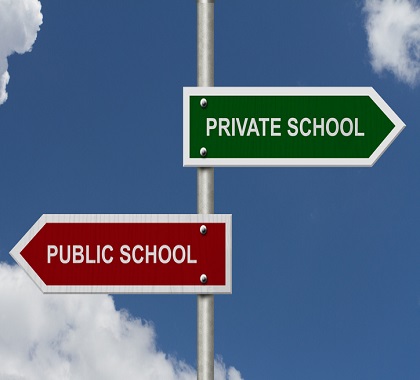
While public schools are struggling, private school attendance has remained steady. However, as more parental choice bills advance, the number of children attending private schools will very likely increase. There are currently 75 private school choice programs in 34 states, serving more than 1.5 million students.
Also, the Federal Tax Credit Scholarship Program, which takes effect on January 1, 2027, is likely to substantially increase the number of students leaving public schools for private schools.
Through the program, individual taxpayers will be eligible for a dollar-for-dollar tax credit of up to $1,700 for contributions to approved scholarship-granting organizations (SGOs). In turn, the SGOs will be required to use these contributions to grant scholarships to students at private and public elementary and secondary schools within their states. Students who are eligible to attend public school and whose family income is below 300 percent of the gross area median income will be eligible for the scholarships. The scholarships can be used for qualified expenses such as tuition, fees, books, supplies, room and board, uniforms, transportation, computer technology, equipment, and internet access.
The program is especially popular among black and Hispanic communities, groups most likely to experience chronic absenteeism. A recent poll found that 63 percent of Hispanics and 68 percent of blacks—groups most in need of choice—support a private option.
Thus far, 31 states have opted into the federal scholarship program, and two governors (in Minnesota and Wisconsin) have said their states won’t participate. The remaining states and the District of Columbia have not yet formally decided or announced their decisions.
In states without a private choice program, the best option for parents is to educate their children at home. In fact, homeschooling continued to grow across the United States during the 2024-2025 school year, with an average increase of 5.4 percent, nearly three times the pre-pandemic growth rate of about 2 percent.
Micro-schools, where classes typically have fewer than 15 students of varying ages and schedules, and curricula are tailored to each class’s needs, are growing in popularity and currently educate about 2 percent of the U.S. student population—roughly 750,000 students. Most micro-schools are independently run by parents, though some are part of a formal network that provides paid, in-person teachers. Lessons take place in various settings, including homes, libraries, community centers, etc.
Micro-schools today are less “micro” than they were, according to the latest analysis of the sector from the National Microschooling Center. In 2024, the median number of students in a typical micro-school was 16. That figure has since risen to 22, reflecting the increased experience of school operators, reports Don Soifer, the center’s CEO. However, some now serve as many as 100 students.
In sum, except in the case of declining birth rates, government-run schools are shedding students because many are not offering a worthy product.
What effect is the public school exit having on colleges? I will address that question in a future post.
Larry Sand is former president of the California Teachers Empowerment Network.