Legislation making its way through the Wisconsin Legislature would require the Wisconsin Public Service Commission (PSC) to block new data center projects from passing along cost overruns from the construction of electric infrastructure to Badger State ratepayers.
To stop this socializing of costs, the bill instructs the PSC to “ensure in rate-making orders that no costs associated with the construction or extension of electric infrastructure that primarily serves the load of a data center are allocated to or recovered from any other customer.”
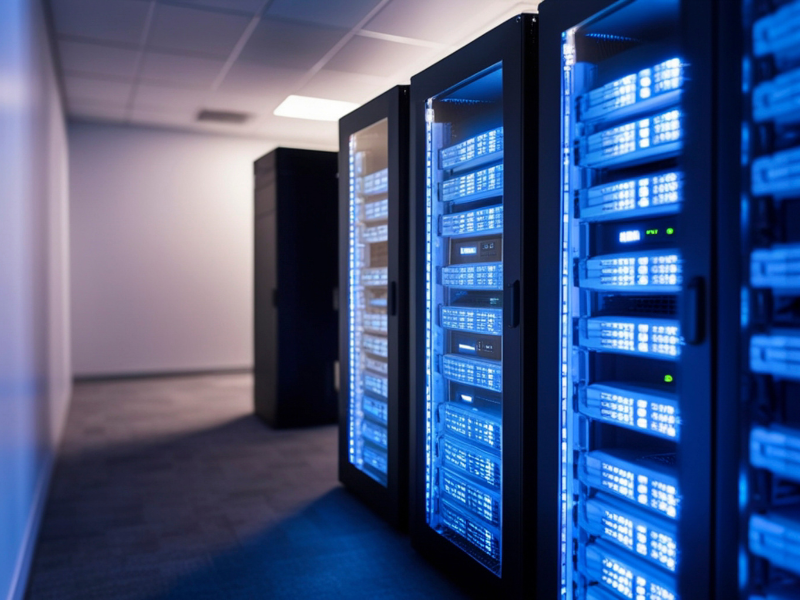
The technology industry has accelerated the construction and utilization of electronic data center and artificial intelligence projects over the past several years, which has resulted in a large increase in electricity consumption. According to Data Center Map, nearly 4,000 data centers have been built in the United States, including 40 in nine different Wisconsin markets. Many more, nationally and locally, are in development.
Further, the bill says any renewable energy facility “that primarily serves the load of a data center shall be located at the site of the data center.” This prevents the costs associated with building the transmission infrastructure to power these centers from being passed on to consumers in the form of higher rates.
Unfortunately, this cost socializing has been happening elsewhere and needs to be protected against. According to a September 2025 report from the Union of Concerned Scientists (UCS), in seven states serviced by the large, regional transmission organization PJM Interconnection—Illinois, Maryland, New Jersey, Ohio, Pennsylvania, Virginia, and West Virginia—utility customers have collectively paid $4.4 billion for transmission upgrades needed to connect large data centers in 2024 alone.
Moreover, UCS reports that only 5 percent of those projects were directly paid by the data center customers, while the rest was socialized across all PJM customers through rate hikes and the regional transmission planning process.
“Without systematic changes to prevailing utility ratemaking practices, the public faces significant risks that utilities will take advantage of opportunities to profit from new data centers by making major investments and then shifting costs to their captive ratepayers,” a March 2025 report from the Environmental & Energy Law Program at Harvard Law School states. “The industry’s current approaches of luring data centers with discounted contracts or lopsided tariffs is unsustainable.”
The Heartland Institute has provided suitable model legislation that would protect ratepayers from this financial burden in the form of the Equitable Escalation of Electricity Demand Act (EEEDA).
EEEDA states “new data centers requiring dispatchable power will be responsible for its provision, either by contracting directly with the local utility for the construction of dispatchable power with the approval for new power sources having to go through the usual regulatory process undertaken by the commission, except for the price which will be negotiated between the utility and the source of the new demand, with safeguards so any cost overruns are not borne by ratepayers in general. Any excess power from the dedicated dispatchable source can be sold onto the broader grid at wholesale rates, with the profits of those sales spilt between the utility and the demanding source, per their contract.”
Further, the legislation requires that “if any state, or political subdivision thereof, provides economic incentives for the construction, opening, or operations of a new data center, they shall enter into a memorandum of understanding or other similar instrument…such that failure or refusal to meet the terms of the aforementioned memorandum of understanding, the state’s public service commission or similar regulatory agency is authorized to notify the relevant state and local agencies to commence proceedings to recoup the current cash value of the economic incentives from the parent company of the data center.”
Lastly, EEEDA states that “if new data centers requiring dispatchable power cannot come to an agreement with the local utility to construct new dispatchable power, they may submit their own plan to the commission for how they will develop and deliver that power. Any dispatchable power source they construct and maintain will have to comply with the same environmental, safety, and health regulations utilities operate under, and any excess power generated by the new source, if connected to the grid, can be sold to a contracting utility at an agreed upon price.”
State legislators should protect common ratepayers from bearing the financial burden of the anticipated strain imposed on the electric grid by new data centers. While Heartland would prefer nationwide adoption of the EEEDA, the provisions in the legislation in question in Wisconsin go a long way toward providing that protection.
The following provides more information about data center issues.
MODEL LEGISLATION: Equitable Escalation of Electricity Demand Act
https://heartlandimpact.org/2024/08/26/model-legislation-equitable-escalation-of-electricity-demand-act/The Equitable Escalation of Electricity Demand Act will ensure that the entities most responsible for the anticipated rapid growth in electricity demand pay the true costs and not shift additional burdensome costs from escalating demand onto ratepayers. The technology industry plans to accelerate the construction and utilization of electronic data centers and artificial intelligence projects, which require tremendous amounts of electricity. And federal and policies are incentivizing and mandating the widespread adoption of electric vehicles (herein after, EVs). These are the primary reasons grid operators project an imminent rapid increase in overall electricity demand, which will require large investments in power production and grid infrastructure. Present electricity generation is insufficient to safely meet projected demand. The cost of technologies that demand large increases in domestic power, like electric vehicles, should they achieve widespread adoption, and large data center, should be borne by those who benefit directly from the new power supply, not ratepayers in general. The added cost should not be socialized. This Act applies a reasonable fee to new electronic data centers sufficient to safeguard common ratepayers from bearing the financial burden of the data centers’ anticipated strain imposed on the electric grid.
Nothing in this Research & Commentary is intended to influence the passage of legislation, and it does not necessarily represent the views of The Heartland Institute. For further information on this subject, visit The Heartland Institute’s website.
The Heartland Institute can send an expert to your state to testify or brief your caucus; host an event in your state; or send you further information on a topic. Please don’t hesitate to contact us if we can be of assistance! If you have any questions or comments, contact Heartland’s Government Relations department, at [email protected] or 312/377-4000.

Tim Benson joined The Heartland Institute in September 2015 as a policy analyst in the Government Relations Department.