IN THIS ISSUE:
- Foreign Elites, China Fund American Climate Alarm
- Wyoming Wind Development Blocked
- New U.S National Security Strategy Touts Importance of Energy Dominance
Foreign Elites, China Fund American Climate Alarm
The late Ron Arnold clued me in to Russia’s funding of anti-fracking environmental activists during the heyday of fracking’s expansion more than a decade ago. I wrote about this foreign subversion of America’s energy security in op-eds, in Climate Change Weekly, and in articles in Environment & Climate News.
It wasn’t just Russia, however. Wealthy elites in the United States and abroad also funded protests by “Just Stop Oil” and destructive, polluting, anti-pipeline sit-ins and protests. Greenpeace USA is currently on the hook for hundreds of millions of dollars over one such protest.
For the Russians, the goal was to prop up their oil industry and geopolitical power at the expense of the United States’. For the elites and the green front groups they’ve supported, the supposed reason for undermining U.S. domestic hydrocarbon development was to fight climate change, though I believe the true goal was to give those two groups more power over peoples’ lives, dictating how and where they can live.
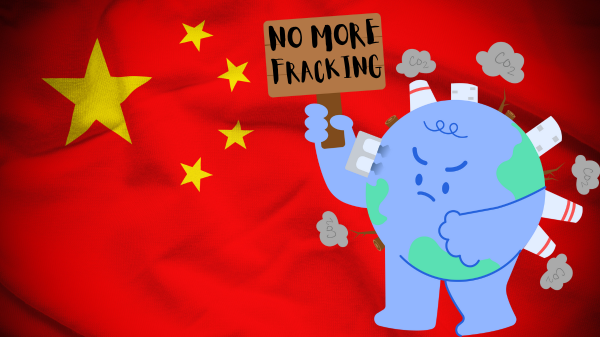
The problem continues today, with foreign charities and the Chinese Communist Party (CCP) pouring billions of dollars into climate activist organizations to limit U.S. hydrocarbon development; regulate appliances, cars, and trucks; and direct federal and state energy and climate policies. Part of their strategy is to support more international engagement and funding for multilateral and U.N. climate policies with the goal of ceding increasing amounts of U.S. sovereignty to the UN to prevent a climate catastrophe. That just happens to benefit China’s green-tech-for-export manufacturing sector.
In a July Senate hearing on “Climate Lawfare and the Courts: How Foreign Actors Are Undermining American Energy Independence,” chaired by Sen. Ted Cruz (R-TX), testimony was given concerning how the Energy Foundation of China, an organization funded by the CCP, funneled millions of dollars to U.S. climate activist groups, among them the Natural Resources Defense Council and the Rocky Mountain Institute, to push policies to restrict domestic hydrocarbon development, support lawsuits filed by climate-change-focused legal groups against oil companies, and advocate continuation of wind and solar energy mandates and subsidies. The latter directly benefit China, which dominates the market for wind, solar, battery, and electric vehicle technologies, both in manufacturing and through the CCP’s control of rare-earth elements and critical metals vital to defense systems, modern electronics, and green technologies.
More recently, a new report by Americans for Public Trust (APT) details foreign “charities” that have donated nearly $2 billion to U.S.-based nonprofits that lobby for progressive environmental policies such as U.S. hydrocarbon restrictions, green energy promotion and subsidies, and federal government engagement with international groups on climate issues. Specifically, APT’s report found,
- The Quadrature Climate Foundation (QCF): the UK-based QCF has given $530 million in foreign money to 41 U.S.-based groups from 2020 to the present, including the ClimateWorks Foundation, Growald Climate Fund, The Grantham Foundation, Arabella’s Windward Fund, and the Sunrise Project.
- The KR Foundation: The KR Foundation, a Danish charity, gave more than $36 million in foreign cash to 53 U.S.-based groups from 2015 to 2024, including The Conservation Law Foundation, the Center for International Environmental Law, Stop the Money Pipeline, Fossil Free Media, the Associated Press, and Oil Change International.
- The Oak Foundation: OF, based in Switzerland, gave more than $750 million in foreign money to 152 U.S.-based groups from 2014 to 2024, including The Environmental Law Institute; Community Change, the fiscal sponsor for Free DC; Rockefeller Philanthropy Advisors; Arabella’s New Venture Fund; the Natural Resources Defense Council; and The Tides Center.
- The Laudes Foundation: Since 2020, The Laudes Foundation, another Swiss-based charity, has poured almost $20 million into 17 U.S.-based groups, including The Pulitzer Center for Crisis, Ceres, Community Initiatives, and The World Resources Institute (WRI).
- The Children’s Investment Fund Foundation: CIFF, based in the United Kingdom, gave more than $553 million in foreign money to 39 U.S.-based groups from 2014 to 2023, including The Energy Foundation China, The Institute for Governance & Sustainable Development, the Environmental Defense Fund, and The Sunrise Project.
“It is extremely alarming that five foreign charities have quietly poured almost two billion dollars into advocating for the most extreme liberal policies and protests in the United States,” said Caitline Sutherland, APT’s executive director, in a press statement issued upon the report’s release. “Since current laws regulating foreign giving to U.S.-based nonprofit organizations are hindered by a lack of oversight and exploitable exemptions and loopholes, foreign actors have been able to advance their radical and dangerous interests virtually unchecked.
“Congress needs to address these serious shortfalls in our laws to protect American interests and keep foreign influence out of our politics,” Sutherland said.
I don’t normally advocate more laws, but foreign governments and foreign individuals should not be allowed to fund U.S. political campaigns or causes, either directly or in the shadows through environmental front groups, to shill for policies that hurt U.S. interests.
Sources: Americans for Public Trust; Forbes; Climate Change Weekly; Townhall
Wyoming Wind Development Blocked
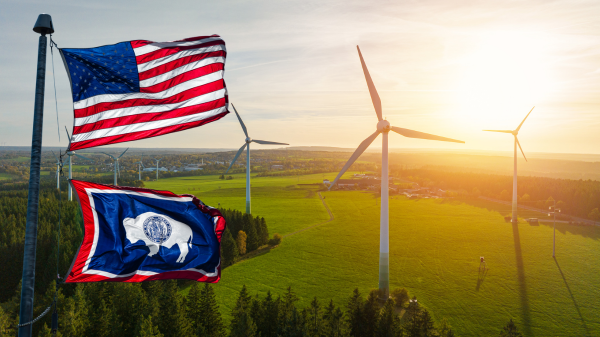
Industrial wind developments have been pushed as a way to reduce carbon dioxide emissions from electric power, ignoring the significant economic costs, problems with consistent supply, and ancillary environmental impacts. More recently, another way wind has been pitched to fight climate change is by generating power for specific types of industrial facilities.
In Wyoming, a state district judge recently deemed one such wind project to have been wrongly approved.
In a 17-page ruling, District Court Judge F. Scott Peasley vacated Wind Lease No. WL-1620, approved by the State Board of Land Commissioners (SBLC) by a 4-1 vote in April, because the project won’t connect to the electrical grid and hence failed to meet the state’s definition of wind energy leasing. Electricity generated by the $1.7 billion Pronghorn H2 project was to be used exclusively to produce hydrogen jet fuel, laughingly referred to as green, through electrolysis. “Green” hydrogen is being sold as a means of reducing aircraft greenhouse gas emissions.
The Stephens Land and Livestock LLC, a family-run operation, challenged the lease on the grounds it violated Wyoming law and the board’s own rules requiring that wind projects using state lands feed the electricity into the state’s power grid. Peasley agreed, citing the board’s rules defining wind energy leasing as leasing of state land for the exclusive right to convert wind energy into electricity for public use, “including collecting and transmitting the electrical energy so converted to the substation from which the electricity will be transmitted from the wind energy development to the interconnection of the transmission grid.”
Gov. Mark Gordon and the Wyoming Attorney General’s Office opposed the lawsuit and tried to have it dismissed, arguing the plaintiff lacked standing. (Gordon serves as president of the SBLC and voted with the majority to approve the lease.) The judge disagreed. Peasley concluded the ranch’s operation would likely suffer distinct harm: the owners reside on a 172-acre homestead parcel adjacent to the proposed wind farm. The wind turbines would be visible from the plaintiff’s property, meaning the views from their property would “be spoiled by Pronghorn’s project.” The judge also agreed with the plaintiff’s claim the family’s holdings would suffer as a result of “increased traffic on rural roads, noise, and construction associated with the 267-turbine project planned for approximately 15,500 acres of state trust lands in the northern Laramie Range mountains,” Cowboy State Daily reported.
Gordon cited economic development of Converse County—$1.7 billion in private investment, with total future taxes paid over the 35-year project life estimated at $471 million—as justifying the plan. Both wind and hydrogen development are highly subsidized by the federal government, meaning much of the state’s windfall would have been provided by federal taxpayers.
The Stephens family was not alone in challenging the Pronghorn project. Wyoming Secretary of State Chuck Gray also fought against it.
“I applaud the court’s ruling reversing the Pronghorn wind lease, which is great news for the people of Wyoming and vindication for those pushing the truth on this issue,” said Gray after the court ruled. “Woke wind is wrong for Wyoming.
“As the only member of the State Board of Land Commissioners to vote against all of these boondoggle wind projects, it is refreshing to see the truth win out,” Gray said. “Perhaps most importantly, my opposition to these wind leases was based on the fact that these projects are bad for Wyoming, because they are based on the fantasies of left-wing, government-controlled, enviro-insiders, driven by Soros-funded Green New Deal schemes intent on destroying Wyoming’s core industries.”
Source: Cowboy State Daily
New U.S National Security Strategy Touts Importance of Energy Dominance
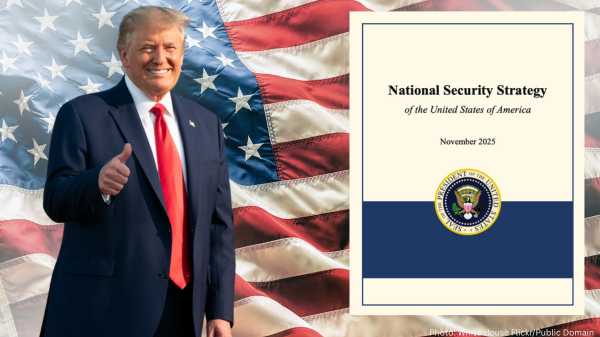
President Donald Trump’s newly released National Security Strategy of the United States of America (NSS) is one more nail in the coffin of climate alarmists’ attempts to fund and implement Green New Deal scams to dictate the nation’s energy and foreign policies.
The Trump administration report forcefully makes the case U.S. energy dominance is in the best economic and geopolitical interests of the United States and our allies.
The NSS makes it clear fear of climate change is unwarranted and a drag on U.S. excellence, and it will no longer guide or inform national energy, industrial, or infrastructure policies.
“We reject the disastrous ‘climate change’ and ‘Net Zero’ ideologies that have so greatly harmed Europe, threaten the United States, and subsidize our adversaries,” states the NSS in its only direct mention of climate change. “Restoring American energy dominance (in oil, gas, coal, and nuclear) and reshoring the necessary key energy components is a top strategic priority.
“Cheap and abundant energy will produce well-paying jobs in the United States, reduce costs for American consumers and businesses, fuel reindustrialization, and help maintain our advantage in cutting-edge technologies such as AI,” the document continues. “Expanding our net energy exports will also deepen relationships with allies while curtailing the influence of adversaries, protect our ability to defend our shores, and—when and where necessary—enables us to project power.”
In recent decades U.S. national security strategy was built on several false premises promoted by international elites that actually undermined America’s national interests, the NSS states:
Our elites badly miscalculated America’s willingness to shoulder forever global burdens to which the American people saw no connection to the national interest. … They placed hugely misguided and destructive bets on globalism … [a]nd they lashed American policy to a network of international institutions, some of which are driven by outright anti-Americanism and many by a transnationalism that explicitly seeks to dissolve individual state sovereignty.
In sum, not only did our elites pursue a fundamentally undesirable and impossible goal, in doing so they undermined the very means necessary to achieve that goal: the character of our nation upon which its power, wealth, and decency were built.
Part of reviving America’s industrial base, energy dominance, and national security requires developing a domestic critical minerals and rare earths supply chain, from mining to refining to manufacturing finished products. On this point the document states,
[T]he United States must never be dependent on any outside power for core components—from raw materials to parts to finished products—necessary to the nation’s defense or economy. We must re-secure our own independent and reliable access to the goods we need to defend ourselves and preserve our way of life. This will require expanding American access to critical minerals and materials while countering predatory economic practices.
The Trump administration’s NSS document offers a stark contrast and rebuke to previous administrations, which made the concerns of international elites the centerpiece of the nation’s national security, especially their belief that climate change is an existential threat. This document sees past administrations’ fear of and support for climate change induced mass immigration, a military focused on adopting green technologies, support for green energy technologies dominated by our enemies, and a financial and industrial base driven by ESG and sustainability concerns as not just misguided but as endangering the nation’s security, sovereignty, and continued prosperity through economic growth.
Sources: The White House (Office of the President); Energy, Security, and Freedom