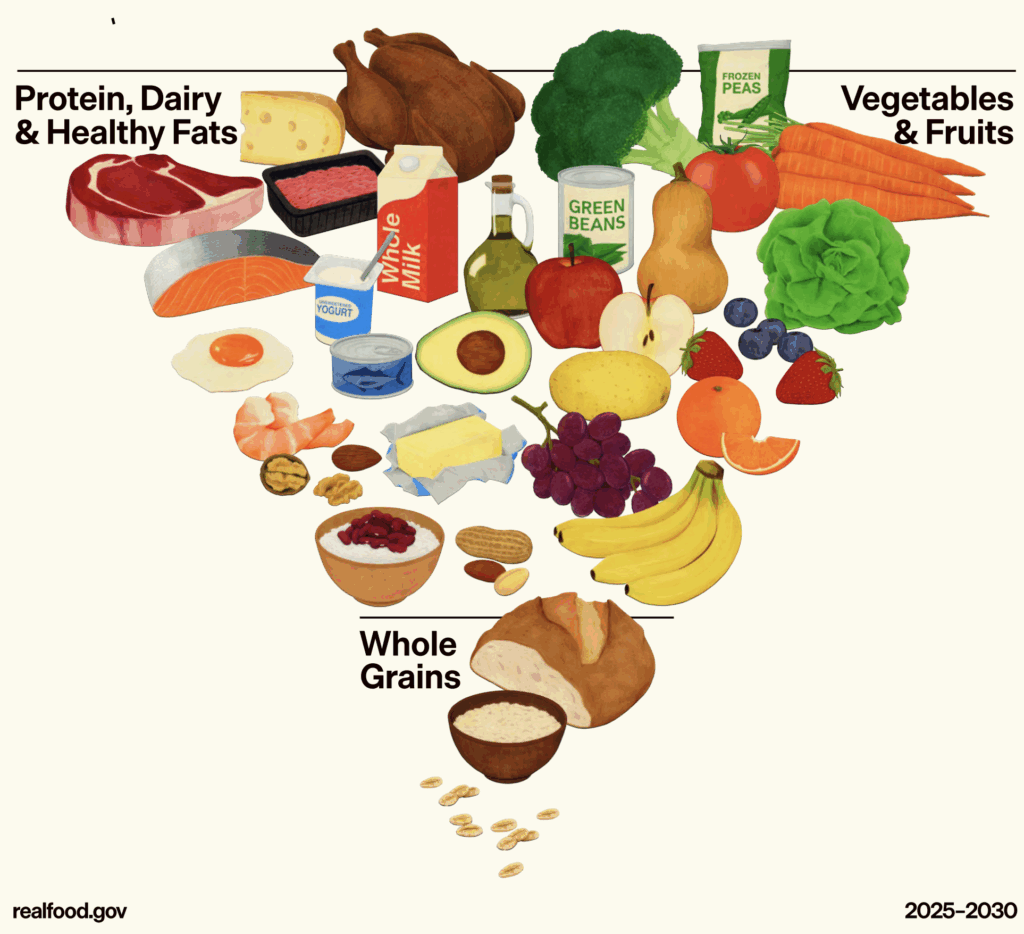
On January 7, 2026, the U.S. Department of Agriculture (USDA) released new dietary guidelines overhauling decades of previous guidance.
The old guidelines, stated a USDA fact sheet, “favored corporate interests over common sense, science-driven advice to improve the health of Americans.”
The USDA’s press release states, “The new guidelines deliver a clear, common-sense message to the American people: eat real food.”
In practice, the documents indicate this means prioritizing nutrient-dense, whole foods over highly processed ones containing added sugars and artificial additives.
Americans Are Sick
The regular consumption of ultra-processed foods has long been associated with the development and progression of chronic health conditions such as obesity and diabetes. This point was heavily emphasized in the MAHA Commission’s May 2025 “Make Our Children Healthy Again: Assessment” and reiterated in the USDA fact sheet and press release, along with the staggering numbers of Americans suffering from poor health due to a poor diet.
“More than 70% of American adults are overweight or obese, and nearly 1 in 3 adolescents has prediabetes,” stated the press release, citing data from CDC web pages. “Diet-driven chronic disease now disqualifies many young Americans from military service, threatening national readiness and limiting opportunity.”
Preventing Disease and Cutting Costs
The USDA fact sheet states the avoidance of ultra-processed foods is “a common-sense and vital public health point” that will help prevent chronic disease and reduce healthcare costs.
As indicated by the USDA fact sheet, the U.S. The Health and Human Services (HHS) and USDA dietary guidelines do not simply serve as advice to individuals and families, but also form the foundation for numerous federal programs that provide food to school children, members of the military, veterans, and large numbers of other Americans.
Using the Supplemental Nutrition Assistance Program (SNAP) as an example, the fact sheet stated, “42 million Americans depend on SNAP for nutrition – but some of the most popular items on the program are sugary drinks, candy, and chips. Because 78% of SNAP recipients are on Medicaid, these incentives for unhealthy food also drive up health care costs.”
“This public policy insanity must end,” stated the fact sheet.
Food Freedom Movement Praise
The guidelines, which resemble the older guidelines but in reverse, have captured the attention of a wide range of professional interests.
“This announcement represents a seismic shift in government bias toward healthier food and will hopefully claw back some of the sickness and chronic disease numbers, where Americans lead the world,” said Joel Salatin, a farmer at Polyface Farm in Swoope, Virginia, via a statement he shared with multiple media outlets. “Leading the world in unhealthiness is not a desirable number one spot.”
The new food pyramid is the most important intervention an administration has made, and “long overdue,” said David Bell, a clinical and public health physician and member of REPPARE (REevaluating the Pandemic Preparedness And REsponse agenda), told Health Care News.
“Turning the pyramid upside down just returns it to the food that humans evolved to eat over the past few hundred thousand years, and closer to what we ate when I was a child,” said Bell.
Obesity Has Gotten Worse
Compared to when he was a kid, Bell says he believes obesity has become more prevalent and more severe.
“My school of about 250 children had one fat kid…and he was far less overweight than many of my current children’s friends,” said Bell.
Previous dietary guidance from the government did little to reduce obesity and may have contributed to the problem, says Bell, who now lives in southern Texas with his family.
“Many of our friends try hard to fix [their weight] by following the [previous] CDC guidelines, which have clearly been making them more overweight and less fit. It has been very frustrating to watch,” said Bell.
Current Dangers and Future Progress
Looking forward, Bell says, despite their potential to do good, the new dietary guidelines can pose danger because they “will be seen as political” and ignored, resulting in school children continuing to be “forced to eat yogurt low in fat and high in sugar, meatless pizza and low-fat milk – the worst food you could feed a young omnivorous mammal.”
Moreover, Salatin, despite acknowledging the new dietary guidelines as “a great step forward,” suggested they do not go far enough.
“[T]hese guidelines fail to recognize the difference between plants and animals grown in healthy soil and habitats versus those grown in chemicals and concentrated animal feeding operations (CAFOs),” said Salatin.
But Salatin offers an upside. “I’ll take incrementalism toward truth any day and wait for the next step.”
Daniel Nuccio, Ph.D. ([email protected]) is a spring 2026 College Fix journalism fellow, reporter, and editorial associate for Health Care News.