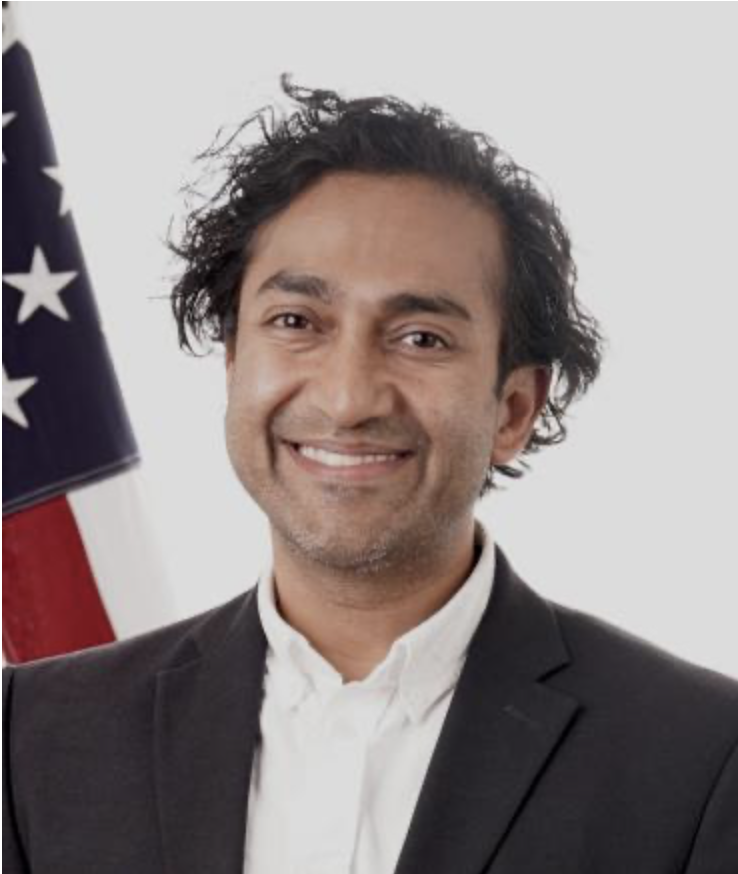
Addressing the growing practice of urban hospitals reclassifying themselves as both urban and rural healthcare facilities, Reps. Dave Taylor (R-Ohio) and Carol Miller (R-West Virginia) on February 5, 2026 introduced the “Defend Rural Hospitals Act.”
“Urban hospitals are double-dipping into rural-intended benefits through the ‘dually classified loophole,’” stated a Fact Sheet from Rep. Taylor’s office. “Through this loophole, urban hospitals in major metropolitan areas such as Manhattan, Los Angeles, Chicago, Boston, and San Francisco have been allowed to dually classify as rural hospitals. This is diverting resources away from truly rural hospitals and raising federal spending.”
Both Reps. Taylor and Miller represent rural districts that bear the brunt of resources diverted to urban hospitals.
Double Benefit for City Hospitals
The dually classified loophole arose in 2016 in response to two federal court decisions, prompting the Centers for Medicare and Medicaid Services (CMS) to allow geographically urban hospitals to be dually classified simultaneously.
“This dual classification enables hospitals to use urban wage indexes for calculating Medicare reimbursements while also benefitting from Medicare policies solely intended to support rural health,” a study published in Health Affairs pointed out.
The study also noted the growing trend of dual-classified urban hospitals to misuse the federal 340B Drug Discount Program, which requires drug makers to sell drugs at reduced prices to struggling hospitals, many of which are in rural areas. Health Care News featured the study in an article posted in October.
Rural Hospitals Lose Resident Slots
Urban hospitals lost no time in taking advantage of the loophole. “From 2017 to 2023, the number of dually classified hospitals exploded from 3 to 425,” Rep. Taylor’s office noted.
The Taylor/Miller bill would “amend Title XVIII of the Social Security Act to limit the geographical reclassification of certain rural hospitals under the Medicare program.” It does so by codifying a return to a regulatory approach like the one that existed pre-2016, before the two federal court decisions were handed down.
In addition to problems resulting from dual classification, rural hospitals, as well as hospitals in low-income urban areas, suffer from a shortage of physicians. A recent study by RURALGME found that, as of December 2025, only 3 of 63 “rural’ hospitals that received new residency slots through the Consolidated Appropriations Act of 2021 were geographically rural.
Congress Investigates
Physician shortages in rural areas were the topic of a February 26 hearing before the House Committee on Ways and Means.
“America will face a total shortage of 187,000 physicians by 2037, with rural areas experiencing shortages of 60 percent and urban areas of just 10 percent,” a Committee press release pointed out. “In addition, many rural hospitals are under-resourced and struggle to open and run their own residency programs.”
Congress has long recognized the problems afflicting rural hospitals, particularly the lack of residency slots. But efforts to remedy the situation through enhanced federal funding of Graduate Medical Education (GME) programs have not lived up to expectations.
“In 2020, Congress funded 1,000 new GME slots, with 10 percent reserved for rural areas, however, actual allocation has fallen woefully short of what is needed,” the committee’s press release said. “Of the 800 slots awarded so far, only 27 have gone to truly rural hospitals. Meanwhile, large urban hospitals have exploited a Medicare loophole and collected 97 percent of awarded slots.”
Training Obstacles
There are some practical problems involved in creating more GME slots under the current law, Dr. Emily Hawes, PharmD., a North Carolina rural clinical pharmacist, told lawmakers.
“There were relatively low numbers of eligible rural hospitals, which is something to consider,” said Hawes. “The prioritization of the slot distribution by Health Profession Shortages Areas (HPSA) actually disincentivizes some of the rural hospitals with low or no HPSA scores from even applying…. If they’re training in rural areas, they need slots to be able to expand.”
Starting a residency program in a rural area presents challenges, Jason Shenefield, a Missouri hospital administrator, told lawmakers.
“There are not enough primary care providers in our community, and we really felt the best way to create more access is by developing a residency program, specifically a family practice with obstetrics. It just seems to fit a few of our different needs in our community…”
AI: The Great Equalizer?
Medical Schools are developing innovative approaches to boosting the quality of rural health care, Thomas Mohr, D.O., the dean of Sam Houston State University College of Osteopathic Medicine, told lawmakers.
“At Sam Houston State University, we’ve created a Medical AI Institute to help us to do research, but also to help us try to figure out how to utilize medical technology, AI, large learning models, and independent wearable technology into the care of folks that are out there,” said Mohr at the hearing. “Now, this could be the great equalizer for rural areas, because this actually could be a way that we bring these types of technologies out to support rural areas…”
“Washington’s traditional way of dealing with problems – real or imaginary – is to throw money at them,” Craig Rucker, president of the Committee for a Constructive Tomorrow, told Health Care News.
“But money is fungible and frequently winds up where it is not intended, imposes paperwork burdens, and supports entrenched interests,” said Rucker. “AI and other innovative technologies offer the prospect of circumventing this bureaucratic morass and uplifting the quality of rural healthcare.”
Bonner Russell Cohen, Ph. D., ([email protected]) is a senior policy analyst with the Committee for a Constructive Tomorrow (CFACT).

Bonner R. Cohen is a senior fellow with the National Center for Public Policy Research, a position he has held since 2002.