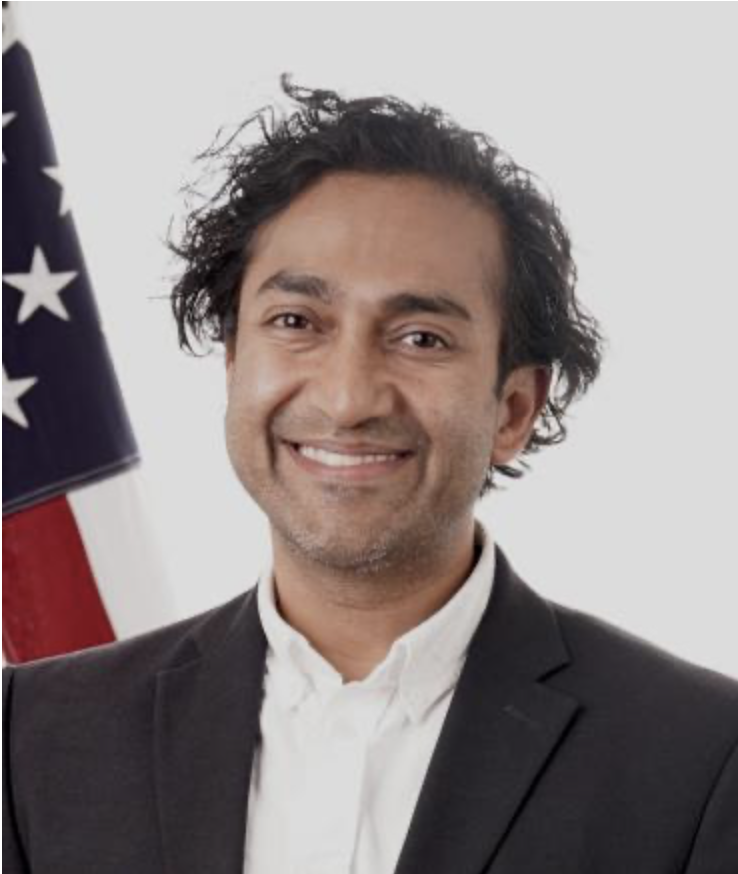
Vinay Prasad, M.D., is out again as the chief medical and scientific officer for the U.S. Food and Drug Administration (FDA).
Last July, Prasad tendered his resignation in the wake of a fiery attack by political activist Laura Loomer, who labeled him a “progressive leftist saboteur” after he demanded that the manufacturer of an experimental gene therapy pull its product from the market following the deaths of patients in trials of the drug from acute liver failure, as Health Care News reported.
Elevidys, made by Sarepta Therapeutics, was the first gene therapy treatment for Duchenne muscular dystrophy. Prasad was later reinstated at the request of the FDA’s Martin Makary.
The latest resignation follows a dust-up over demands made by Prasad that a little-known biotechnology company called Uniqure undertake more rigorous trials to demonstrate the efficacy of a gene therapy drug for Huntington’s disease. The brain disorder is incurable and fatal.
Questions Over Control
The treatment requires neurosurgery for deep insertion into brain tissue. Early trials involved a “sham surgery” control, a placebo, so that patients would not know whether they had received the gene therapy. The gene therapy group showed no improvement over the placebo.
A follow-up trial removed the control group, and the company asked for approval of its drug based on results showing it slowed progress of the disease over a three-year period. The company, however, used a “typical progression” of the disease as the control. Prasad demanded a new trial with a proper control group before giving the drug a green light to move forward. The company balked.
Another Rejection
In February, Prasad nixed another drug, Moderna’s new mRNA flu vaccine, for a similar reason.
Trials showed the new shot was no more effective than existing vaccines but had a vastly greater risk of side effects.
The rejection followed standard approval protocol, but pressure from big pharma, the corporate media, and private equity giant Blackstone, which had invested $750M in the Moderna product, prompted pressure on Prasad from the White House to review the shot for approval, again.
On March 6, on X, FDA Commissioner Marty Makary announced Prasad will leave his post in April.
Best Practices
Journalist and author Alex Berenson wrote in a Substack article that Prasad is following what should be the minimum standards for drug approval.
First, Berenson wrote, “if companies want the FDA to approve a new treatment where an older one already exists, they should have to show that it works at least as well as the older one and doesn’t have way worse side effects.”
There should be a minimum standard for control groups, writes Berenson.
“If companies want the FDA to approve a new treatment where none exists, they should have to run a clinical trial against a placebo — even if the disease they are trying to treat is very serious. Arguably, it’s even more important to run placebo-controlled trials for such diseases because patients and doctors deserve to know if a treatment works,” wrote Berenson.
“The only exception should be if a disease is so vanishingly rare — with a few hundred patients at most every year — that no clinical trial is reasonably possible,” wrote Berenson. “Unfortunately, that is not the case for Huntington’s disease, which affects about 40,000 Americans.”
Third-Party Payers
A complicating factor in drug policy is third parties, often U.S. taxpayers, who pick up the tab for medications.
“The concern about paying for expensive, low-value treatments is real—but it’s a predictable consequence of a government-driven third-party payer system that socializes costs while distancing patients from the price of care,” said Jeffrey Singer, M.D., a senior fellow at the Cato Institute. “Adding another layer of government restrictions on which treatments patients may try doesn’t solve that problem; it only further erodes patient autonomy.”
Corporate Pressure
Prasad’s departure suggests politics at play, says Jane Orient, M.D, the executive director of the Association of American Physicians and Surgeons.
“The lack of expected research of these effects (negative evidence) suggests a cover-up,” said Orient. “The influenza vaccine is of limited efficacy in any case, so the risk-to-benefit ratio is highly unfavorable. We should be researching better therapy, as with repurposed drugs, instead of expensive (lucrative) gene therapy (‘vaccines’ only by redefining the term), the long-term effects of which cannot possibly be known.”
Uniqure, the drug for Huntington’s, is another example of a “hugely expensive, inadequately tested product,” said Orient.
“For desperate patients desiring a ‘right to try,’ it could be made available as experimental therapy with informed consent,” said Orient. “I think Dr. Prasad’s decision to withhold approval was correct. The pressure applied to Dr. Prasad makes a mockery of an independent approval process based on objective science. Taxpayers and policyholders are being abused to reward powerful, corrupt corporations, while likely doing severe harm to patients without the prospect of reasonable compensation.”
Kevin Stone ([email protected]) writes from Arlington, Texas