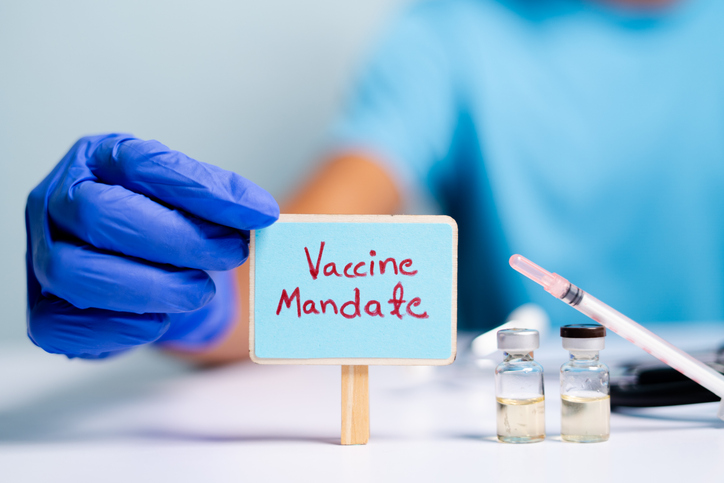
Nineteen states have indicated they will not incorporate updated recommendations on childhood vaccination from the Centers for Disease Control and Prevention (CDC) into their own state-level recommendations or adjust requirements for school or daycare attendance accordingly.
States rejecting the new recommendations include California, Colorado, Connecticut, Hawaii, Illinois, Maryland, Massachusetts, Michigan, Minnesota, New Hampshire, New Jersey, New Mexico, New York, North Carolina, Oregon, Pennsylvania, Vermont, Washington, and Wisconsin.
Updated Recommendations
The CDC announced its new recommendations on January 5, 2026, following a December 30 letter from the Centers for Medicare and Medicaid Services (CMS) to state health officials updating vaccination reporting guidance. In a December 5 memorandum, President Donald Trump directed the Secretary of Health and Human Services and Director of the CDC to review the childhood vaccination practices of other developed countries, as well as the science upon which those practices are based, and revise recommendations in the United States, if warranted.
As stated in the CDC announcement, the assessment “found that the U.S. is a global outlier among developed nations in both the number of diseases addressed in its routine childhood vaccination schedule and the total number of recommended doses, but does not have higher vaccination rates than such countries.”
Based on the findings of the assessment, the CDC lowered the number of vaccines recommended for all children from 17 to 11, while stating decisions to give children several vaccines not included in this category should be based on shared clinical decision-making between parents and physicians, along with individual risk-benefit profiles.
States Adopt Private Recommendations
Several of these states indicated they would base state-level recommendations and policy on the immunization schedule of the American Academy of Pediatrics or similar organizations instead.
Simultaneously, though, New Hampshire is considering legislation that would end its vaccine mandates for school and daycare enrollment or entry.
Additionally, the December 30 CMS letter stated, “In 2026 and beyond, CMS will explore options to facilitate the development of new vaccine measures that capture information about whether parents and families were informed about vaccine choices, vaccine safety and side effects, and alternative vaccine schedules.”
Implications for Families
As for the implications for parents and families in states rejecting the updated CDC guidance, “we truly don’t know the answers yet!” Mary Holland, the CEO of Children’s Health Defense (CHD), told Health Care News.
“No state fully follows the CDC recommendations to implement all vaccines as mandates,” said Holland, adding that the continuation of existing state-level vaccine mandates and the rejection of the CDC’s new recommendations by some states are matters of concern.
Holland testified before the state legislatures in Vermont and New Hampshire in early February regarding vaccine safety and informed consent.
After Idaho, last year, became the first state in the nation to ban vaccine mandates, several MAHA groups are working to get other states on board, reports Reuters.
“MAHA is bringing national attention to an issue that is by no means new,” said Jane Orient, M.D., the executive director of the Association of American Physicians and Surgeons. “The National Vaccine Information Center, nvic.org, has been fighting this battle since 1982.”
Liability Protections Retained
The continuation of liability protections for vaccine manufacturers is another matter advocacy groups are watching.
Vaccines previously protected under the 1986 National Childhood Vaccine Injury Act (NCVIA) have not lost their protection, says Holland, and there is no indication that changes are forthcoming. (See related article).
“If there were no liability protections for vaccines, as is the case for drugs, the industry would likely be greatly more careful in its clinical trials and warnings, and physicians in turn would be much more careful in their decisions on whether to vaccinate,” said Holland.
Options for Parents
Regarding options for parents concerned about vaccine mandates in their states, Holland says, at least nominally, all 50 states have medical exemptions.
“Some states, like New York state, have been quite arbitrary in granting and denying medical exemptions,” said Holland.
Furthermore, 45 states allow for religious exemptions, says Holland, with the exceptions being California, New York, Maine, Connecticut, and West Virginia.
“Health freedom advocates, including CHD, challenge the lack of religious exemptions in these five states on the grounds of equal protection, parental rights, and free exercise of religion,” said Holland.
Courts and Congress
“There are serious efforts in the courts and in Congress to create a federal right to religious exemptions against state vaccine mandates,” said Holland, “The Supreme Court’s recent decision in Mahmoud v. Taylor has shifted the standard of review and playing field in religious exemption cases around vaccines.”
Mahmoud v. Taylor concerned the rights of Maryland parents to remove their children from school lessons regarding LGBTQ topics, said Holland when speaking before the New Hampshire state legislature.
The Supreme Court’s decision in that case called for the application of “strict scrutiny because of the exercise of religion and the parental rights involved” and the utilization of the “least restrictive means possible” to achieve a state goal, Holland testified.
The Supreme Court’s decision in that case subsequently influenced a later case, Miller v. McDonald, involving vaccine exemptions for Amish students, said Holland.
A federal district court and an appeals court upheld New York’s decision to fine Amish schools $118,000 for violating the state’s vaccination law. The U.S. Supreme Court vacated the decision and remanded it to the federal appeals court in light of Mahmoud.
Daniel Nuccio, Ph.D. ([email protected]) is a spring 2026 College Fix journalism fellow, reporter, and editorial associate for Health Care News.