Earlier this month, the Organization for Economic Co-operation and Development (OECD) released findings from the 2025 Programme for International Student Assessment (PISA), a global measure of educational achievement that assesses the knowledge and skills of 15-year-old students.
PISA was conducted every three years from 2000 to 2025 and has now shifted to a four-year cycle. Each test assesses reading, mathematics, and science, with one subject designated the “major domain” on a rotating basis. In 2025, science was the focus, and the test covered 91 education systems worldwide.
Overall, the results show that the United States ranked 13th in reading and science and 27th in math. Reading scores fell by 14 points since the last test in 2022. It’s not just the United States that’s moving in the wrong direction. The decline is part of a broader global trend, with the OECD average across 23 countries down 16 points.
However, the United States stood out for the size of its performance gap. Some 26 percent of our students were ranked as low performers in reading, while 13 percent were rated as top performers.
Michael Kieffer, a professor of education at New York University, stated that across all 90 participating countries, “there was not a single country with significantly wider inequality in reading scores than the U.S. What is clear is that we are under-serving many students.”
“The reading gap in the U.S. has widened by 50 points since 2015—or the equivalent of 2.5 years of lost learning—making it the largest in the world,” said U.S. Education Secretary Linda McMahon.
The question then becomes why the scores are tanking.
In fact, there are many reasons, including eroding student-teacher relationships, reduced family support, excessive screen time, and growing dependence on AI.
Andreas Schleicher, the OECD’s director for education and skills, maintains that the quality of student-teacher relationships and family support has consistently been linked to higher student achievement. “Students who felt their teachers respected them and cared about their well-being were more likely to score higher on PISA. The United States scored slightly above the OECD average in student-teacher relationship quality.”
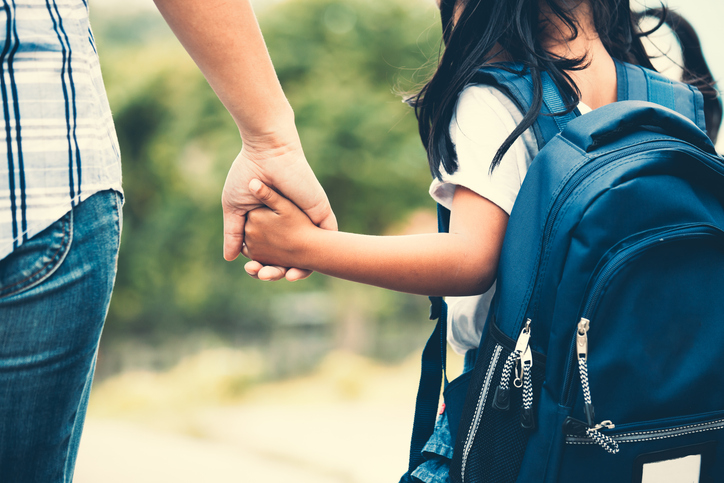
Family support is another strong predictor of student success, Schleicher said, noting that students whose parents ask about their schoolwork perform better than those whose parents don’t. Schleicher maintains that family support has declined since 2022, both globally and in the United States.
Children in China did quite well on the assessment, but that comes with a major asterisk. China cherry-picks which students take the test, so the scores don’t reflect students’ knowledge nationwide. In reality, only students in four provinces—Beijing, Shanghai, Jiangsu, and Zhejiang—participated.
Much of the media consistently overlooks this important detail, though many education analysts have known about it for some time. For example, in 2024, the American Enterprise Institute released a detailed analysis of the claim that China’s K–12 education performance is world-class. The report clearly explains that PISA is administered only to students in a few regions of China, not nationwide.
So what do we do about this sad state of affairs?
First, we must ban smartphones in schools, as China did in 2021. They do not benefit children and are a major distraction. If students must bring a smartphone to school, they should not be allowed to use it at any time during the school day.
We also need to return to teaching the basics, especially in reading.
Over the past decade, Mississippi has made extraordinary progress in 4th-grade reading, often described as the “Mississippi Miracle.”
In reality, nothing about it is miraculous. All the state did was revert to phonics, also known as the “science of reading,” the traditional method of teaching reading.
In 2024, Mississippi ranked 9th in the country in 4th-grade reading, up from 49th in 2013, a 40-place climb over a decade, moving from near the bottom of the nation to the top 10.
Additionally, parents must become more involved in their children’s education. If a parent must send their child to a school—especially a government-run school—they should talk with their children about schoolwork and, in general, take a greater interest in their learning.
Students whose family members ask them at least weekly what they did in school that day scored about 35 points higher on the PISA science test—equivalent to more than a year and a half of learning—than those whose families are less interested. This difference persists even after accounting for socioeconomic factors.
Furthermore, we must limit how students use artificial intelligence. AI is often used to cheat, despite being touted as a tool to bolster instruction. A new Fordham Institute paper, “High Tech, Low Standards: High School in the Age of Distraction,” reports that 48 percent of students use AI to solve math problems, 36 percent use it to summarize books or texts to avoid reading them, 29 percent use it to write the first drafts of their essays or reports, and 26 percent use it for help during quizzes and tests.
When asked to respond to statements about the effects of AI on school, 58 percent of students agreed that it’s made homework meaningless, and 57 percent agreed that it lets students get good grades without doing real work.
Another way to improve education is through parental choice. New research shows that children who attend private schools through school-choice programs outperform most of their peers, regardless of socioeconomic status.
The Wisconsin Institute for Law & Liberty (WILL) recently released peer-reviewed academic research analyzing more than 100,000 low- and middle-income students from 2019 to 2023.
WILL’s analysis, which measured performance on the English/Language Arts section of the Wisconsin Forward Exam, compared school-choice beneficiaries with students from similar economic backgrounds in the public school system. Across Wisconsin’s three major private-school choice programs, researchers found that students who remained enrolled longer consistently demonstrated greater academic reading growth than comparable public school attendees.
In sum, unless we limit students’ use of smartphones and AI, increase parental involvement in their children’s education, and expand school choice, we cannot expect the meaningful change we desperately need.

Larry Sand is former president of the California Teachers Empowerment Network.