According to a September Gallup poll, Americans’ satisfaction with K-12 education has fallen to 32%, the lowest level since Gallup began tracking the issue 27 years ago.
Nearly half of Americans said the country’s schools did a poor job of preparing students to think critically and solve problems. “Preparing students for the current world of work” and “preparing students to work effectively with others” also received low ratings.
The results of any poll raise questions about its accuracy. But, as former U.S. Assistant Secretary of Education for Policy Bruno Manno notes, a second survey from 2025, the Phi Delta Kappa Poll, asks a different question. It asks Americans to grade schools like a report card rather than rate their satisfaction, and its findings are similar to those of the Gallup poll. Just 13% of respondents gave U.S. public schools an A or B, and scores have fallen every year since 2017.
National Center for Education Statistics (NCES) data indicate that this dissatisfaction is a major driver of more than 1,000 public schools closing in the 2025-26 school year. It’s the fourth consecutive year of rising school shutdowns.
Some people have blamed COVID-19 for the closures, but they were already underway before the pandemic. NCES statistics show that about 15,000 public schools were shuttered between the 2010-11 and 2021-2022 school years.
The closures are forcing districts nationwide to make difficult decisions amid budget constraints and declining enrollment.
For example, St. Louis Public Schools, a large school system, educated 115,000 students at its peak in the late 1960s. But by the start of the current academic year, after decades of poor performance, that number had fallen to below 17,000, approximately 15% of its former size, and plans are afoot to close 14 schools next year.
In Oklahoma, Tulsa’s Board of Education approved closing or consolidating 17 schools on Oct. 19, with the move taking effect in the 2027-28 school year. The school district is making the change after the board passed a resolution in July asking Tulsa leadership to submit recommendations to save at least $12 million amid budgetary stress.
In Austin, Texas, the school district’s board recently approved closing 10 schools for the current school year, affecting nearly 3,800 students.
A restructuring plan in Cleveland will result in 29 fewer schools in the district.
Other cities, including Houston, Pittsburgh, and Philadelphia, have likewise identified schools for closure and consolidation as they grapple with declining enrollment and aging facilities.
In California, the country’s most populous state, traditional public school enrollment has declined by more than 11% since the 2015-16 school year, according to the state Department of Education.
Meanwhile, charter school enrollment across California has increased by nearly 27% during the same time period.
This trend is particularly pronounced in Orange and Los Angeles counties, where enrollment declines have outpaced the statewide average. Compared with 2015-16, the 2025-26 school year saw declines of more than 14% in Orange County and 18% in Los Angeles County.
In the city of Los Angeles, enrollment peaked in the 2002-2003 school year at 724,113 students, but has since plummeted sharply. Projected enrollment for 2027-2028 is 375,661 students.
One way to address school closures and student departures is for boards and superintendents facing declining enrollment to maximize enrollment in higher-performing schools.
Research shows that moving students to higher-performing schools can yield sustained academic gains for thousands of students. Additionally, consolidating underutilized buildings can reduce facility maintenance costs by millions of dollars, reduce the need for uncertified teachers, and free up resources for the specialized programming families want.
The 74 reports that this is precisely what happened in Texas’ Aldine Independent School District, which has been hit hard by enrollment declines. The Houston-area district went from more than 70,000 students in 2015-16 to 48,000 just 11 years later, one of the state’s largest declines. In response, the district used the consolidation strategy to make the difficult but responsible decision to close 14 low-performing schools over three years. A central office project manager is overseeing the closures, communicating new school assignments to families well before the end of the school year, and helping teachers and principals find new placements.
Not only did the closures save millions of dollars in staffing and maintenance costs, but students at the closed schools also saw their reading scores on state exams rise by 7 to 14 percentage points. Additionally, attendance rates rose, and chronic absenteeism declined. Educators from the closed schools overwhelmingly chose to remain with the district, effectively eliminating a teacher shortage.
Another way to address the school shutdown problem would be to reduce the number of teachers by eliminating the lowest performers, but that will not happen. Teacher union-mandated permanence clauses make it nearly impossible to fire an incompetent or even criminal educator. In California, a 2012 court case found that, on average, only 2.2 of its 275,000 teachers (0.0008%) were dismissed each year for unprofessional conduct or unsatisfactory performance.
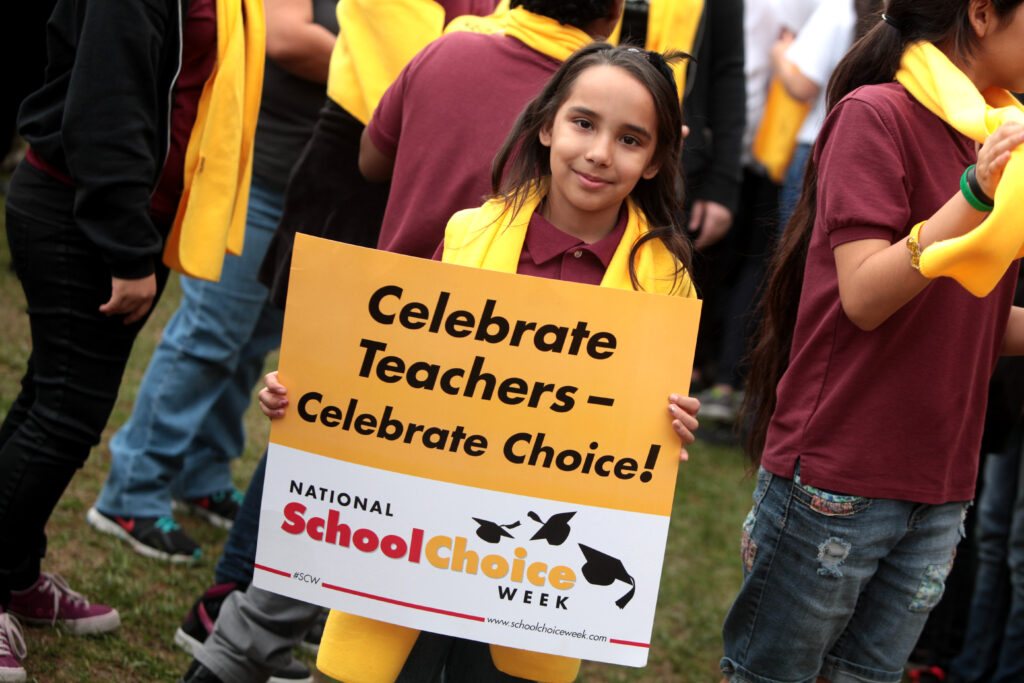
Ultimately, the best thing we can do is expand a nationwide universal school choice system. It’s not surprising that private school choice is growing as traditional public schools are emptying. EdChoice reports that 75 choice programs currently serve 1,574,675 students across 34 states. There are various types of school choice, with the most popular being Educational Savings Accounts (ESAs), vouchers, and tax credit programs.
Florida holds the top spot nationally, with roughly 1.4 million students using various school choice options.
Effective Jan. 1, the Federal Scholarship Tax Credit Program will become the largest school-choice program in the U.S. To date, 31 states have opted in. The program allows taxpayers to claim a dollar-for-dollar credit of up to $1,700 per year ($3,400 for a married couple) for donations to a scholarship-granting organization (SGO). Parents can then use the credit to fund scholarships for educational expenses, such as tutoring, after-school programs, and private school tuition.
In sum, too many public schools are failing, parents are abandoning them, and much-needed changes are underway, with more hopefully to come.

Larry Sand is former president of the California Teachers Empowerment Network.