“The Supreme Court should take its constitutional responsibility seriously by banning Boulder’s climate lawsuit in a way that applies to other cities’ lawsuits”
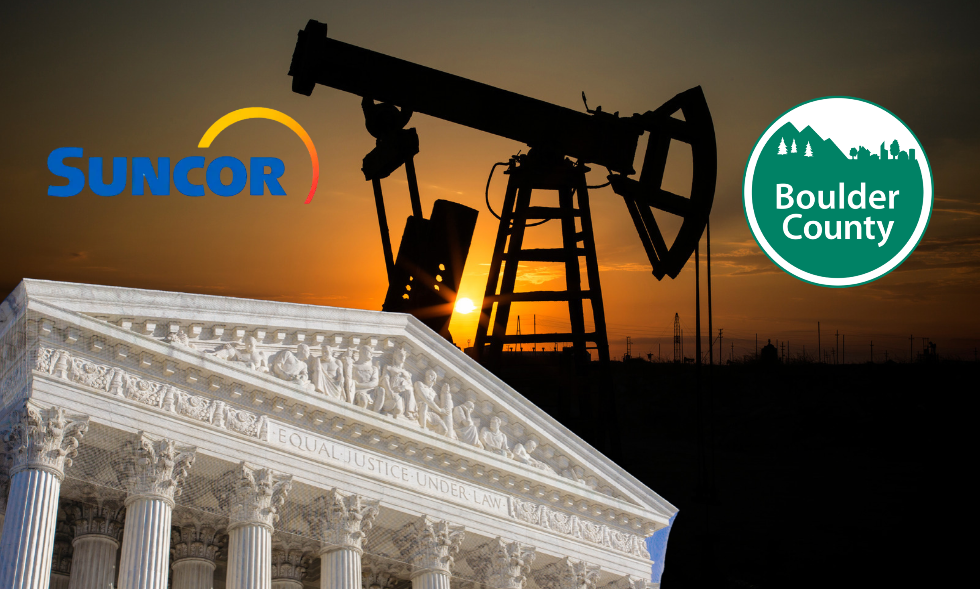
SCHAUMBURG, IL (October 5, 2026) — The U.S. Supreme Court today heard oral arguments in Suncor Energy v. County Commissioners of Boulder County, October 5, 2026, a case that could decide whether state and local governments can use state tort law to hold energy producers liable for the effects of global climate change.
In 2018, the City of Boulder and Boulder County, Colorado, sued ExxonMobil and Suncor Energy in state court. They seek compensation for local costs they attribute to climate change, including wildfires, heat, and other impacts. They allege the companies created a public nuisance and engaged in a civil conspiracy by selling fossil fuels without warning the public about their climate effects. Boulder is one of more than 30 states and local governments that have filed similar suits.
The following statements from experts at The Heartland Institute may be used for attribution. To speak with our experts on this topic, please reply to this email or contact VP & Director of Communications Jim Lakely at [email protected] or call/text 312-731-9364.
“This case is ripe for a definitive and final ruling by the U.S. Supreme Court. Rather than a very narrow decision concerning whether there is room for state torts against oil producers, the Supreme Court should take its constitutional responsibility seriously by banning Boulder’s climate lawsuit in a way that applies to other cities’ lawsuits. The justices should make clear that states and localities are precluded from regulating national and international energy policy through local lawsuits.
“Interstate commerce, which energy production and use clearly is, is solely the responsibility and authority of Congress. International energy policy also falls solely with the authority of the federal government. Any lawsuit or sets of local lawsuits that impose tremendous costs and restrictions of liberty are major questions which also require acts of Congress. The court should make clear that localities and states may not make national policy directly or indirectly through the courts.”
H. Sterling Burnett, Ph.D.
Director, Arthur B. Robinson Center on Climate & Environmental Policy
The Heartland Institute
[email protected]
“The case before the court was nonsense from the beginning: it is insane to try to sue particular energy companies in an attempt to, basically, hold them accountable for bad weather. It’s modern-day superstition, akin to making sacrifices to make it rain, and it’s neither scientific nor constitutionally sound. Boulder cannot prove that Suncor caused any actual harm. Activists are attempting to ‘make the process the punishment’ and cost energy companies enough money battling lawfare that they are driven into bankruptcy, and it’s a precedent the Supreme Court cannot allow.”
Linnea Lueken
Senior Fellow
Arthur B. Robinson Center on Climate and Environmental Policy
The Heartland Institute
[email protected]
“Boulder’s lawsuit is an attempt to use a local courtroom to impose climate and energy policy far beyond Colorado’s borders. Fossil fuels are produced, transported, sold, and consumed through national and international markets, and the emissions Boulder complains of come from billions of individual and institutional decisions around the world. Allowing municipalities to assign responsibility for alleged climate damage to a handful of selected companies invites a patchwork of judicially created energy policies that neither Congress nor the Constitution authorized. The Supreme Court has an opportunity in the Suncor case to draw a clear line: national energy and climate policy belongs at the federal level, not in a collection of state and local tort suits designed to accomplish through litigation what activists have been unable to achieve through legislation.”
Anthony Watts
Senior Fellow
Arthur B. Robinson Center on Climate and Environmental Policy
The Heartland Institute
[email protected]
The Heartland Institute is a national nonprofit organization founded in 1984 and headquartered in Schaumburg, Illinois. Its mission is to discover, develop, and promote free-market solutions to social and economic problems. For more information, visit our website or call 312/377-4000.

H. Sterling Burnett, Ph.D., is the Director of the Arthur B. Robinson Center on Climate and Environmental Policy and the managing editor of Environment & Climate News.

Linnea Lueken is a Research Fellow with the Arthur B. Robinson Center on Climate and Environmental Policy.

Anthony Watts is a senior fellow for environment and climate at The Heartland Institute.