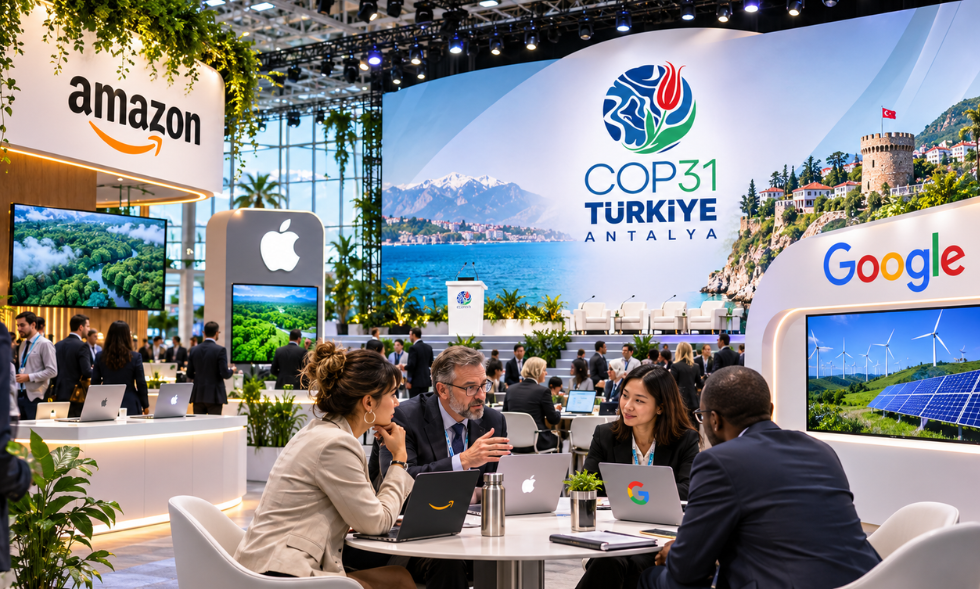
What may be the biggest item on the COP31 agenda is getting almost no press. This may be because it has no content, but that is precisely the issue.
It is item (g) under section 11. “Matters relating to finance,” with this obscure listing:
“Work programme on climate finance, including on Article 9, paragraph 1, of the Paris Agreement in the context of Article 9 of the Paris Agreement as a whole.”
What makes this very big is that Article 9, paragraph 1 is the one that says the developed countries will pay the developing countries for climate action. Here is that text:
“Developed country Parties shall provide financial resources to assist developing country Parties with respect to both mitigation and adaptation in continuation of their existing obligations under the Convention.”
“Shall” means there is a legal obligation to pay. The problem is that “assist” is vague, and there is a huge difference in how the developing and developed countries interpret it.
The developing countries tend to interpret assistance as meaning the developed countries are obligated to pay for all their climate costs. Many, perhaps all, formally submitted national climate action plans are contingent on this funding.
Developed countries have treated assistance as a form of foreign aid with the amount determined by what they feel they can afford. Promises of aid may or may not be kept.
The work programme on climate finance might be tasked with trying to resolve these hugely different opposing viewpoints. Or maybe not. The actual task of the work programme is what is on the table at COP31.
The possibilities vary greatly. At one extreme, the result could be naming specific annual amounts that are due from the developed countries — in effect a payment schedule that rises over time. It could even say which countries owe how much, possibly based on historic emissions. Fantasy calculations like that already exist.
At the other extreme, there might just be the ever popular wished for but not enforceable targets. These numbers also already exist in various forms and amounts.
The work programme results would not themselves be enforceable under the Paris Agreement. As things stand, they would feed into COP32 for deliberation and action.
The two-year work programme was established in COP30. The first year involved collecting opinions from member countries which were reported on November 4, 2026, just in time for COP31. If COP31 does not change the schedule, the final results will be published in time for next year’s COP32.
Note that while any member country can veto a proposed COP decision, this control does not apply to the work programme. Thus, extreme results are certainly possible.
This veto constraint does apply to the COP31 tasking, so it will be very interesting to see how that goes. One possibility is that consensus cannot be reached, which might put the work programme into limbo. Or perhaps it can proceed without COP31 tasking.
Another very real possibility is that the COP31 tasking will be as vague as Article 9, paragraph 1. Studied vagueness is how diplomats often avoid contentious issues, and this issue is as big as they get in COP-world.
Or they may find a middle ground, although it is hard to see one. The work programme has been little publicized so there has been very little public discussion of this momentous financial issue. What is the nature of the climate action financial obligation between developed and developing countries?
One thing that seems certain is, no matter how COP31 handles the tasking of the financial work programme, a lot of countries are going to be unhappy. Maybe that is why the COP’s Financial Theme Day was scheduled on Friday the 13th.
Stay tuned to CFACT to see how this colossal financial issue proceeds.

David Wojick is a former consultant with the Office of Scientific and Technical Information at the U.S. Department of Energy in the area of information and communication science.