IN THIS ISSUE:
- Did Climate Change Stave off the Next Ice Age? Study Says Maybe
- Climate Lawsuits Are a Hidden Energy Tax
- Wildfire Numbers Are Declining
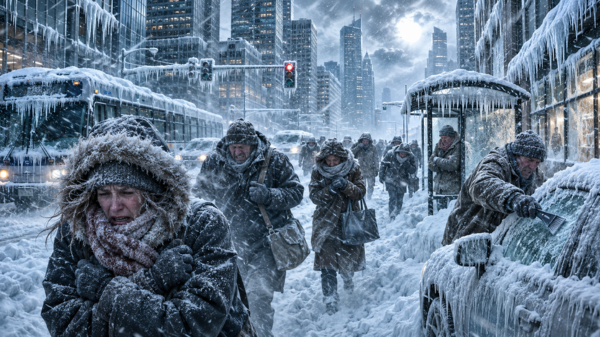
Did Climate Change Stave off the Next Ice Age? Study Says Maybe
The Heartland Institute has long critiqued the “social cost of carbon” calculations used to monetize supposed future damages from climate change. (Consider, for example, some of our presentations at ICCC conferences, in news stories, in commentaries, and at Climate Change Weekly). While we and our allies have identified specific problems with the way this alleged cost is calculated, from the unrealistic models used to the woefully low discount rate, the most telling and persistent critique of the government’s modelling exercise is the failure to include any benefits from a modestly warming world to complete an honest cost-benefit comparison.
If there are, in fact, any long-term harms from climate change, a balanced, comprehensive cost-benefit analysis would almost certainly conclude the net benefits are greater than the costs. And that’s even before we consider the recent suggestion that human greenhouse gas emissions have actually staved off a coming ice age or glacial period. Research published in the journal Science suggests just that, and if true, it would mean the social cost of carbon calculations are superfluous, with the benefits outweighing the costs by a factor of thousands.
Over the last million years or so, ice ages or glaciation periods have lasted around 70,000 to 90,000 years on average, although sometimes a bit longer, and interglacial periods have been much shorter, 10,000 to 30,000 years, with most having been closer to 10,000 than 30,000. Our current interglacial cycle, the Holocene, began about 12,000 years ago, with temperatures rising abruptly and then shifting slightly up and down cyclically to the present, followed by a huge glacial retreat, with the oceans rising by fits and starts as the ice locked up in the miles-deep glaciers which covered much of the Northern Hemisphere melted and formed large and small freshwater lakes and the water flowed into the seas.
It should be obvious to all that ice ages are bad for human life and most wildlife, compressing habitat, limiting arable land, and reducing crop production. Double cropping ceases to be an option. Also, cold temperatures kill far more people than hot temperatures. As a result, an ice age would prove deadly for multiple reasons: crop production would drop sharply; mass hunger, cold-related illnesses, and premature deaths would increase sharply; and probably, with modern technologies, deadly wars for resources and living space would commence. Barring some barely imaginable technological breakthroughs, ports and coastal cities in the Northern Hemisphere would become isolated by hundreds of yards or even several miles from the nearest water, and entire cities, towns, and communities would be scraped from the surface of the Earth and covered by billions of tons of ice. We would truly have a climate immigration crisis as hundreds of millions of people from the Northern Hemisphere tried to move south.
Think “The Day After Tomorrow” but without the immediate chaos, unfolding over hundreds of years rather than across days.
That’s why there was such headline-provoking angst in the 1970s when many scientists noted the Earth was likely overdue for the next glaciation and average temperatures were falling. Top media outlets warned of the possibility of the coming ice age.
In conducting the new research, the scientists involved examined the Laurentide Ice Sheet (LIS), the largest of the Pleistocene ice sheets. They found it reached its glacial minimum about 3,600 years ago and began to expand again approximately 2,000 years ago. It reached its maximum in the 1960s, just as concern about falling temperatures and a looming ice age began making headlines. Then, coinciding with the rapid rise in CO2 emissions, it began exhibiting a negative ice balance, meaning it was retreating rather than continuing to expand.
The editor’s summary in Science identified the importance of the research:
Has anthropogenic warming prevented the next glacial cycle? Young et al. showed that it may have done just that (see the Perspective by Marcott). They looked at the evolution of the Barnes Ice Cap on Baffin Island, Canada, the last remaining piece of the Laurentide Ice Sheet (LIS), which once covered much of North America and was the largest of the Pleistocene ice sheets. After shrinking throughout much of the early- and mid-Holocene, the LIS began to grow again around 2000 years ago but then began shrinking once more around 1960. The authors attribute this reversal to anthropogenic greenhouse forcing, evidence that humans caused the termination of the next glaciation.
If true, this is great news that should be topping headlines all over the world, especially as much of the world is gathered in Turkey at the 31st U.N. Conference of the Parties intending to reverse the trend in CO2 emissions. Governments want to halt the very factor that is preventing a natural glaciation cycle from wiping billions of people off the globe. I’ve seen a few headlines about the study in science magazines, but it’s virtual media silence on the daily cable, satellite, and television news and in the daily major print media. Where are the New York Times or Washington Post headlines touting the fact that global warming or climate change has saved us from the next ice age and the destruction it would bring? Crickets!
If this study is accurate, why is COP 31 still meeting and trying to end fossil fuel use, aside from bureaucratic momentum? We should be throwing a big carbon-dioxide-intensive party celebrating the salvation of modern civilization.
Instead, this research is getting the silent treatment, as have similar studies and claims in the past. Carbon Brief reported in 2012 on aNature Geoscience paper that suggested climate change had delayed a “lethal ice age” by at least 1,500 years, giving humanity time to mitigate, plan for, and/or adapt to the glaciation if it should come. No applause or cheering accompanied the study’s findings. Instead, politicians and activists ignored it and continued pushing for carbon dioxide limits to fight warming. In 2016, a climate alarmist organization, the Potsdam Institute for Climate Research, actually published a study indicating human-made climate change suppressed the next ice age. This research called into question the organization’s previous alarmist claims about humans causing dangerous climate change. The Environmental Defense Fund (EDF) noted this study but tried to spin it into a scare story, arguing the lack of an ice age would affect the planet for the next 100,000 years.
I don’t know whether climate change has staved off the next ice age. If it has, I still doubt carbon dioxide, a minor trace gas in the atmosphere, is the control knob responsible. Large cosmic forces far beyond our control have historically driven glaciations or deglaciations, with no help or hindrance from CO2. Instead—and we can’t know this—previous interglacials may have comprised warmer periods of ice retreat or stasis, interspersed with cooler periods and ice expansion, without tripping into a full ice age.
Regardless, the moral of this story is not that the Earth is being saved from an icy death—which, of course, I hope it is—but that almost everyone with power over our lives is ignoring this possible good news in their ongoing pursuit of life- and freedom-denying limits on access to fossil fuels. Evidently, they can’t let good news get in the way of the march toward authoritarianism.
Sources: Science Alert; Climate Realism; Science
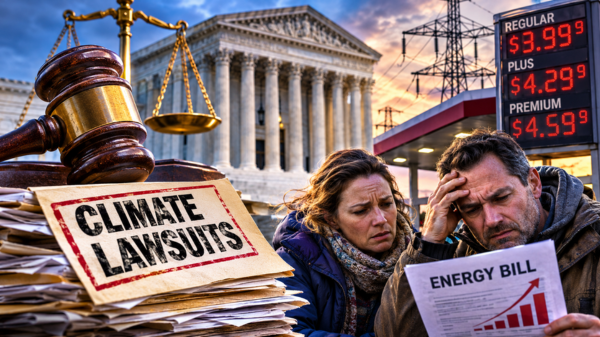
Climate Lawsuits Are a Hidden Energy Tax
We at The Heartland Institute have often discussed the bad science, bad law, bad policy, and high hidden costs of the dozens of climate lawsuits filed against oil and gas companies by cities and climate lobbying firms (here, here, here, and here, for example), including filing our own friend of the court brief in one case.
Recently, the Hon. Jason Isaac, founder and CEO of The American Energy Institute, wrote a powerful analysis of the hidden, ever-mounting costs these lawsuits impose on consumers and society, costs arising even though the lawsuits that have been decided thus far were won by the defendant energy firms.
“Climate liability lawsuits have become an attractive way for cash-strapped city halls to go looking for someone else’s money,” writes Isaac. “What happens to your electric bill when a county jury decides how much American energy companies owe for the weather?
“That was the question before the Supreme Court on October 5 in Suncor Energy v. Board of County Commissioners of Boulder County, and the justices’ questions during oral arguments showed just how far the consequences could extend beyond Suncor and ExxonMobil,” writes Isaac. “The price tag ultimately could reach your pump and power bill.”
The word “ultimately” is not accurate. These lawsuits are already increasing people’s energy costs. Every day these lawsuits are in dozens of courts across the country, the attorneys’ fees are mounting, and those costs are passed on to drivers and electricity users by the companies being sued and by taxpayers in those jurisdictions pursuing the claims. These costs have almost certainly topped tens of millions if not hundreds of millions of dollars so far, since such lawsuits have been ongoing in one jurisdiction and another for more than a decade.
Isaac describes the legal costs:
The dollar figures involved are not small. New York’s Climate Superfund Act, before a federal judge struck it down this past September, sought $75 billion from energy producers. Multnomah County, Oregon, is seeking more than $51 billion in a single suit. Add up even a handful of the roughly 60 pending cases and you are talking about hundreds of billions of dollars in potential liability, and that money does not come out of a shareholder’s pocket. It gets priced into the product, the same way any cost of doing business does. When a company defends against dozens of lawsuits in dozens of courtrooms for years, that legal exposure becomes a line item, and companies pass it to customers long before any jury reaches a verdict.
That concern was not hypothetical to the justices on Monday. Justice Brett Kavanaugh pressed Boulder’s lawyer on what happens if these lawsuits multiply, suggesting that enough of them could bankrupt defendants and noting that any manufacturer, any business, could face similar liability theories. He later asked whether the Court’s longstanding concern about judges making ad hoc climate policy should apply just as much to a six-person state jury in Boulder.
In addition to identifying the indirect but significant costs being passed onto consumers already, Isaac explains how these lawsuits cost jobs now and, if ultimately successful, will cost more in the future; how they will affect electricity prices; and how they undermine U.S. national security, since the lawsuits can’t touch the state-owned oil companies in China, Iran, Mexico, Russia, and Saudi Arabia, to name just a few, giving them a competitive advantage against the private oil companies facing the barrage of expensive lawfare in the United States.
Isaac argues these lawsuits are less about preventing climate change than filling the coffers of cities struggling with budget problems, detailing the large gaps between cities’ promised programs and commitments and their current revenue streams. Payouts from big oil could be used to plug the gap, but the money would come at the expense of U.S. energy, geopolitical, and economic security.
Source: Daily Wire
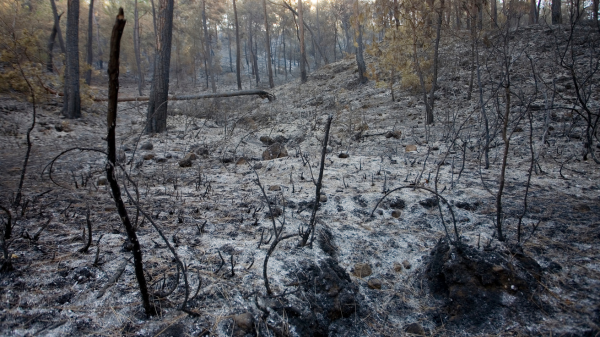
Wildfire Numbers Are Declining
Recent data confirms what The Heartland Institute has long noted: amid modest climate change over the past century, the number of wildfires and the acreage lost have declined.
“State of Wildfires 2025–2026,” forthcoming in the journal Earth System Science Data, reports, “During the March 2025–February 2026 fire season, global burned area (BA) was 18 percent below the 2002–2024 average and global fire carbon (C) emissions were also 20–31 percent below average, making it one of the lowest years on record.” The study reports on comprehensive research assembled by 60 authors from research institutes and universities in 20 countries.
While, as is true in every year, different regions are affected by wildfire differently, with some regions experiencing more wildfires than in previous years and others experiencing less, globally on average the survey found the acreage lost to wildfires during the 2025 through 2026 fire seasons was nearly 20 percent below the long-term average.
Longer-term data from NASA suggests the decline measured in this paper is part of a longer-term pattern. Data from NASA’s MODIS satellite system recorded an approximately 1.5 percent annual decline in wildfires globally between 2001 and 2023, a total decline of more than 30 percent in global acreage of wildfire losses.
An earlier paper, published in the same journal, that examined smaller fires possibly missed by MODIS also confirmed the decline, pegging it at about 24.2 percent over 20 years. That paper found the decline “is primarily driven by a decrease in fires in savannas, grasslands, and croplands.”
Another independent source of data on global wildfires is the European Space Agency’s (ESA) satellite network. As discussed in Climate at a Glance: Global Wildfires, since 1982 the ESA has also recorded a significant decline in wildfires globally.
The most recent paper warns climate change is expected to make “fire weather” worse and lead to an increase in wildfire losses at some indeterminate time in the future. When it comes to wildfire predictions, however, the future never seems to arrive. Citing climate models, the U.N. Intergovernmental Panel on Climate Change has been predicting worsening wildfires since the organization’s inception in 1988, yet during a period of steadily rising carbon-dioxide emissions and a slight rise in temperatures (including a couple of hiatuses in temperature rise) wildfires have declined dramatically.
The simple fact is neither carbon-dioxide levels nor global average temperatures is the control knob for wildfires. Human activities such as settlement patterns, land/forest management, and arson often result in wildfires, and that has nothing to do with “climate change.”
Sources: Watts Up With That; Earth System Science Data; Climate at a Glance: Global Wildfires; Climate at a Glance: U.S. Wildfires