IN THIS ISSUE:
- Turns Out Climate Change Isn’t Causing ‘Mass Extinctions’
- Offshore Wind Has an Unaccounted Major Environmental Impact
- Greenland’s Temperature Trends Don’t Track Climate Change Predictions
- Patients Prefer Doctors Who Focus on Health, Not Climate Concerns

Turns Out Climate Change Isn’t Causing ‘Mass Extinctions’
One of the persistent claims made across the twentieth century is that humans are causing mass extinction of species, both in rate and numbers, unseen since the end of the age of dinosaurs. I discussed this claim at length and explained why it was not supported by the data and evidence, in my dissertation, “Ecosystemic Goods: The Pros and Cons of a Property Rights Approach.”
More recently, many researchers, green-energy profiteers, green-virtue-signaling politicians, bureaucrats with environment and energy portfolios, and the fawning mainstream media have asserted climate change has replaced other causes as the driving force behind fast-rising extinction rates. The high point of this alarmist rhetoric perhaps was when the misinformed and misguided youth Greta Thunberg was invited to berate the United Nations in a speech made famous on video. Among the many false claims Thunberg made, she said, “People are dying, entire ecosystems are collapsing, we are in the beginning of a mass extinction. . ..” (Emphasis mine. Btw, that portion of the video is used in the opening of The Heartland Institute’s Climate Realism Show each week.)
There is one tiny problem with this claim, as recent research reinforces: It probably just ain’t so!
A study published in October in the Royal Society’s Proceedings B finds that in the past century, amid ongoing climate change, extinction rates have slowed, and they are currently at their lowest in the past 500 years. The findings confirm what I posited in my dissertation: past claims of rapid extinction were based on flawed extrapolations of extinctions on islands to mainland habitats and ecosystems. Island biogeography studies have never been a solid basis for projecting mainland extinctions nor of the types of species threatened.
From the article abstract (emphasis mine):
Biodiversity loss is one of the greatest challenges facing Earth today. The most direct information on species losses comes from recent extinctions. However, our understanding of these recent, human-related extinctions is incomplete across life, especially their causes and their rates and patterns among clades, across habitats and over time. Furthermore, prominent studies have extrapolated from these extinctions to suggest a current mass extinction event. Such extrapolations assume that recent extinctions predict current extinction risk and are homogeneous among groups, over time and among environments. Here, we analyse rates and patterns of recent extinctions (last 500 years). Surprisingly, past extinctions did not strongly predict current risk among groups. Extinctions varied strongly among groups, and were most frequent among molluscs and some tetrapods, and relatively rare in plants and arthropods. Extinction rates have increased over the last five centuries, but generally declined in the last 100 years. Recent extinctions were predominantly on islands, whereas the majority of non-island extinctions were in freshwater. Island extinctions were most frequently related to invasive species, but habitat loss was the most important cause (and current threat) in continental regions. Overall, we identify the major patterns in recent extinctions but caution against extrapolating them into the future.
A number of species lost to extinction over the past 500 years were the result of commercial hunting for meat, hides, and feathers. However, most species then, and as it seems is the case still, have been lost to the introduction of invasive species and, most importantly, habitat loss from conversion of wildlands for agriculture, dams, urban development, and other types of anthropogenic land alterations.
“For their study, [Kristen] Saban and [John] Wiens analyzed rates and patterns of recent extinctions, specifically across 912 species of plants and animals that went extinct over the past 500 years,” wrote my Heartland Institute colleague Anthony Watts in describing the study. “All in all, data from almost 2 million species were included in the analysis.”
The good news is that extinctions of plants, arthropods, and land vertebrates peaked about 100 years ago and have declined since then, even as the climate has changed.
Directly addressing this point in a University of Arizona interview, Wiens said, “We show that extinction rates are not getting faster towards the present, as many people claim, but instead peaked many decades ago.”
So much for climate change driving the sixth great mass extinction. If this study is correct, climate alarmists will have to drop this talking point from their litany of climate horrors.
Sources: Proceedings B of The Royal Society; Watts Up With That

Offshore Wind Has an Unaccounted Major Environmental Impact
A new study seems to confirm what previous studies have suggested: industrial offshore wind facilities change the structure and dynamics of the seas where they are constructed, compromising the ocean’s subsurface ecosystems.
The researchers involved in the study conducted a series of climate model simulations to understand the dynamic impact of operating wind turbines on surface waters and the subsurface stratification of minerals, elements, chemicals, and the sea life that depend on specific conditions that existed before the wind facilities were installed.
One effect offshore wind developments have on the surrounding area is to diminish wind speeds and, partly as a result of that, to increase surface and near-surface temperatures by 0.3° to 0.4°C. This results in changed stratification below the surface and less mixing of ocean waters.
Based on this, the authors write: “Offshore wind farms may induce changes in the upper ocean and near-surface atmosphere through coupled ocean-atmosphere feedbacks. . .. These changes may drive oceanic and ecological responses.”
Indeed, oceanic and ecological responses are precisely what previous peer-reviewed research published in the past four years has found, and the ecological responses are harmful, not beneficial or neutral to the species adapted to the preexisting ocean ecosystem.
Studies published in 2022 in the journals Nature and Frontiers in Marine Science detail harmful impacts of offshore wind development on the surrounding marine ecosystem. Those papers suggest the “wind wake” effect of offshore wind farms could dampen annual primary production (the amount of foundational food sources for sea life, such as phytoplankton, plankton, seaweed and small oceanic arthropods, and crustaceans) in the area encompassed and beyond by the wind farms by as much as 10 percent or more. Less food for fish and sea-mammals is a bad thing. The same modeling indicates the offshore industrial wind projects slow ocean currents, resulting in the decreased cycling of dissolved oxygen in the affected areas, causing low oxygen concentrations. Reduced oxygen concentrations for the food chain are also bad, at least if one is concerned about sea life and ocean fisheries.
These findings were discussed and referenced in a 2024 report the Congressional Research Service produced for the U.S. House of Representatives.
Sources: Science Advances; Watts Up With That
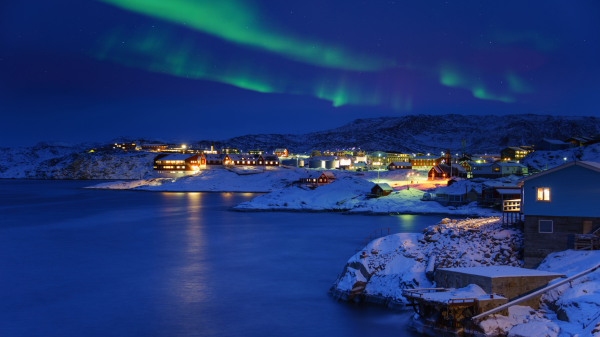
Greenland’s Temperature Trends Don’t Track Climate Change Predictions
Research published in the journal Weather and Climate Dynamics examined the temperature history of Greenland from 1900 through 2015, concluding temperature changes there did not follow the climate script of being driven by greenhouse gas emissions.
In fact, despite a significant increase in atmospheric carbon dioxide concentrations beginning in the late 1940s, there has been hardly any net increase in temperatures in Greenland, a region where climate change is supposed to exhibit one of the greatest amounts of warming.
As No Tricks Zone summarizes:
Greenland temperature stations indicate there was an abrupt 2.9°C warming trend from 1922-1932 (10 years) that was almost identical to the 3.1°C warming trend from 1993-2007 (14 years).
Between the two warming periods (identified as WP1 and WP2 in the study) was an overall ~3°C cooling from 1933-1992.
These findings are similar to those found in an earlier study in which the authors wrote, “the annual whole ice sheet 1919-32 warming trend is 33% greater in magnitude than the 1994-2007 warming.”
In the end, “[l]arge-scale atmospheric patterns strongly determine Greenland’s regional climate through air mass advection and local weather conditions, making them essential to understand atmospheric variability,” the authors of the new study write.
In Greenland, it seems, atmospheric greenhouse gas concentrations need not apply as drivers of temperature. And if Greenland hasn’t warmed that much, warming there can’t be causing the much-ballyhooed but little-documented loss of ice mass there, either.
Sources: Weather and Climate Dynamics; No Tricks Zone

Patients Prefer Doctors Who Focus on Health, Not Climate Concerns
In recent years the practice of medicine has become increasingly compromised by efforts to modify medical treatments and practice to mitigate long-term climate change. Medical care is supposed to be about preventing and/or treating illness and injury with minimal pain for the patient. Climate scolds, however, have been pushing medical practitioners to modify their efforts, at the risk of patient health and welfare, to minimize the profession’s impact on climate change.
This can be seen in the requirement at some medical schools for doctors to be taught the consensus view of climate change in order to modify their future practices and influence their future patients’ behaviors. Time spent indoctrinating medical students in climate alarm not only misinforms them about the current state of the climate and the known causes and consequences of climate change but also takes time away from medical training in the prevention, diagnosis, and treatment of illnesses and injuries.
Other efforts to modify medical practices to accommodate green concerns include pushing the manufacturers of inhalers used to treat potentially fatal breathing problems such as asthma and COPD to use propellants that emit less greenhouse gas. The alternatives may modestly reduce net greenhouse gas emissions from inhalers, but they are more expensive and less effective. Making the switch would put lives at risk for no climate gain.
In addition, climate researchers and activists have advocated and lobbied in recent years for doctors and hospitals to use less anesthetic during medical procedures and use less-effective means of sterilizing medical devices. You read that right: with infections being one of the biggest risks during hospitalization, climate scolds want hospitals to fight climate change at the risk of spreading deadly infections. The same climate alarmists also call for doctors to allow their patients to suffer a bit more pain in the quest for climate mitigation. The Marquis de Sade could hardly have dreamed up a more perverse prescription for health care advice than climate alarmists have.
Fortunately, it seems that the public prefers doctors that put patients’ personal health needs above environmental or climate protection.
As part of a new study published in the journal The Lancet, researchers in the Netherlands undertook a double-blind randomized survey of a representative sample of the population: 1,536 participants above 18 years of age, split equally between male and female. The participants were asked questions about a variety of medical problems ranging from mild to severe and with a range of four options for treatments for each medical issue, ranging from a less “sustainable” treatment offered with no reference to environmental sustainability; a treatment offered that was considered more sustainable without the medical providers mentioning that sustainability was a consideration in their suggestion; the medical staff offering the patient a choice of treatments, identified as one more sustainable and one less; and the medical advisor recommending a particular course of treatment and explicitly stating it was being recommended because it is better for the environment.
The results, as described by the paper, were clear:
Participants receiving the Less Sustainable advice . . . generally had higher trust scores than participants receiving one of the other three types of advice. Participants receiving the Sustainable made Explicit advice . . . generally had lower trust scores than those receiving one of the other three types of advice. … Post-hoc analysis indicated that differences in trust scores were primarily driven by high severity conditions and varied across medical problems.
In short, the people surveyed wanted doctors to focus on treating their health problems regardless of sustainability concerns. The more explicitly sustainability was included in the suggested medical intervention, the less the participant trusted the recommendation offered.
This research suggests doctors who drink the sustainability or climate Kool-Aid and make treatment recommendations influenced by the environmental concerns the medical provider may have, instead of strictly focusing on what treatment would best help the patient, may be jeopardizing their patients’ trust in them, possibly losing patients to less environmentally woke doctors or, worse still, causing them to forgo necessary treatment altogether. The harder a doctor (or, one would presume, medical facility) pushes green concerns as part of treatment, the less trusted they are.
Source: The Lancet