As an ardent supporter of abolishing public—or, more accurately, government-run—schools, I recently came across an article by Chad McLeod, an educator, consultant, and founder of Sociis Education, who makes several important points that highlight the differences between how businesses and public schools are managed.
McLeod writes, “Imagine if America’s favorite businesses had to operate by the same rules as your local public school. Starbucks would open every morning to a crowd of customers assigned by ZIP code. Managers wouldn’t be able to choose their market or tailor their product to the people most likely to buy it. And if the espresso machine broke, the manager wouldn’t just replace it. They’d apply for a grant, form a committee, hold a public hearing, and eventually buy a replacement from a state-approved vendor—at triple the price—sometime around next spring.”
He then adds that schools typically serve students who live within a specific geographic area. Obviously, there are no rules that restrict businesses from attracting people from any ZIP code.
While McLeod makes many salient points, I need to add one: the damage teacher unions have inflicted on public schools. If a business fails to fulfill its mission, it loses customers, may have to fire some employees, and eventually goes belly up. But due to teacher-union mandates, the vast majority of government-run schools cannot fire incompetent teachers, and schools don’t close for poor performance.
To be sure, the great majority of our educators range from acceptable to excellent. However, as former GE CEO Jack Welch has stated, the bottom 10 percent of any field should be replaced. In a similar vein, Eric Hanushek has asserted that eliminating the bottom-performing 5 percent to 7 percent of teachers would enable our education system to rival Finland’s world-class system.
An example of the problem’s breadth emerged in a 2012 lawsuit in California. During the Vergara trial, it was revealed that only 2.2 of the state’s 300,000 teachers (0.0008 percent) were dismissed for unprofessional conduct or unsatisfactory performance in any given year. This compares with 8 percent of private-sector employees dismissed annually for cause. Applying the 8 percent figure to teachers would mean that about 24,000 of the lowest-performing teachers in California should be let go each year.
When discussing unions, it’s important to note that there are significant differences between those in the private and public sectors. These differences aren’t just technical—they shape how negotiations affect workers, employers, and the broader community. As Americans for Fair Treatment explains, in the private sector, unions and employers operate under a mutual understanding that if demands get too high, there’s a real risk the company could go bankrupt.
“This risk ensures that both sides negotiate with more caution, striving to strike a balance that keeps the company afloat. In theory, the mutual need for financial survival should keep everyone in check.”
However, in the public sector, unions negotiate with government entities, people who, in many cases, the unions helped put in power. Additionally, bankruptcy isn’t an option—governments can’t simply go out of business. This lack of a financial breaking point reduces pressure on public-sector unions to moderate their demands. As a result, agreements are often more generous than those feasible in the private sector, and ultimately, it’s the taxpayers who foot the bill.
Government involvement in schools has a dubious history. As the late Cato Institute scholar Andrew Coulson noted, “Shifting the reins of educational power from private to public hands would, they promised, yield better teaching methods and materials, greater efficiency, superior service to the poor, and a stronger, more cohesive nation.”
In the 1830s, education reformer Horace Mann viewed public schools as a “crucible of democracy.” He sought to have the state take over schools and raise taxes to fund them. Mann even predicted that if public schooling were widely adopted and given enough time to take effect, “nine-tenths of the crimes in the penal code would become obsolete,” and “the long catalog of human ills would be abridged.”
Clearly, Mann was dead wrong. Almost 200 years later, our nation, with its massive education bureaucracy, is more divided than ever, crime rates are high, and we have more “human ills” than we can handle. And taxpayers fork over about a trillion dollars a year in the process.
While Mann’s utopian goals obviously didn’t come to fruition, they did create a link in people’s minds between the “institution of public schooling and the ideals of public education” that, sadly, still exists today.
But the status quo is simply unacceptable.
Government removal from education could not happen overnight, but a 12-year phase-in would be workable. Let the kindergartners be the first group to leave, and add a grade each year through grade 12, so the conversion would be complete in 13 years. That way, every child now enrolled in a public school could complete their K-12 education the old-fashioned way. Also, that amount of time will be needed to help existing private schools prepare for the influx of students they would receive and to give new school operators time to plan for full-scale privatization.
This will be a tough sell, to say the least. The bureaucrats and teacher-union bosses will do everything they can to preserve the status quo, and it will take time for many Americans to see the light.
One question the naysayers are sure to ask is about poor people who can’t afford their children’s education. The answer is that we will do for schooling what we do for food. If a family demonstrates it can’t afford groceries, we provide a SNAP or EBT card as a subsidy. Similarly, we can assist impoverished families by subsidizing their children’s education. Everyone else pays their own way—just as they do for food.
As the 250th anniversary of our country’s independence from England approaches, it’s time for the government to get out of the education business and, at the same time, save taxpayers oodles of cash. We must disentangle ourselves from a massive, one-size-fits-all, centralized government education complex and its unions. Let full educational freedom ring!
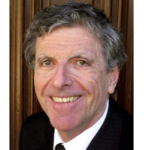
Larry Sand is former president of the California Teachers Empowerment Network.