Forward this issue to your friends and urge them to subscribe.
Read all Life, Liberty, Property articles here, and full issues here and here.
In This Issue:
Life, Liberty, Property #157
- Data Center Hysteria and the Decay of America’s Political System
- Video of the Week: What The Flock?! – In The Tank #549
- Washington Post Condemns Federal Overspending
- Constructive Stories of Virtue and Vice
DON’T MISS THIS!
Heartland and Ron DeSantis
Join us on Sept. 3

Data Center Hysteria and the Decay of America’s Political System

The war on data centers has intensified to the point that localities all across the country are banning them outright or stopping them through targeted regulation such as zoning decisions. Although people’s concerns are understandable, the hysteria over these enterprises exemplifies what has gone wrong with the American political system since the rise of progressivism at the beginning of the twentieth century.
Public opposition to data centers has increased by 12 percentage points in just the past four months, with 61 percent now saying they oppose building new data centers, according to the Annenberg Public Policy Center.
Opponents of data center construction held 142 protests in 42 states on July 18. Expressed concerns include excessive water use, noise, high electricity demand and potential power outages, air pollution, and lowering of land values in the surrounding communities.
Predictably, politicians are turning against data centers.
On Tuesday, Gov. Josh Shapiro of Pennsylvania signed an executive order restricting construction of data centers, bragging that he was imposing “the strictest guardrails in the nation.”
Asserting “a long history in Pennsylvania of industry running roughshod over our communities to make a buck,” Shapiro said “we will not be bullied” or “bulldozed” by developers and their lawyers, in a speech marked by fierce moral dudgeon.
Critics noted that Shapiro, who is up for reelection this year, strongly supported data center construction in the state, even including them in a fast-track approval program, until the recent wave of grassroots objections spooked him.
Across the country, 211 county and local governments now have active moratoriums on data center construction. There are more than 3,000 such centers currently operating in the United States, with 1,500 others under construction, the Pew Research Center reports. Construction is moving to rural areas, with two-thirds of planned facilities set for locations in the wide-open spaces, whereas 87 percent of existing data centers are in urban areas.
It is reasonable to worry about potential harms from any human enterprise. Concerned citizens have a right to inform property owners about such possible damages and request that they reconsider their plans. In fact, people have a moral responsibility to do so.
That, however, is where their rights end. There are very good reasons for this limit. No one can foresee the full consequences, positive and negative, of any proposed enterprise—or even calculate them afterward.
That is why we have courts: to examine claims of harm people may have done to others, and to determine what is just recompense and any deserved punishment. An objective and impartial civil justice system removes the need for extensive regulation and preemptive limits on human creativity.
With courts available to adjudicate disputes, governments should not impose targeted taxes or regulations to impede proposed business activities, nor use subsidies to encourage such investments. In the case of the data centers, governments should leave them alone to pay for the energy they use, subject them only to reasonable laws that apply to everyone, give no preferred access to water and other natural resources, and so on.
In short, governments should not allow anyone to harm others, and they should use the civil and criminal courts to examine and decide on the validity of assertions of actual damage, instead of imposing preemptive regulatory command and control based on unproven worries.
This approach optimizes justice, social cohesion, and the use of resources. Over the years and through the common law, courts can ascertain the Social Cost of Whatever, and free enterprise can measure those costs against the underpublicized Social Value of That Same Thing. Government regulation is a very poor substitute for that.
In a free society, then, you don’t get to decide what other people do with their property. That goes for “you” plural, too. The fact that many people may want to band together to determine how to use someone else’s property or limit their liberties does not make it right. Stealing and coercion are wrong regardless of the number of people who agree to the theft and duress.
There is an obvious alternative to this gangster racket. People who do not want a data center to be built on a particular property have a simple solution at hand: buy the land.
If you cannot afford to buy the property, you can put together a consortium to buy it. Instead of organizing protests, you can use those skills to arrange a purchase.
If you and your neighbors can afford the property but prefer not to buy it, you have the same option as everybody else: mind your own business.
If you buy the property, you can use it however you like—as long as your neighbors or other nearby busybodies don’t object to your plans as you did to the proposed data center. Mission accomplished.
The company that wanted to build the data center will just go somewhere else, and take with it the jobs, local tax revenue, and increased prosperity the center will generate for some less- meddlesome community.
This approach to governance brings about the greatest prosperity and human thriving possible in a world of limited resources. Buying and selling of properties, goods, and services ensures that the people of a particular place will put all available resources to their best feasible uses, as prices encourage the purchase and sales of these things by those to who expect to make the highest-valued uses of them.
Unfortunately, that’s not good enough for an ever-increasing number of Americans. The opposition to data centers parallels the rise of support for democratic socialism in reflecting a widespread valorization of collectivism over individual rights.
Though concerns are understandable, and those who want to build these centers should listen to objections, the reflexive demand for control over other people’s property represents the long decline of the American Way and the rise of collectivism.
Restoration of property rights is the only way for the United States to renew prosperity and human flourishing. Maybe we should start with the data centers.
Sources: KYW Newsradio Philadelphia; Pennsylvania Capital-Star; U.S. Data Center Moratorium Tracker
Video of the Week
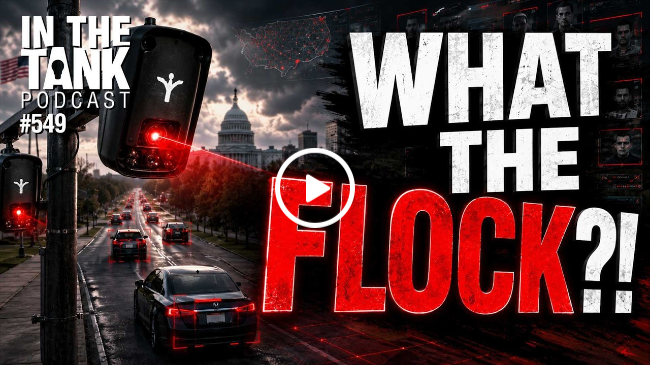
One of the biggest tech-related debates right now, which also overlaps with concerns about privacy rights and government overreach, is over new Flock camera systems being used on public and private property. These camera systems are interconnected, in part so police departments can more easily coordinate between jurisdictions to solve crimes… but at what cost? Supporters say it’s worth it to stop crime, opponents say it’s an invasion of privacy and expansion of the surveillance state. The panel discusses how much is too much, and whether regulations already exist to limit public surveillance.
The Latest Heartland Institute Report
‘Today’s crisis is a product of government errors, not greedy landlords, institutional investors, and so-called market failure.’

Washington Post Condemns Federal Overspending

The Washington Post editorial board just sounded an alarm that the federal deficit is causing unnecessary economic damage, making the obvious point that “Washington has lost control of federal spending” and arguing that the pandemic excuse no longer applies:
The last time the monthly deficit exceeded July’s level was in March 2021, when pandemic relief spending drove the figure to $658 billion. But today, the government is not dealing with the fallout of a historic pandemic, and unemployment is low. The deficit swelled anyway.
Well, that depends on what you decide to include as pandemic “fallout.” I have pointed out, in this newsletter, in op-eds, and in my Heartland Institution paper on the affordability crisis, that the pandemic was no excuse even when Congress and President Joe Biden rapidly increased federal spending starting in January 2021. Just when government spending was heading back down to the historical trend line, Biden and the Democrat-controlled Congress jacked it way up with a truly demented spending spree (see Figure 17 in the linked document) that raised annual government expenditures by well over a trillion dollars.
The WaPo board acknowledges that “[u]nrestrained pandemic spending, and the round-the-clock money printing that took place to enable it, contributed to the inflation that followed and has still not resolved,” and “[i]t will be nearly impossible for the Federal Reserve to deliver on its mandate to return inflation to 2 percent if the government doesn’t rein in its cash flow.” These are points I’ve made regularly.
However, the government spending and Federal Reserve money-printing did not just “contribute to” the inflation that has indeed “still not resolved.” They were the source of it all. The WaPo board’s observation that inflation will not abate if the government does not cut spending is basically unassailable. There are some possible technical objections to it, but the general point remains true.
The Post board is right to criticize Congress and the president for their failure to cut the deficit and the damage it is doing. They deserve additional credit for choosing not to name the Republicans for their failure to cut spending since January of last year. The GOP thoroughly deserves obloquy for that, but the Democrats set them up for disaster by putting so much new spending in the pipeline before losing their House majority in the 2022 elections, a demotion they richly deserved.
The necessary course of cutting well over a trillion dollars from the federal budget is not a proven way of winning subsequent elections. Republicans, however, could and should have made at least some spending cuts in the past 18 months.
This profligacy with other people’s money is transferring money very rapidly from current taxpayers to bond holders, who are generally wealthier than the average American and include other nations’ governments and central banks. “Net interest paid by the Treasury Department so far this fiscal year totals $931 billion,” the editorial notes. “That’s nearly a trillion dollars of taxpayer money spent not on defense or education or scientific research but on servicing the money politicians have already spent.”
What is most interesting about these observations from one of the nation’s longtime bastions of managerial-state liberalism is the board’s clear statement that the cause of America’s cataclysmic federal deficit is excessive spending, not a shortage of revenues. “Politicians are addicted to making promises that require sources of money they don’t have,” they write. “Their failure to control spending remains one of the biggest threats to the country.”
That is correct, and it is good to see The Washington Post say it.
If only they had done that in 2021 when the spending was initiated.
Source: The Washington Post
Constructive Stories of Virtue and Vice

A free society depends on widespread public acceptance of a set of values to maintain it. Prominent among these are personal responsibility, self-reliance, honesty, kindness, charity, humility, and self-control. A primary source of guidance is the tradition of the Seven Virtues (or the Seven Heavenly Virtues) and the Seven Deadly Sins, from which the above-named once-dominant values derive.
One of the most effective and enduring ways of conveying values is through popular stories and tales, of course, especially those aimed at children. During the long march of leftists through the nation’s institutions since the early years of the twentieth century, Communists and other collectivists directed attention away from the values on which America was founded, substituting ones more in line with their totalitarian aims. They are still doing so today, increasing their lockdown on the American mind, writes Jack Miller Center Teacher Education Fellow Danton Kostandarithes at Law & Liberty:
Recent winners of the coveted Newberry and Caldecott prizes are illustrative. Recurrent themes include personal identity, mystical powers, the importance of discovering one’s heritage, and the challenge of navigating cultural boundaries. A common thread is non-judgmentalism, since sharp distinctions between right and wrong would be too harsh in our therapeutic world.
As an alternative to indoctrination into these values, Kostandarithes recommends readers consider “the forgotten world of Thornton W. Burgess,” an American novelist and naturalist whose body of work “captures the moral certitudes of an earlier era.”
Born in 1872 in the town of Sandwich on Cape Cod in Massachusetts, Burgess “created the endearing characters of Jimmy Skunk, Spotty the Turtle, Billy Mink, and countless others,” Kostandarithes writes. “Burgess’s 900-plus stories were published around the world in multiple languages. Many remain in print today, often the mainstay of homeschoolers and parents in search of wholesome refuges for their children.”
Burgess’s stories encourage a healthy interest in the world around us and a respect for reality and one’s own uniqueness and limitations, Kostandarithes writes:
Where modern children are encouraged to focus on themselves and their needs and to embrace and celebrate what they believe to be true, the children of Burgess’ day were urged to learn what is right. Rereading these stories helps us appreciate why narcissism has replaced the character formation of yesteryear
Burgess’s background as a naturalist suffused the stories with charm and character while identifying human virtues and vices as a natural part of life and a matter of individual choice:
Through lively creatures, Burgess taught children that mean and selfish actions are morally wrong, but also part of nature. He did not urge them to become social activists or nurse grievances. For example, in “A Fisherman Robbed” (1919), the predatory King Eagle robs poor and hungry Plunger the Osprey of his hard-caught fish. An outraged and puzzled Peter Rabbit asks wise Jenny Wren to explain. “He isn’t kingly in his habits,” she states, “not the least bit. He never hesitates to rob those smaller than himself.” Yet she adds: “The best thing I can say of him is that he takes a mate for life and is loyal and true to her as long as he lives.” Thus Burgess notes that even a flawed animal (and implicitly a person) can have redeeming qualities. It’s a jarring contrast from the self-appointed judges of cancel culture.
Providing an additional motive for personal character development, the stories show “how people themselves are injured by their vices,” while “subtly reminding children to feel gratitude for what they had rather than bemoaning what they did not,” Kostandarithes writes. The stories thus foster a healthy perspective in today’s “daily world in which [children] are relentlessly exposed to curated pictures of others who appear to have near-perfect looks or lives.”
Burgess taught children moral agency, continually communicating that we are responsible for the choices we make, in great contrast to the widespread adoption of moral relativism in the past half-century or more. Kostandarithes writes,
Together with authors like the famous William McGuffey, Burgess realized that shame is an instructive teaching tool for children since it can provide moral instruction. They understood the difference between shame, which has utility, and humiliation, which serves no useful, didactic purpose. This distinction is often forgotten today.
The culture of Burgess’s time encouraged positive values, Kostandarithes observes. Unfortunately, that was about to change radically:
Burgess was part of a generation of writers who fostered children’s understanding of good citizenship, which entails more than simple loyalty to one’s nation. Rather than exhorting them to elevate their identities, or code-switch between cultures, they were instructed how to behave in civil society—on which citizenship rests. In his tales, the animals learned acceptable boundaries in order to coexist. The stories extolled the inherent virtues of self-confidence, kindness, and self-control. In our current culture of selfies, online mobs, and perfect Instagram images, such values have never been in greater demand.
It is about time that we begin to restore such sensible ideas to the center of our national culture.
Source: Law & Liberty
‘The CSDDD is the greatest threat to America’s sovereignty since the fall of the Soviet Union.’

Contact Us
The Heartland Institute
1933 North Meacham Road, Suite 559
Schaumburg, IL 60173
p: 312/377-4000
f: 312/277-4122
e: [email protected]
Website: Heartland.org



S. T. Karnick is a senior fellow and director of publications for The Heartland Institute.