Forward this issue to your friends and urge them to subscribe.
Read all Life, Liberty, Property articles here, and full issues here and here.
In This Issue:
Life, Liberty, Property #161
- For 100 Years, Zoning Has Been Destroying Housing Affordability
- VIDEO OF THE WEEK: The End Times As a Political Weapon? – In The Tank #553
- Zoning’s Enormous Invisible Damage
- The Real Health Care Fraud
For 100 Years, Zoning Has Been Destroying Housing Affordability
This year marks the 100th anniversary of the first zoning laws in the United States. It would be a good occasion on which to begin reversing the damage these laws have done over the decades.
In 1926, the U.S. Supreme Court ruled that the Ohio village of Euclid’s zoning ordinance was constitutional as an extension of the state’s police powers. That principle allows states to enact laws and regulations to enforce public order and govern for the collective welfare of the people.
Regulation of the types of housing and commercial enterprises that people may choose to construct on their own property, however, is significantly different from the protection of public safety, health, and morals that the police powers traditionally covered. Unfortunately, the Progressive movement was in full stride in 1926, and judges became very inventive in expanding government power.
After tentative steps by local governments early in the century, the Court’s decision in Euclid v. Ambler Realty Co. unleashed state and local governments to manage people’s use of their own property for whatever those governments considered to be the public good. Zoning subsequently expanded into an enormous thicket of laws and regulations specifying in ever-greater detail what people can and cannot build on their property.
The consequences have been momentous. Zoning has raised the cost of housing significantly, especially by discouraging the construction of starter homes, leading to a housing supply gap of more than 4 million homes in 2025, according to Realtor.com. Zoning and other regulatory requirements are the major limitation on housing construction, a new paper from the American Enterprise Institute concludes. “[I]n many markets policy-induced costs and local feasibility barriers act as the primary constraint on new housing production and are more binding than capital availability alone,” the paper states.
A study by the Cato Institute found that “rising land-use regulation is associated with rising real average home prices in 44 states and that rising zoning regulation is associated with rising real average home prices in 36 states. In general, the states that have increased the amount of rules and restrictions on land use the most have higher housing prices.”
Land-use regulations directed toward “focusing density and redevelopment” in urban areas, to prevent expansion of cities into surrounding regions (“urban sprawl”), represent perhaps the most ambitious form of zoning. The regulations drive up housing prices far beyond their costs in less-regulated places, greatly suppress economic development, and increase urban poverty, notes demographer Wendell Cox.
“[M]ore restrictive urban planning policies have been associated with undermined housing affordability for the middle class,” Cox writes. “Given the primacy of housing costs in household budgets, this also means that these restrictive policies, especially urban containment, have been associated with greater overall poverty. Some research even suggests that rigid regulation has taken a heavy toll on the economy.”
Such regulation “reduces the land available for development of middle-income housing in the forms most households prefer (ground-oriented, such as detached, semi-detached, or row houses)” and “make[s] it all but impossible to profitably build tracts of housing affordable to middle-income households in many markets,” Cox writes.
What economists call the “zoning tax” now drives almost 24 percent of the final cost of the average new home in the United States, the Affordable Housing Initiative (AHI) reports. Zoning costs each household a shocking $94,000 per unit, the survey by the National Association of Home Builders and the National Multifamily Housing Council found.
This enormous cost arises from decisions by local governments and the voters who install them in office. “In Houston, where land-use regulation is minimal, new homes sell close to their construction cost,” the AHI notes. “In Manhattan, San Francisco, or Boston, the same home might cost two, three, or five times more to buy than to build—not because of materials or labor, but because of what the law prohibits. Minimum lot sizes, height limits, parking minimums, setback requirements, design review boards, environmental impact assessments—each adds delay, cost, and uncertainty that builders must price into the final product.”
Zoning now governs “all things large and small—from where you can live and work to what you can grow in your front yard,” the Institute for Justice observes. The Euclid decision and others over the decades “signed off on some of the government’s worst impulses, acknowledging that local governments could regulate trivial things, like subjective aesthetics, and deeply intimate choices, like who we live with,” the IJ notes.
By limiting supply, local governments’ regulation of property uses and their imposition of mandates for enhancements have been the central factor in the nation’s housing affordability problem. “A family earning the nation’s median income of $106,800 now needs 36% of that income to cover the mortgage payment on a median-priced existing home ($434,900) and 34% for a new home ($410,700),” Realtor.com reports. The recommended proportion is 28-30 percent.
The median age of a first-time homebuyer is now 40, up from the late 20s in the 1980s, when the use of the phrase “urban sprawl” first rose dramatically and localities across the country responded by imposing the ever-tighter land-use limitations that have destroyed affordability.
Of course, those who already own homes like being able to place preemptive restrictions on other peoples’ property through government action. Having made a big investment in a house and land, it is natural for people to want to protect its value.
The rules that governments impose in response to those desires have become extremely harmful, however, as the statistics indicate.
With the damage having developed into a housing crisis, scholars on both the left and the right are starting to challenge this system. A 2024 paper by constitutional scholars Joshua Braver and Ilya Somin argues that “exclusionary zoning—the imposition of restrictions on the amount and types of housing that property owners are allowed to build— is unconstitutional because it violates the Takings Clause of the Fifth Amendment.”
I agree, and I hope that they will succeed in getting courts to strike down these laws and regulations. In addition to being a judicial flimflam that has overruled people’s property rights across the country, zoning and other intrusive land-use laws and regulations lock millions of people out of the American Dream of homeownership.
A century of zoning is more than enough. Let’s end it now.
Source: Realtor.com
Video of the Week

On In The Tank’s “farewell” episode, the panel (plus special guests) enjoys a completely UNHINGED compilation of the craziness coming out of the DSA and Socialist movement, while warning that extremist activists should not be dismissed or ignored entirely.
From energy policy to emerging technology and socialism and everything in between, Heartland Institute staff reflect on the most important issues covered by In The Tank and at the Heartland Institute at large, and discuss what’s coming next for the action-tank… and how to save America.
For America @ 250, this week in 1776 American spy Captain Nathan Hale was executed by the British for espionage, he was just 21 years old. He was not the only spy active for the Patriot cause, they were essential to uncovering conspiracies and warning Washington’s forces. Spies during the Revolutionary War were willing to sacrifice everything, even their honor and their lives.

Zoning’s Enormous Invisible Damage

The issues of housing affordability and data center location are closely related to each other, with both representing the ongoing clash between individual rights and government power. Most Americans claim to be for freedom, implying that they support individual rights, yet nearly everyone accepts, welcomes, and insists on government intrusion when interventions are deemed necessary.
When advocates of government action characterize proposed actions as necessary, it generally means that they perceive the intrusions as advantageous to themselves, though they invariably cloak this motivation with claims of altruism and a pressing concern for The Public Interest.
Motives aside, a major problem with these claims is the question of whether the proposed intervention is truly in the public interest. It is a factual question, but one subject to so many possible factors as to be largely unresolvable.
In the case of zoning, for example, the definition of public benefit relies on often-vague criteria. The Legal Guide objectively summarizes the case for zoning as follows: “Zoning is a regulatory framework enacted by local governments to designate permitted uses for parcels of land and to set standards such as building heights, setbacks, density, and lot sizes. These rules create predictable patterns of development, helping residents and developers anticipate what can be built where.”
Predictability, then, is a central goal of zoning. The idea is that trading liberty for security is the wise course. (You may have heard of a quote disputing that.) The Legal Guide mentions several specific benefits that zoning advocates identify:
- Health, Safety, And Welfare is a foundational rationale. Zoning reduces hazards by separating incompatible land uses, such as heavy industrial plants from homes, and by ensuring buildings meet safety standards. Traffic patterns, emergency access, and environmental protections are easier to manage when land uses are clearly delineated.
- Efficient Land Use And Development Patterns aim to avoid urban sprawl and encourage compact, walkable neighborhoods. Zoning guides the mix of residential, commercial, and civic uses to promote efficient infrastructure investment, accessible public transit, and convenient access to services.
- Property Rights Balance involves protecting individual property rights while safeguarding the community’s interests. Zoning creates predictable rules so property owners can plan investments, while also preventing actions that would harm surrounding properties or the broader public welfare.
- Public Services And Infrastructure Planning is another key objective. By shaping development density and location, zoning helps determine the capacity needs for roads, schools, utilities, and parks, enabling municipalities to allocate resources effectively and sustain service levels.
- Environmental Protection seeks to minimize risks to air and water quality, preserve green spaces, and maintain biodiversity. Zoning can include overlays or standards that safeguard wetlands, floodplains, and hillside areas, influencing where growth occurs.
- Health And Aesthetic Quality policies reduce nuisances, preserve neighborhood character, and maintain pedestrian-friendly environments. Design standards, lighting limits, and landscaping requirements contribute to safer, more attractive communities.
All these claimed benefits are limited to current property owners, of course. The justifications for zoning generally ignore “that which is not seen,” in the words of the great economist Frédéric Bastiat: the effects on third parties that constitute invisible consequences, unobservable because the government’s action prevented them:
It is this third person who is always kept in the shade, and who, personating that which is not seen, is a necessary element of the problem. It is he who shows us how absurd it is to think we see a profit in an act of destruction. It is he who will soon teach us that it is not less absurd to see a profit in a restriction, which is, after all, nothing else than a partial destruction. Therefore, if you will only go to the root of all the arguments which are adduced in its favour, all you will find will be the paraphrase of this vulgar saying—What would become of the glaziers, if nobody ever broke windows?
This is what economists call the opportunity cost of a particular course of action. Such costs apply to all economic choices: spending money on one thing or investing it in something means that you cannot spend or invest it on some other thing. Regulation likewise imposes costs on third parties. The benefits of zoning are apparent to current residents. The costs are often hidden.
Obvious among those costs are affordability, innovation, and the blessings of liberty. These are largely invisible because the government actions prevent them from occurring.
Corruption is another cost, and one which is more visible, when people are willing to look for it. Unfortunately, the incentives for such exposure are limited. Governments benefit from the power to zone and, especially, to grant exceptions. Working people have important things to do other than to root out government corruption. The press may be inclined to submit to intimidation and various forms of bribery.
Measuring factors such as hazard reduction, land-use efficiency, health effects, environmental protection, and aesthetic quality is inherently difficult in light of the inability to create accurate baselines. As a result, the benefits of zoning are often assumed rather than proven.
Among the greatest costs of zoning is a huge increase in social isolation, writes social analyst John Carter in a Substack note. Commenting on “The Doge Patriarch’s” essay on “The Male Loneliness Epidemic,” Carter observes that the essay posits the rise of social isolation as originating in the 1940s. This suggests an important factor, Carter notes:
What changed after the 40s, though?
I don’t think the role of the suburb can be ignored. The single use zoned, single family detached dwelling, freeway, parking lot, and distribution center strip mall pattern of development is a form of urban architecture almost uniquely suited to isolate its inhabitants. Before 1948 or so this form of suburb was almost unknown; after 1948, it became practically illegal to build anything else. Our grandparents entered this novel environment carrying their inherited social capital, and for a while this sustained us; for the most part, the war generation and the boomers were able to maintain tolerable social lives in the suburbs. But suburban isolation meant that new connections were hard to make, new social capital hard to build, and so after a few generations it was gone and everyone was all alone in their big drywall boxes, watching screens in their finished basements.
These are very good observations, and there is plenty of scientific evidence indicating a strong connection between suburbanization and social isolation. Establishing the degree to which zoning is the reason that “it became practically illegal to build anything else” other than suburban tracts is a matter that requires further investigation. The connection is certainly plausible.
If zoning has contributed greatly to social isolation, that is certainly an enormous cost. Although it may be difficult to measure that cost in dollars, it is surely not appreciably harder than measuring the alleged benefits of zoning. Carter points to a potentially fruitful line of investigation: “North Americans however are uniquely socially isolated. Europeans tend to have more active social lives, despite lower fertility and arguably higher levels of women’s lib. Urban design is one of most significant differences between Europe and North America.”
While acknowledging that multiple other factors have contributed to social isolation, Carter argues that the great increase in zoning and other regulations has prevented people from developing communities that provide the desired opportunities for social life, which human settlements had achieved throughout history through people’s free choices. Removal of those laws and regulations will be central to a lasting solution, Carter writes:
Fixing that is a tall order. Huge bodies of regulatory law need to be rolled back in order for walkable mixed use communities to even be possible again. Worse, the sheer scale of the suburban build-out has locked in that model over huge tracts of land. Freeways, parking lots, and big box stores aren’t useful for anything else. Single-use zoning produces single-use buildings. You can’t convert a modern suburb just by changing zoning laws, you have to actually tear everything down and rebuild from the ground up, and people will object to this.
Carter’s claim that laws and regulations have grossly distorted the structures of communities for the past three-quarters of a century strikes me as correct. I agree with Carter on the need for repeal of all these laws, for reasons constitutional, practical, philosophical, and sympathetic.
This would not unleash destruction. It would allow people to build communities naturally, according to preference and manifested through their choices on where to invest their personal resources as homeowners, renters, landlords, developers, and so on.
The appropriate place to determine whether someone’s use of their own property has harmed another is the courts, as I argued in item 1, above. The courts resolve the knowledge problem by dealing with specific cases and allowing the evidence to decide what is just. They rely on what can be seen and shown, not what scaremongers may imagine (at least when the courts are functioning properly, a matter for another discussion).
When the fundamental justification for a proposed government action proves to be unconfirmed, and especially when shown to be inherently indeterminate, the government must defer to individual rights and reject calls for intervention.
This is true of zoning controls and limits on data center location. Disputes over land use are matters for the courts to decide in light of proven damage, and never on speculation. The nation’s courts, legislatures, and government executives should disallow all such interventions undertaken through statute or regulation. They should repeal them now, strike them down, and refuse to enforce them.
Sources: The Legal Guide; John Carter
The Real Health Care Fraud

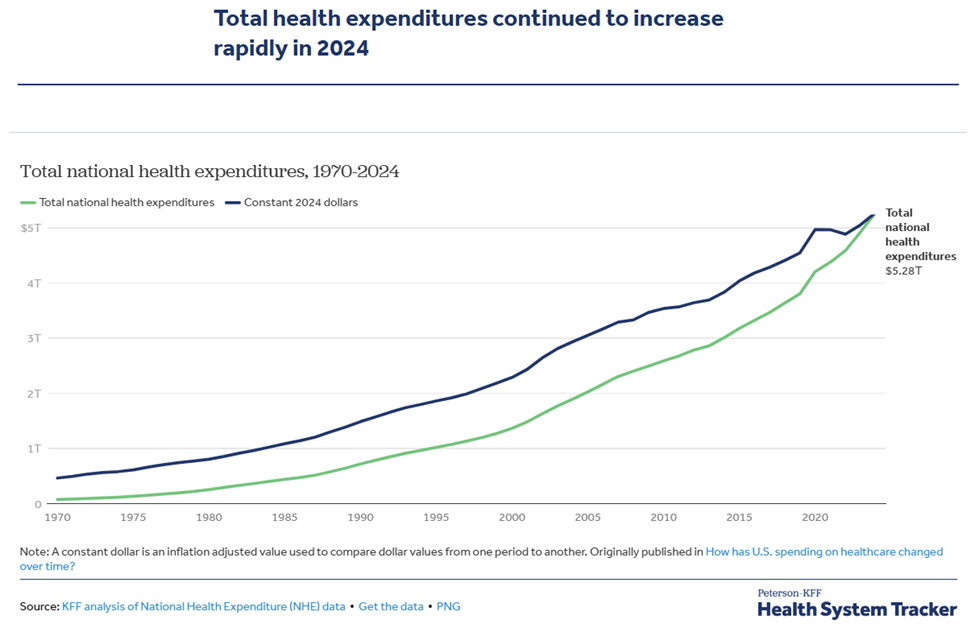
One of the worst affordability crises in the United States is in health care. Supporters of socialism have regularly exploited the troubles in the nation’s health care system to call for a government takeover, commonly in the form of so-called Medicare for All. Given that the cost of health care has risen very suspiciously in lockstep with ever-greater government spending and regulation in this sector, skepticism toward salvation-by-government is amply warranted:
The latest news on Obamacare fraud provides further reason to reject additional government excursions into health care. The White House Task Force to Eliminate Fraud found 760,000 fraudulent accounts in the system, the cancellation of which will save the nation’s taxpayers an estimated $2.2 billion.
“We are announcing $2.2 billion in American taxpayer money that we’re saving by doing what should have been an obvious thing,” task force leader J. D. Vance wrote at X. “We’re actually making sure that the people receiving Obamacare subsidies are actually entitled to receive them.”
In the previous administration, Congress and President Joe Biden expanded Obamacare enrollment radically, spurring massive fraud. “During the Biden administration, Obamacare enrollment increased from about 10 million people to more than 22 million,” The Western Journal reports. “A Department of Health and Human Services report issued this year estimated that nearly half of new Obamacare enrollments during Biden’s time in office were fraudulent.”
This amount of fraud is obviously disgraceful and ought to be a huge embarrassment to the American people, who are ultimately responsible for these programs.
There is certainly much more fraud than this. Just a week earlier, the Small Business Administration announced it was suspending “870,000 borrowers tied to $39 billion in suspected pandemic fraud” from the Paycheck Protection Program and Economic Disaster Loan benefits.
Government spending invites fraud: the rewards for theft are high, and the payoff to government bureaucrats for exposing fraud is more likely to be harassment or termination of employment than a pat on the back or a promotion.
The nation’s founders read the lessons of history and understood those temptations fully. That is surely one reason they authorized federal government spending only to “provide for the common Defence and General Welfare of the United States,” not of individuals.
All federal health care spending is unconstitutional. The Constitution does not grant specific authority for this purpose, and the spending does not promote the general welfare, instead promoting the individual welfare of those designated to receive the benefits. The Constitution does not authorize this kind of spending.
As a practical matter, moreover, federal government’s intrusion into the provision and purchasing of health care has corrupted the system utterly and made it inefficient and unfair by diverting gargantuan amounts of money into it.
The entire apparatus is a destructive fraud. An honest Supreme Court would strike it down as unconstitutional, an honest Congress would repeal it, and an honest president would refuse to administer it.
Sources: The Wall Street Journal; The Western Journal
‘The CSDDD is the greatest threat to America’s sovereignty since the fall of the Soviet Union.’

Contact Us
The Heartland Institute
1933 North Meacham Road, Suite 559
Schaumburg, IL 60173
p: 312/377-4000
f: 312/277-4122
e: [email protected]
Website: Heartland.org



S. T. Karnick is a senior fellow and director of publications for The Heartland Institute.