Forward this issue to your friends and urge them to subscribe.
Read all Life, Liberty, Property articles here, and full issues here and here.
In This Issue:
Life, Liberty, Property #166
- The High Cost of Affordability
- VIDEO OF THE WEEK: Texas Electric Bills Are Up 30% — Here’s Why
- Voters Affirm Social, Cultural Agendas in Ballot Measures
- Regulations Devastate Fast-Food Industry
The High Cost of Affordability
Having given my thoughts about democracy and serfdom and made an accurate prediction of the election results in my comments in the newsletter on Election Day last week, there is no need for me make any post-election alterations. The votes went true to form.
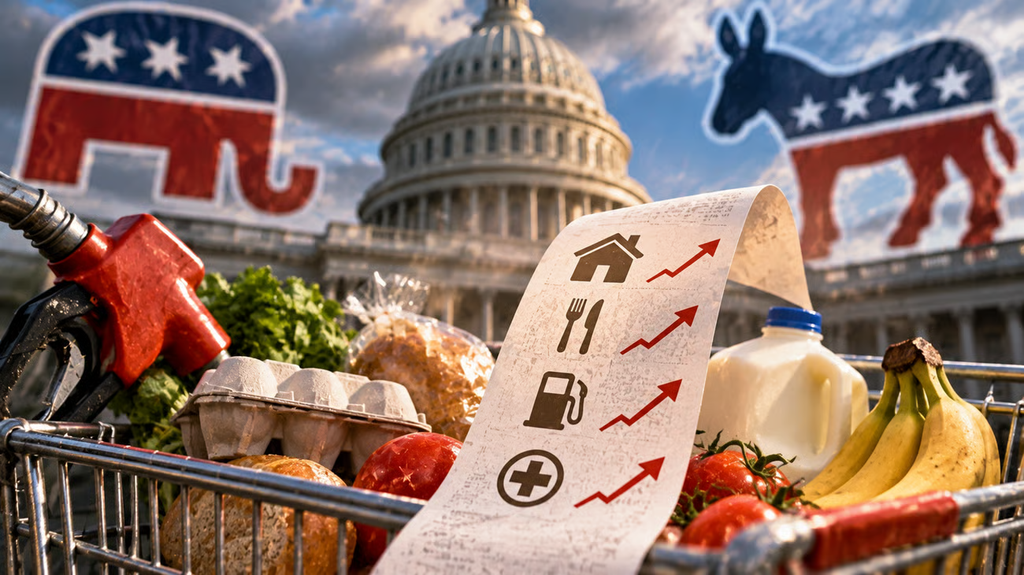
The American people punished President Donald Trump and the Republicans in the majority in both houses of Congress, for their inexcusable complacency about the high cost of living, vividly characterized as “the affordability crisis” since January 20 of last year. The Republicans’ failure to apprehend the seriousness of that issue and act on it is the major factor behind their downfall.
Although a Democrat-controlled Congress and President Joseph Biden set off the awful price inflation that has led to five years of struggles for lower- and middle-income households to meet the unduly high prices of necessities, especially housing, the current president and his party paid the price for their inability to reverse or at least stop the cost increases.
Voters drastically transferred their distrust on economic issues away from Democrats to Republicans in the past two years, The International Business Times noted, citing exit polls by CBS:
An exit poll conducted for CBS News found that 44% of voters believed their financial situation had deteriorated since the last presidential election. Another 38% said their finances were about the same, while just 18% reported being better off.
Democrats captured both chambers of Congress, making gains in several states Trump carried two years earlier. The CBS poll found that 65% of voters believed his policies had made economic conditions worse, with the economy ranking among the leading issues influencing their decisions.
In 2024, the picture was different. An Associated Press VoteCast survey of more than 120,000 voters found that Trump performed particularly well among Americans struggling with everyday expenses. He won more than half of voters who were very concerned about food, housing and healthcare costs and made gains among lower- and middle-income households.
Two years later, financially struggling voters shifted toward Democrats by approximately 30 percentage points compared with 2024, according to an analysis of NORC survey data involving more than 90,000 voters by The Washington Post. The comparison covers two different electorates rather than tracking the same voters over time.
The cost of Republican inaction was 30 percentage points of public support.
An AP Voter Poll found about four in 10 voters reported “wanting ‘to express opposition’ to Trump with their vote for Congress,” while a little less than two in 10 voters “wanted ‘to express support’ for the president,” the news agency reported on Election Day.
Voters expressed equal dissatisfaction with Congress, AP reported:
The survey suggests voters want to see Congress take on a stronger role as a co-equal branch of government. Roughly 7 in 10 voters say Congress is doing “not enough” to provide checks and balances on the presidency. Only about 2 in 10 say it’s doing “about the right amount,” and about 1 in 10 say Congress is doing “too much.”
Since taking office in January of last year, Trump regularly denied that people were suffering from an affordability crisis, a truly disastrous and, frankly, unfathomable claim. Congressional Republicans bickered with one another over their differing levels of devotion to high principle versus the practical need to pass legislation, the latter being their jobs, it is only fair to observe.
After finally passing the One Big Beautiful Bill Act, the GOP legislators dusted off their hands and considered their work complete for the next year and a half. The 119th Congress has passed 138 bills thus far, 0.66 percent of the bills introduced, according to Congress Countdown. Those are very low numbers in historical terms (including when measuring total page counts), and the public noticed, as the poll numbers confirm.
I think that the vast, vast majority of what the federal government does is unconstitutional, enacted unconstitutionally, or both. Action by Congress is generally an unalloyed evil. When Congress and presidents have been expanding the federal leviathan for 115 years, however, the only peaceful solution is government action to begin reversing that accumulated damage. This Congress played politics instead, and it lost.
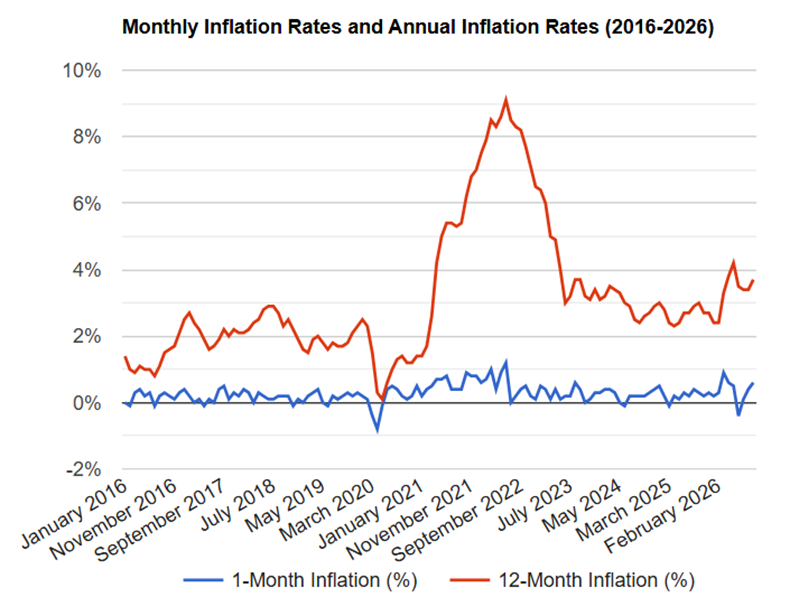
Trump, for his part, implemented major reforms in a variety of areas, as I have documented regularly in this newsletter. Unfortunately, he squandered the One Big Beautiful Bill Act’s real progress toward an end to the affordability crisis, engaging in a war in Iran that drove gasoline and diesel prices into Biden territory and caused a new bout of overall price inflation.
Source: U.S. Inflation Calculator
Neither Trump nor Congress ever convinced the American people that the inflation under which we were still suffering was the fault of the Biden-era government spending increases, which it definitely was. They would have had a very strong, positive case to make had they passed legislation removing unnecessary and economically destructive regulations and cut government spending, as those would have boosted the economy, raised wages, and stopped the inflation.
The Republicans chose to run out the clock, go rope-dope, play keep-away, or whatever other metaphor you may use to describe their excuse for inaction. The decision was a historic miscalculation, resulting in an overwhelming public determination to run feckless Republicans out of office.
Tens of millions of people based their votes on revulsion toward the party in power instead of a positive appeal by their opponents, notes journalist Selena Zito at The Epoch Times:
Among independents who lean Republican, according to Pew Research, 55 percent say a major reason is that Democratic policies are harmful, while only 30 percent credit Republican policies. Among those who lean Democratic, 51 percent point to the harm done by Republicans, and only 34 percent to anything Democrats have done.
Those are the voters who decide who controls the House, and they lean away from one party more than toward the other.
Yet each new majority behaves as though it has been embraced. It grows the government it promised to restrain, spends money it promised to save, or pushes the agenda its base wants over the one swing voters were promised, confident that the country is behind it. It isn’t. Those voters were never committed, and they take the keys back as quickly as they handed them over. That is why the next wave tends to come so soon.
The president and Republican congressional majorities deserve what they got in this election.
The American people, however, will pay the price for the GOP’s complacency and the voters’ ire. Only seven members of the Democratic Socialists of America have been elected to Congress at the time of writing. That is seven too many, in the view of anyone who believes in the nation’s founding values and the American Way they inspired for many decades. It is not, however, in itself any great threat to the nation’s welfare at this point in time.
The real threat is the very complacency that the Republicans displayed over the past two years, and the gross irresponsibility the Democrats manifested in 2021 and 2022. What the Democrats did was unforgivably destructive, and the Republicans’ failure to reverse it was cowardly and ruinous.
As I have argued in this newsletter and elsewhere, the solution to the Biden inflation and economic destruction was to return federal spending to the pre-Covid trendline. The Republicans dishonored the nation and disappointed their voters by failing to do that. They extended the tail end of the Biden-era inflation.
It is true that one group in Congress has been far more responsible for the spending problems than the other is. Both, however, have repeatedly passed disastrously unbalanced budgets. Blaming one’s predecessors for raising the budget baseline is a terribly inadequate substitute for real action to move it back down to where it belongs.
Radicals create the problems. Conservatives preserve the problems.
As a result of the two parties’ ways of doing things or avoiding doing things, the situation has progressed from an affordability crisis to an existential one. Within just a few years, the enormous drag of the $40 trillion federal debt, which rises by a couple of trillion dollars every year or so, and the rising costs of Social Security and other entitlements will trigger unstoppable interest rate increases that will make it impossible for the government even to pay the interest on that debt.
That will devalue the dollar, sparking rapid inflation. It will push up interest rates throughout the economy, destroying businesses all across the nation by making the cost of borrowing too high to support rational investment. That will stop economic growth and reverse it. All of that will throw millions of people out of work. In fact, it may well be tens of millions. Consumer spending will plummet even as personal debt skyrockets if people can get loans at all.
The promise of abundant largesse from the government leads inexorably to the destruction of a nation. All those who vote for it, deserve it. The few who spoke out against it will have only the cold comfort of knowing they were right as they struggle to make their way in a collapsing economy and a nation crumbling into anarchy and the inevitable slide into authoritarianism.
Sources: International Business Times; AP; Congress Countdown; The Epoch Times
Video of the Week
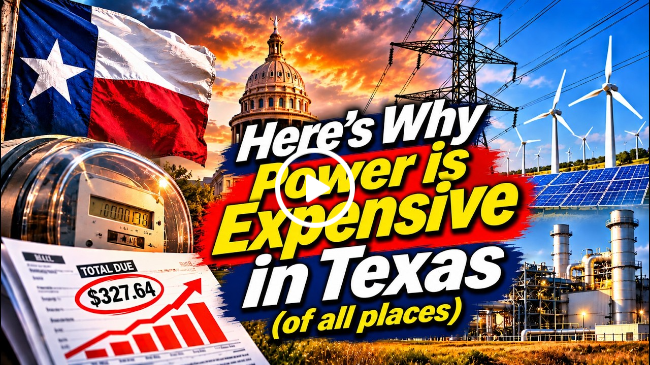
Texas just elected its first Democratic governor in more than 30 years. Former Texas state Rep. Jason Isaac says Republicans have to own a big part of why, starting with Texans’ electric bills.
Since Winter Storm Uri, Texas has added tens of gigawatts of wind, solar, and batteries but only a sliver of new natural gas, and residential electricity costs have climbed by about 30%. Now Texans face billions more for new high-voltage transmission lines that will be passed on to ratepayers. Jason and H. Sterling Burnett explain how the state ended up subsidizing both sides of a distorted power market, and why that frustration showed up at the ballot box.
Voters Affirm Social, Cultural Agendas in Ballot Measures
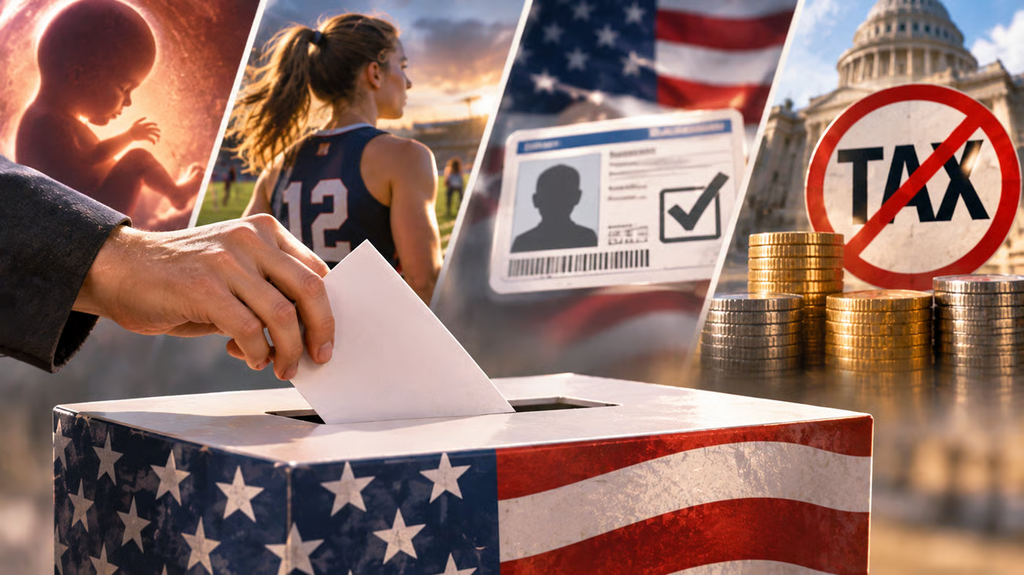
Voters across the country largely affirmed current social and cultural attitudes in their votes on ballot measures and referenda in last week’s elections. Typifying that approach was the fact that voters consolidated support for abortion while rejecting boys’ involvement in girls’ sports in state schools.
Interestingly, while voters were rejecting Republicans, they voted against potential tax hikes and expansions of taxing powers in California, Tennessee, and Washington. South Dakota’s voters rejected Medicaid expansion, another high-cost measure.
Voters in eight states approved ballot measures to tighten election rules and enforcement, including voter I.D. and requirements for proof of citizenship.
All of those states leaned Republican in recent years, and several turned against the GOP in Tuesday’s elections. The Epoch Times reports on the election-integrity measures:
In West Virginia, South Dakota, Kansas, Alaska, and Arkansas, voters approved measures affirming that only U.S. citizens can vote in state elections. All but Alaska’s were constitutional amendments, while Alaska’s was a ballot initiative.
Voters in Ohio and Nevada approved constitutional amendments requiring photo ID to vote in person. North Carolina voters approved an amendment extending the state’s photo ID requirement, already in its constitution for in-person voting, to mail ballots.
Reliably Democrat-dominated states rejected election integrity initiatives, the newspaper notes:
Voters in California and Colorado rejected measures that would have tightened voter ID rules. California’s Proposition 39 would have required voter ID, and Colorado’s Amendment 84 would have required an ID number for mail-in ballots.
In Arizona, a measure that would require voter ID and prohibit foreign contributions in elections was trailing but hadn’t been called.
Voters ultimately rejected the Arizona measure by 53.1 percent to 46.9 percent.
Voters in the heavily left-leaning states of Colorado and Washington approved ballot measures preventing males from participating in school girls’ athletic activities, as did voters in Arizona and Nebraska, with the last-named electing to add the ban to the state’s Constitution.
In Missouri, voters rejected a proposed constitutional amendment that would have banned all abortions in the state and prohibited sex-change procedures on minors.
A majority of voters in the socialist bastion New York City “approved four ballot measures aimed at making it easier to build things and reducing paperwork,” notes Emma Camp at The Wall Street Journal. The measure with the greatest potential benefits “will streamline construction permits,” though we’ll have to wait to see whether the municipal bureaucracy embraces the new requirements or attempts to impede them.
Sources: The Epoch Times; The Wall Street Journal
Regulations Devastate Fast-Food Industry
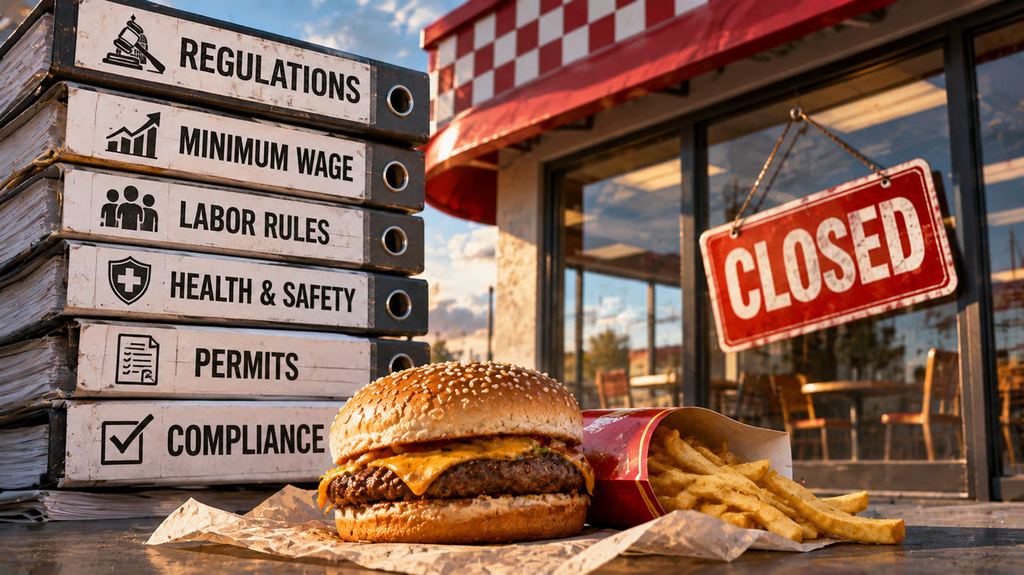
Regular readers of this newsletter and my op-eds in various outlets will know that I consistently rank regulation as essentially equal to taxes in the damage they do to our individual rights and to the economy. Proponents of greater regulation always present the restrictions as promoting safety, fairness, protection of nature, and all sorts of other good things.
What regulation accomplishes most effectively are suppression of the production of goods and services, pervasive misallocation of resources as government experts overrule the direct choices of the public ordinarily made through the price mechanism, enabling politicians to profit from businesses’ desire for exemptions that will give them advantages over their competitors, consequent concentration of wealth and economic and political power, legal cover for prejudice and social engineering, shortages of critical goods and services (such as food staples, housing, and energy), unnecessary affordability crises, and other manifestations of economic distortion and social corruption.
A clear and simple example is the destruction that enormous increases in state and local mandated minimum wages have done to the low-cost restaurant industry. ZeroHedge reports on the latest victim of this government regulation catastrophe (bold type removed from quote):
Global Midsouth Holding Corp., a franchisee of Checkers and Rally’s, filed for Chapter 11 bankruptcy protection on October 28, just one day before a scheduled foreclosure auction involving one of its Tennessee restaurant properties, according to TheStreet.
The Memphis-based company reported $1.9 million in assets against $1.3 million in liabilities. Revenue fell from $860,000 in 2024 to $800,000 in 2025, underscoring the financial difficulties facing the business.
Across the fast-food industry nationwide, costs have risen rapidly in the wake of much-higher beef prices and minimum wage hikes. The rising beef prices have been spurred greatly by government policies such as gasoline ethanol mandates imposed in 2005, overall price inflation raising production costs by 55 percent between 2020 and 2025), and the invasion of the New World screwworm from Mexico after President Joe Biden’s decision not to defend the nation’s border, all of which have contributed to a collapse in the nation’s herd size which has persisted despite annual changes in drought conditions.
All of these bad decisions by government have led to a “burger bloodbath,” as ZeroHedge puts it (bold type removed from quote):
However, Global Midsouth isn’t the only burger franchisee that went bust.
Meritage Hospitality Group, one of Wendy’s largest franchisees, filed for bankruptcy in September after struggling with declining sales, rising beef prices, and mounting financial obligations. …
As we reported yesterday, San Diego-based Out West Restaurant Group, also known as Cerca Trova Restaurant Group, filed for Chapter 11 bankruptcy protection Monday in Delaware, putting 61 restaurants across five Western states into bankruptcy proceedings.
The company’s debt has exploded from $269 million in 2020 to approximately $449 million in 2026, according to the Los Angeles Times.
“Guest traffic and earnings continued to decline, while food, labor, and other production costs continued to rise,” CEO David Goronkin said.
Prominent among those costs are the extravagant minimum wages imposed across the country. “California’s rising minimum wages have been a major problem, with more than half the company’s employees working in the Golden State,” ZeroHedge reports in regard to the Out West Restaurant Group bankruptcy filing. “The COVID-19 pandemic also delivered another devastating blow, sending revenue plunging approximately 35%.”
The lockdowns, of course, were an unprecedented regulatory craze the federal, state, and local governments imposed all across the nation, much of it in defiance of laws on the books.
Advocates of regulation have a psychologically pleasing argument for their desires. Those of us who treasure liberty and free markets have the better moral and practical cases by far.
Source: ZeroHedge
‘The CSDDD is the greatest threat to America’s sovereignty since the fall of the Soviet Union.’

Contact Us
The Heartland Institute
1933 North Meacham Road, Suite 559
Schaumburg, IL 60173
p: 312/377-4000
f: 312/277-4122
e: [email protected]
Website: Heartland.org



S. T. Karnick is a senior fellow and director of publications for The Heartland Institute.