A Virginia naturalization bill offered Protestant settlers 50 acres and cash. Thomas Jefferson struck the religious test, opening a debate that still shapes American identity.
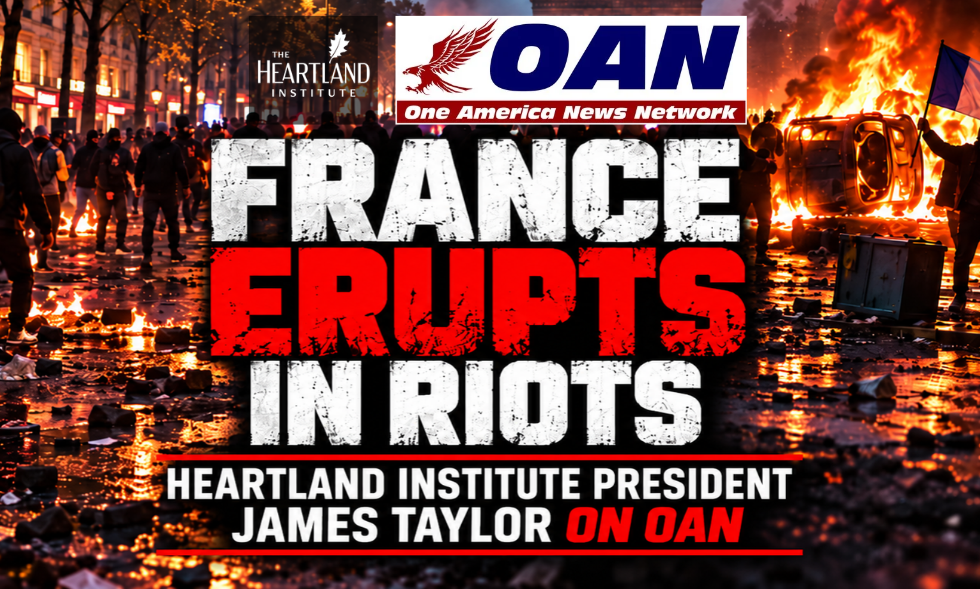
The mass rioting and destruction across France in recent weeks has laid bare the direct connection between multiculturalism and authoritarian political movements across the West, as does the similar chaos in countries such as Albania, Belgium, Italy, and Portugal.
The resemblance to the mass disturbances in the United States in 2020 is obvious, with all these incursions combining ethnic agitation with socialism and Marxism, a red-green alliance financed significantly by outside forces such as foreign billionaire Neville Roy Singham and Communist parties around the world.
This combination shows that the planned destination of multiculturalism is hard socialism or, looking further down the road to perdition, outright Communism.
The intertwining of multiculturalism with socialism and communism is obvious in leftist-ruled American locales such as New York City, Minneapolis, Michigan, New Jersey, and California. Meanwhile, the United States has become the first country to begin seriously reversing mass immigration and the cultural and educational inculcation of anti-American or anti-European attitudes among the public, in the brief time since the end of the Biden administration.
A fierce dispute over America’s national identity has characterized the debate over this issue. Last week’s 250th anniversary of a little-known bill in the Virginia Generally Assemblyillustrates how important the definition of an American identity is to the nation’s destiny.
Edmund Pendleton, the author of the bill, titled it “Naturalization of Foreigners,” meaning Protestants. Pendleton’s bill explicitly and repeatedly specified that its benefits were for Protestant Christians and no one else.
In addition to granting full citizenship to “all foreign Protestants … who shall take an Oath of Fidelity to the Common Wealth and subscribe to be Obedient to the Laws thereof,” Pendleton’s bill would have provided “the sum of 20 dollars to every foreigner who shall come to settle in this Commonwealth” and “fifty acres of unappropriated lands wherever he shall chuse the same to be held.”
Founding Father and Virginia resident Thomas Jefferson revised the bill to remove all mention of Protestants. Jefferson was passionate about expanding immigration beyond Protestants, the National Archives notes in its comments on the bill.
Pendleton’s draft was aimed at the expansion of a people, specifically Protestants, whereas Jefferson’s version was directed at universalizing a proposition: America as a country to which anyone could belong by essentially accepting the principles of the Declaration of Independence (or, to be fully accurate, merely claiming to agree with it).
Those two positions are fundamentally different, pitting a vision of the United States as a “shining city on a hill” demonstrating the rightness of the American Way, against a belief that America is the repository for the “wretched refuse” of other nations regardless of what fundamental ideas they may adhere to and how much they could influence the nation to deviate from the very proposition under which the newcomers were admitted.
Arguments about the degree to which immigrants benefit the incumbent population, typically in promises of economic bounty, tend to drive the discussion, yet the strongest passions consistently arise over whether America is a people or a proposition. Although Jefferson’s draft of Pendleton’s bill did not pass, those characterizing America as a proposition usually appear to occupy the moral high ground in the debate, regularly deriding their opponents as bigots and religious zealots.
It has been a highly effective rhetorical tactic, creating a form of asymmetrical cultural warfare that collectivists and other universalists have learned to deploy to redefine America in their own image. Progressives, socialists, and communists do not accept the universality and inalienability of the freedoms of speech, religion, association, enterprise, and so on.
Read the rest at The Blaze.

S. T. Karnick is a senior fellow and director of publications for The Heartland Institute.