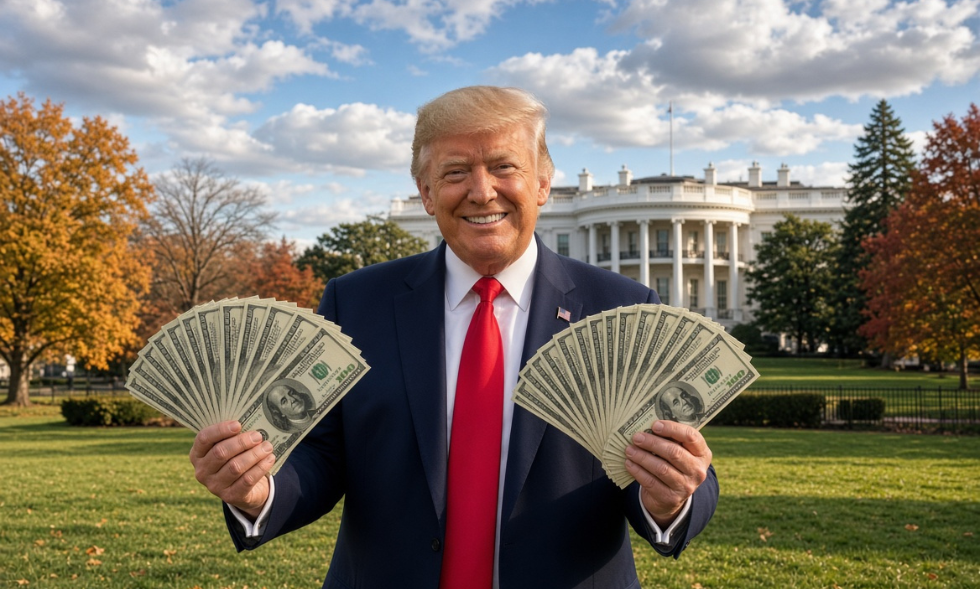
President Donald Trump made another of his bold and extravagant promises at the Republicans’ midterm convention last Wednesday, proposing to give “every adult citizen in the United States of America” a “dividend” of $5,000 if Republicans win House and Senate majorities this November.
That would cost approximately $1.2 trillion, according to media estimates.
Democrats immediately derided the plan, as is their reflexive response to anything Trump does or says. Some Republicans quickly joined the chorus of woe, as is likewise their habit.
The complaints have substance: The plan is unworkable in the form in which Trump presented it. It would increase the already terrifying national debt and probably spark much higher inflation, to be followed by a harsh recession, depression, or hyperinflation.
Trump argues that recent economic growth justifies a return of resources from the grossly overfed government to the private sector. That is a fair point. In fact, it identifies what the nation most needs today: liberation from the damage the federal government has been doing for decades in constructing and feeding a massive, costly, unwieldy, and enterprise-destroying welfare state and a similarly expensive national-security apparatus.
Trump, however, does not put it quite that way. The White House press release for his plan says, “Like a successful company returning cash to its shareholders, the Trump Dividend is possible only because of President Trump. In his second term, he has unleashed trillions in new private investment, launched an unprecedented crackdown on government waste, and rebuilt American strength at home. That success belongs to the American people—and the Trump Dividend returns it to them.”
It is only fair to note, however, that the American people have already received a “Trump Dividend.” It has arrived in the form of the economic growth he and his team cite, which has improved wages, spurred increases in the value of investments, reduced federal taxes (thus increasing after-tax income), and transferred jobs from criminal illegal immigrants to American citizens and legal resident aliens.
Of course, the government is taking a large chunk of those wages and profits, so there is a strong case to be made for redress to people paying federal taxes.
The qualifier at the end of that sentence is important. To reduce the effect on debt and inflation, it would make sense to send the payments only to those who have actually paid federal taxes, and cap each check at the amount of taxes the person has paid since January 20, 2025.
Those who are paying taxes are the ones doing the productive work and investment that is creating the economic growth Trump says he wants to reward. They should be the ones to receive any cash dividend on that success.

S. T. Karnick is a senior fellow and director of publications for The Heartland Institute.