California may be only one state, but are its climate regulations effectively becoming national policy?
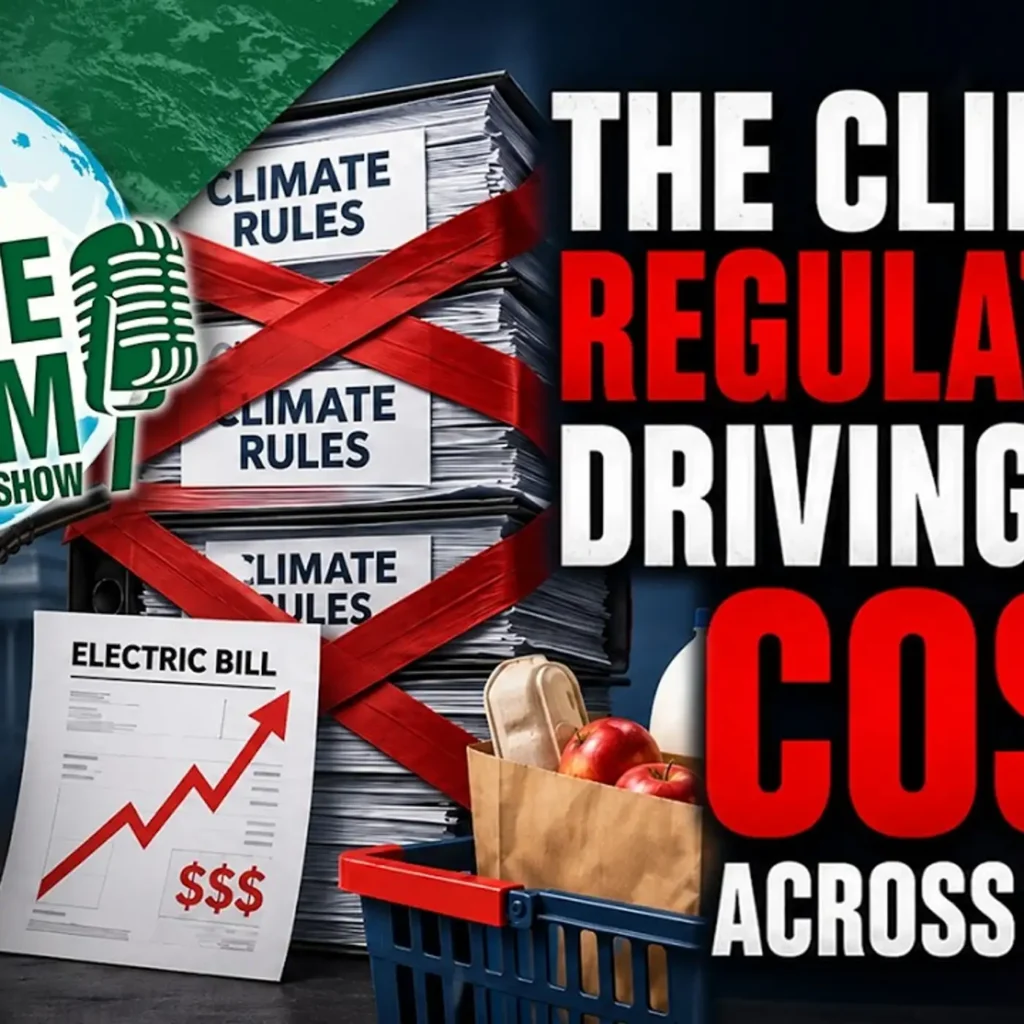
In Episode #212 of The Climate Realism Show, host Andy Singer is joined by Linnea Lueken, Anthony Watts, and H. Sterling Burnett to break down how California’s climate and environmental regulations can affect consumers, businesses, and supply chains far beyond the state’s borders.
The main story examines California rules targeting ships docked at the state’s massive ports, along with vehicle and equipment regulations that critics argue function as a “hidden climate tax” on Americans nationwide. With California ports handling a huge share of U.S. imports and the state’s enormous market influencing what manufacturers produce, how much power should one state have to shape the national economy?
The panel also digs into several other major climate and energy stories:
🍔 Drive-Thru Climate Ban: Culver City is considering restrictions on new drive-through restaurants, with greenhouse-gas emissions, vehicle idling, air quality, and pedestrian-oriented development among the reasons cited. Is blocking new drive-throughs meaningful climate policy, or regulatory overreach?
⚖️ Climate Chapter Pulled: The National Academies of Sciences temporarily removed a climate-science chapter from the Reference Manual on Scientific Evidence while reviewing concerns about how the chapter was developed and potential conflicts involving people connected to climate litigation.
🔥 Solar Fire Surge: UK fire-service data show incidents involving solar-panel systems increased sharply between 2022 and 2025, significantly faster than the growth in installations. Are subsidies and aggressive deployment targets outpacing installation quality, inspections, and fire-safety standards?
🚢 California’s National Reach: From cargo ships and port infrastructure to cars, engines, and equipment, the panel examines whether California is simply exercising authority granted under federal law or using its economic power to impose de facto national regulations without a national vote.

Linnea Lueken is a Research Fellow with the Arthur B. Robinson Center on Climate and Environmental Policy.

Anthony Watts is a senior fellow for environment and climate at The Heartland Institute.

H. Sterling Burnett, Ph.D., is the Director of the Arthur B. Robinson Center on Climate and Environmental Policy and the managing editor of Environment & Climate News.