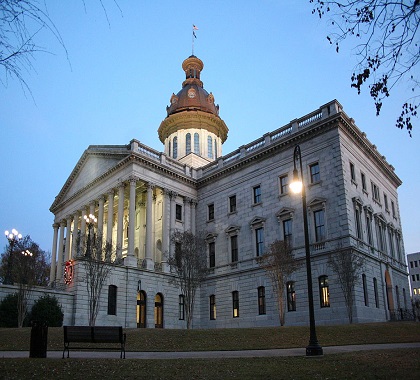
The Colorado General Assembly is considering a bill that would limit the government’s use of historical location information for tracking people in the state.
SB26-070, also known as the “Protecting Everyone from Excessive Police Surveillance (PEEPS) Act,” as initially introduced in January, would restrict law enforcement agencies’ warrantless access to personally identifiable location information captured more than 24 hours in the past, limit data retention beyond four days outside of narrowly defined exceptions, restrict data sharing, and require annual reports on the use of relevant data-collection tools.
Types of data cited in the initial version of the bill included information collected through cameras, automatic license plate readers, cellular networks, and facial recognition programs. The restrictions described in the initial version of the bill would also apply to data collected through similar unlisted technologies.
After its hearing in the Colorado Senate Committee on Judiciary, a pre-amended version of the Colorado’s PEEPS Act was posted to the General Assembly’s website on February 24, 2026.
Unlike the initial version of the bill, which would regulate several forms of surveillance technologies, the pre-amended bill deals solely with the use of automatic license plate readers, sometimes referred to as ALPRs, license plate readers, or LPRs. It allows for warrantless access to data collected through ALPRs for up to 72 hours after collection, as opposed to 24 hours in the original version, and the retention of collected data for 30 days instead of four.
ALPRs are a type of camera that can be mounted on traffic lights, street lamps, telephone poles, or other structures and used to capture the license plate information and other identifying details of passing vehicles. This information is then compared to lists of vehicles being sought by law enforcement agencies, also known as “hot lists,” and transferred to a searchable database, along with the time and location at which the information was captured. More-advanced ALPR systems can be combined with facial recognition programs and flag cars for driving patterns determined to be suspicious by artificial intelligence.
Even if ALPRs can be used by law enforcement for legitimate purposes, ALPRs and other surveillance technologies, amass vast amounts of data that are “highly sensitive in nature and, when accessed over time, can reveal detailed and personal information about an individual’s movements, associations, habits, and daily activities,” as noted in the initial version of SB26-070.
Regarding ALPR data specifically, a 2021 analysis by the Electronic Frontier Foundation indicated that of the 1.4 billion license plate scans collected over a two-year period by law enforcement agencies from which the EFF procured data, only about 0.05 percent were of license plates linked to vehicles being sought by law enforcement. Analyses such as these confirm the vast majority of data collected by ALPRs pertain to law-abiding citizens.
There have been numerous cases of drivers and their passengers being pulled over by law enforcement officers, sometimes in a highly aggressive or threatening manner, because an ALPR misread the license plate of their vehicle, because a database of vehicles being sought by law enforcement was not updated, or because a vehicle’s license plate had been swapped with that of a wanted vehicle without the driver’s knowledge. Similar incidents have occurred because of mistakes by other surveillance technologies such as facial recognition programs, leading to convenience store employees calling the police on innocent customers, as well as wrongful arrests and detainments.
Additionally, individuals within law enforcement have been accused of using ALPRs to stalk former romantic partners and perceived romantic rivals.
The ability to move about in public free from government surveillance is vital for a free society. However, technological advances have allowed law enforcement to deploy mass surveillance programs with greater ease and at a lower cost than possible in the past. When law enforcement agencies implement these advanced surveillance technologies, they can collect and retain large amounts of data about the lives of innocent people.
By placing restrictions on warrantless access to personally identifiable location information, the retention of such information, and the sharing of the information, SB26-070, as initially introduced, would give individuals in the state of Colorado considerable protection from mass surveillance. In its pre-amended form, SB26-070 is far more limited in scope but would still provide some protections from surveillance by ALPRs.
The following documents provide useful information about mass surveillance in general and ALPRs specifically.
Text of Colorado’s SB26-070, “Protecting Everyone from Excessive Police Surveillance (PEEPS) Act,” as initially introduced.
SB26-070 (Preamended Versions)
Text of the pre-amended versions of Colorado’s SB26-070, “Protecting Everyone from Excessive Police Surveillance (PEEPS) Act.”
This “field guide” from the Electronic Frontier Foundation provides detailed information regarding the wide array of surveillance technologies used by law enforcement to surveil American citizens.
Street Level Surveillance: Automated License Plate Readers
This portion of the Electronic Frontier Foundation’s Street Level Surveillance site provides greater detail on how ALPRs work, how they are used, and threats posed by their use and misuse.
The Institute for Justice’s Plate Privacy Project provides information about how ALPRs work and the threats they pose to privacy and liberty. The site also provides information about the IJ’s legal and educational efforts regarding ALPRs.
In this 2023 commentary, ACLU Senior Policy Counsel Chad Marlow and ACLU Senior Policy Analyst Jay Stanley discuss different policy approaches to regulating the government’s use of ALPRs.
This 2021 report from the Electronic Frontier Foundation details the results of analyses performed by the organization regarding the amount of data collected by ALPRs, the amount of that data relevant to vehicles sought by law enforcement, and the frequency with which license plates are scanned.
This 2024 post from the Electronic Frontier Foundation presents descriptions of some of the more prominent cases of ALPR mistakes and misuse.
Nothing in this Research & Commentary is intended to influence the passage of legislation, and it does not necessarily represent the views of The Heartland Institute. For further information on this and other topics, visit the Health Care News website and The Heartland Institute’s website.
The Heartland Institute can send an expert to your state to testify or brief your caucus, host an event in your state, or send you further information on a topic. Please don’t hesitate to contact us if we can be of assistance! If you have any questions or comments, contact Heartland’s government relations team at [email protected] or 312/377-4000.
Daniel Nuccio
Daniel Nuccio, Ph.D. ([email protected]) is a spring 2026 College Fix journalism fellow and a reporter-writer and editorial associate for Health Care News and Government & Liberty, published by The Heartland Institute.