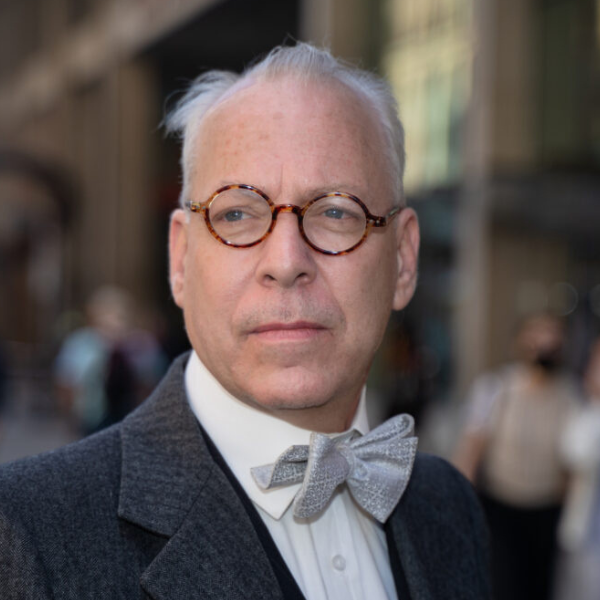
Editor’s Note: Just over six years ago, governments around the world forced businesses, schools, and churches to close. They threatened to arrest citizens who stepped outside their homes for unapproved reasons. Weddings, funerals, and even small gatherings in homes were prohibited. Drones monitored some areas for signs of disobedience. Not long thereafter, millions of people were coerced into receiving an unproven medical treatment.
This is the account of the Covid years provided by economist Jeffrey Tucker in a recent article written for the Brownstone Institute, the organization he founded in 2021 in response to Covid policy and its effects on the American people.
On March 19, 2026, Tucker spoke with Daniel Nuccio of Health Care News about his organization’s current push for a proposed “CovidJustice” resolution in the U.S. Senate, which would condemn “the bad science and coercion” of the Covid years and pledge “to do better next time,” as well as the recent poll Brownstone cosponsored to gauge what the American people think about medical freedom, vaccine mandates, and Covid-era restrictions. This interview was edited for clarity and length.
Health Care News: I want to talk a little bit about Brownstone’s poll and CovidJustice resolution.
To start with the poll, could you briefly discuss what motivated it and what it found?
Tucker: The poll was motivated by a response to two polls that came out in December and January by a polling company called Fabrizio, and the takeaway from the poll was that vaccine skepticism was a political loser. People love their vaccines. RFK’s threatening them. He needs to be silenced, shut down, minimized.
I’m reading this thinking I’m not sure that that’s really going on here. This is a little bit funny. And so I began to dig into the poll itself and realized that the poll was one of these classic cases where the poll questions gave away the right answer. And you can’t do that with a poll. I mean, a poll’s not valid if you’re hinting at the right answers. And I looked at question after question that did this. Like, one of the best questions was ‘Agree or disagree, vaccines save lives.’
In 225 years of vaccine history, have vaccines saved lives? Certainly. I don’t think there’s anybody who is in a position to say no to that. I mean, anyone. So, not surprisingly, it generated overwhelming public approval. In fact, a surprising number of people disagreed with that, like 25 percent, which is amazing!
But I thought, you know what, what we need is a poll that actually is objective, just so we can know what the public’s view is on matters like the pandemic response, the Covid response, the vaccine mandates, medical freedom, all these key factors.
We contacted Zogby and put together a really objective poll of 30 questions, and it came back with large supermajorities clearly favoring medical freedom, personal autonomy, informed decision-making. That’s including on matters of vaccines, especially concerning adults. … For children it was less but still very large majorities. … So it’s a very encouraging poll.
And so, you wonder, well what was the purpose of the previous poll, which was clearly just designed to come up with the results it did, and I think the purpose was just to use it in a war, a propaganda war against any changes to the status quo.
Health Care News: Has the poll received much attention since the publication of the results?
Tucker: Well, I fully expected that it would be widely reported. But of course it was mostly ignored by the mainstream. In fact, it really frustrates me that we’re still seeing the Fabrizio poll cited all over the place, whereas our poll is somehow not considered part of the public conversation. It’s just sort of the way it works.
And so I learned a lot from this experience. We used a conventional pollster. A regular poll. Objective questions. Played by the rules. And we’re just not being cited as anything.
Health Care News: As to the CovidJustice resolution, you wrote a piece about that for Brownstone not too long ago. You went into the motivation there, the need to condemn the Covid response and stop something similar from happening again, so I won’t ask you to reiterate that. But can you talk about the response to the resolution?”
Tucker: The Covid response began six years ago, and it ended about two years ago. So it’s hard to get people interested and excited, and it’s hard to cut through on anything in the digital world. But given that, we have, I think, 31,000 signatures so far.
I think that’s pretty amazing for any kind of online petition, actually. So yes, I want it to be one million, but I like it especially because so many people want to do something, they don’t know what to do, and this [signing the resolution] is something people can actually do.
It’s important. We need to give outlets to people so they don’t think the whole system is just a racket. … so the public doesn’t shut up completely.
Health Care News: Do you see it actually making it to the Senate?
Tucker: That’s not really part of [Brownstone’s] work, but the other organizations that are more political, like Children’s Health Defense, are working that angle.
I think it’s possible. There’s definitely some interest in it. But whether it comes up for a vote or not is entirely up to the leadership of the Senate.
I doubt very seriously that anybody wants to revisit this, tragically, but I think we definitely need to revisit it, and if nothing else, we got to.
The Covid period is a festering wound, and something’s got to be done about it. Something has to be done about it. It’s just an illusion that we can just sweep it all under the rug. It’s not going to happen.
The Covid response is for the ages and has produced a lot of population-wide bitterness, and if we’re ever going to be a normal country again, we’ve got to have some kind of reckoning.
Daniel Nuccio, Ph.D. ([email protected]) is a spring 2026 College Fix journalism fellow, reporter, and editorial associate for Health Care News.