This week, Ohio Senate Bill 294 passed the Ohio Senate. This legislation provides guidance to the state’s Power Siting Board on the intent of the General Assembly that the energy powering the Buckeye State should be “affordable, reliable and clean,” and the energy produced and the way it is produced shall rely on domestically sourced materials and “minimize reliance” on “foreign adversary nations for critical materials or manufacturing.”
Energy is the “lifeblood of our economic system,” as the Nobel Prize-winning economist Milton Friedman noted. It is the master resource. Affordable, reliable, and plentiful energy is the foundation of economic growth and prosperity. Energy is at the core of nearly everything we do, everything we use, everything we manufacture, everything we purchase, sell, eat. It’s how we heat and cool our homes, it is a part of how we educate, how we stay connected with our community, and how we care for our young, elderly, and sick. Therefore, energy prices are a significant factor in our lives and our overall personal, state-level, and national prosperity.
Affordable and reliable energy, economic growth, and protecting the environment from degradation need not be at odds with one another. The energy sources that are most abundant and affordable are surprisingly environmentally friendly when we look at the full-spectrum environmental impacts of the various energy sources. Often, the best way to be pro-environment is to be pro-energy.
To fully unleash economic opportunity in the Buckeye State, policymakers in Ohio should be deliberate in enacting policies that prioritize abundant, reliable energy. It is positive news for Buckeye State residents that members of the Ohio Senate did just that last week.
According to the bill, an “affordable” energy source is one that has “a stable and predictable cost” and provides a “cost-effective means of heating, cooling, and generating electricity.” Further, “affordable” sources must deliver “substantial savings relayed to residential and commercial customers comparable to energy sources listed in 42 U.S.C. 15852(b),based on the average cost per unit of energy output calculated to include any direct or indirect payment by any level of government for the previous five years.” Those energy sources in the U.S. code being solar, wind, biomass, landfill gas, geothermal, municipal solid waste, or hydroelectric.
To be considered a “reliable” energy source, the bill demands the resource be “readily available at all times to meet energy demands with minimal interruptions during high-usage periods” and that, when used for power generation, the resource must have a “minimum capacity factor of fifty per cent,” that it’s electricity output is “dispatchable at all times and with the capability to ramp up or down electricity generation within one hour to stabilize the electrical grid,” and have the ability to “complement and provide backup to renewable energy resources during periods of low availability.”
“Dispatchable” power sources are those that can adjust to the electric grid on demand, such as a natural gas turbine, coal plant, hydroelectric dam, or nuclear power plant. Non-dispatchable power sources, such as solar and wind, cannot be turned on or off to meet demand because they are highly intermittent. They are not continuously available 24 hours a day because of factors that cannot be controlled—such as cloud cover, daylight, wind speed, air density, and other variables—and are therefore unreliable.
The bill considers a “clean” source to be any energy generated by natural gas, nuclear, or “any energy generated by utilizing those sources listed in 42 U.S.C. 15852(b) or hydrocarbons, which, when combusted for the purpose of electricity generation, meet the national ambient air quality standards set by the United States environmental protection agency under the authority of the Clean Air Act,” 42 U.S.C. 7401.
SB 294 would establish a clear state policy prioritizing affordable, reliable, and clean energy – not as mutually exclusive goals, but as interdependent pillars of sound energy governance. By aligning state policy accordingly, the bill provides regulatory clarity and market certainty for investors, utilities, and consumers alike.
By encouraging affordable, reliable, and clean energy sources, Ohio would not only protect its consumers and industries from unreliable or costly alternatives. It would also set a policy model for other states to follow.
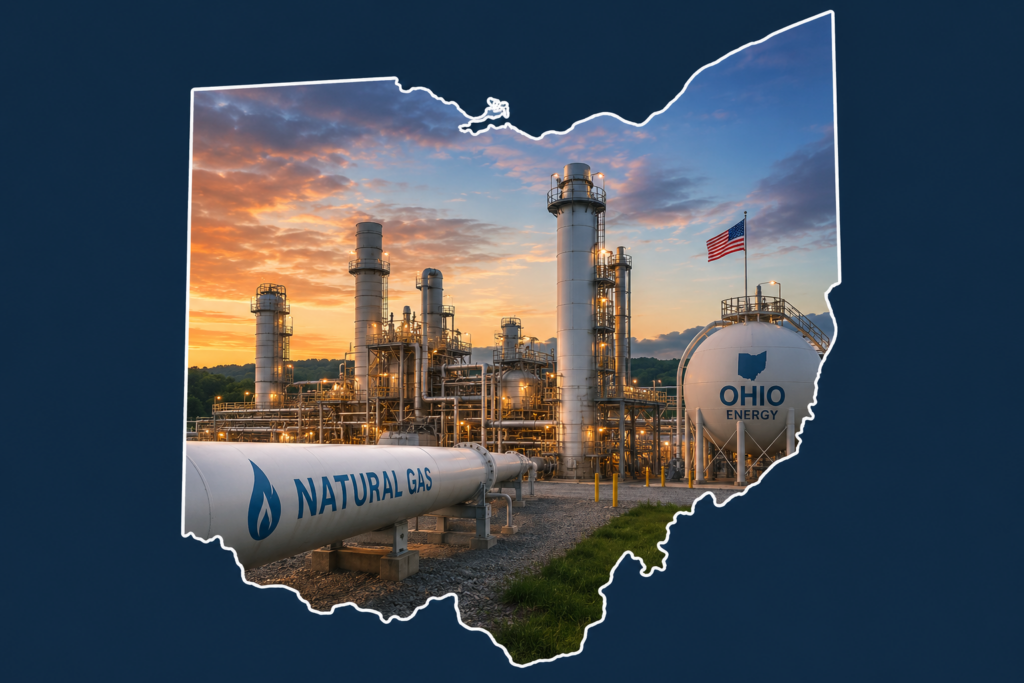
A balanced energy framework guarantees dependable power for homes, hospitals, and manufacturers. Energy independence for Ohio also means economic resilience. Prioritizing American-produced fuel, particularly natural gas, which is in abundant supply in the Buckeye State, reduces exposure to hostile or unstable foreign suppliers, secures jobs, and keeps energy dollars in Ohio.
This policy position stewards energy security for the present and secures economic prosperity for the future. The “affordable, reliable, and clean” policy set forward in this legislation aligns environmental stewardship with economic strength, ensuring Ohio leads the nation in sustainable growth and reliability.
The following documents provide more information about affordable, reliable, and clean power.
Affordable, Reliable, and Clean: An Objective Scorecard to Assess Competing Energy Sources
https://heartland.org/wp-content/uploads/2025/04/Apr-25-ARC-Scorecard.pdf
This Heartland Institute scorecard analyzes and assigns an objective numerical score for competing energy sources regarding their affordability, their reliability, and their effect of the environment.
Better Energy Policy for Ohio
https://www.buckeyeinstitute.org/library/docLib/2025-01-22-Better-Energy-Policy-for-Ohio-policy-report.pdf
This report from the Buckeye Institute and Americans for Prosperity-Ohio outlines the challenges facing Ohio as the need and demand for energy grows and offers basic principles lawmakers should use as a guide to develop better energy policies for the Buckeye State.
Clearing the Air: Honest Truths about Green Energy
https://www.theamericanconsumer.org/wp-content/uploads/2024/07/Clearing-the-Air.pdf
This report from the American Consumer Institute details many of the environmental impacts associated with so-called green energy sources. The life cycles of all three—wind turbines, solar panels, and EV batteries—involve significant environmental consequences that should not be overlooked and need to be part of the discussion when implementing energy policies.
Policy Brief: How the Green New Deal’s Renewable Energy Mining Would Harm Humans and the Environment
https://heartland.org/wp-content/uploads/documents/PBdriessenmining2Apr20.pdf
In this Heartland Institute Policy Brief, Paul Driessen, senior policy advisor with the Committee For a Constructive Tomorrow, argues expanding mining on the scale needed to meet the renewable energy requirements contained in the Green New Deal and other proposed renewable energy mandates would cause unimaginable harm to the environment, wildlife, and humans.
The 100 Percent Renewable Energy Myth
https://www.instituteforenergyresearch.org/wp-content/uploads/2019/02/Renewable-Myth-Policy-Brief219.pdf
This Policy Brief from the Institute for Energy Research argues that a countrywide 100 percent renewable plan would put the U.S. economy in jeopardy. The brief investigates intermittent power generation, land requirements, capacity factors, and the cost of transition and construction materials that limit the ability of the United States to adopt 100 percent renewable energy.
Nothing in this Research & Commentary is intended to influence the passage of legislation, and it does not necessarily represent the views of The Heartland Institute. For further information on this subject, visit Environment & Climate News and The Heartland Institute’s website.
The Heartland Institute can send an expert to your state to testify or brief your caucus; host an event in your state; or send you further information on a topic. Please don’t hesitate to contact us if we can be of assistance! If you have any questions or comments, contact Heartland’s Government Relations department, at [email protected] or 312/377-4000.

Samantha Fillmore is a State Government Relations Manager for The Heartland Institute.