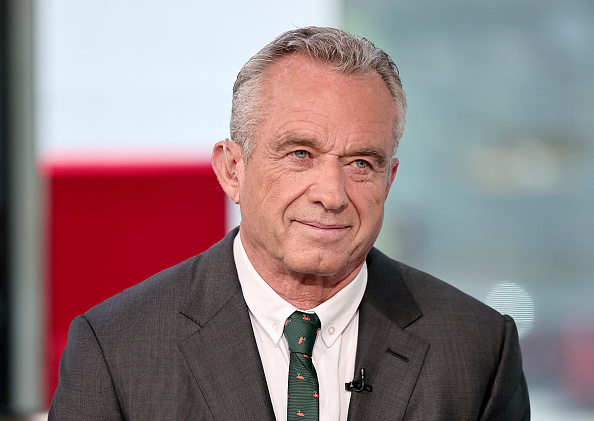
Fifteen states are suing Health and Human Services Secretary Robert F. Kennedy Jr., Centers for Disease Control and Prevention (CDC) Acting Director Jay Bhattacharya, and their respective agencies, over recent changes to the CDC’s childhood vaccination recommendations.
The CDC reduced the number of vaccines recommended for all children following an assessment that demonstrated the United States to be an outlier among developed nations in the number of diseases for which it recommended vaccination and the number of vaccine doses it recommended for children.
“The Kennedy Schedule will damage public health by decreasing vaccine uptake and increasing rates of vaccine-preventable diseases, including by creating confusion, spreading misinformation contrary to established scientific evidence, and increasing vaccine hesitancy,” the lawsuit claimed.
The states bringing the lawsuit include Arizona, California, Colorado, Connecticut, Delaware, Maine, Maryland, Michigan, Minnesota, New Jersey, New Mexico, Oregon, Pennsylvania, Rhode Island, and Wisconsin.
Many of these states previously expressed opposition to the changes with several indicating that moving forward, they would base relevant, state-level policies on the immunization schedules of private organizations such as the American Academy of Pediatrics, which is facing a RICO lawsuit for its vaccine promotion.
Questioning Credentials
Through the lawsuit, the fifteen states are seeking to have the CDC’s new recommendations declared arbitrary, capricious, and illegal, as well as have the “Kennedy Appointees” to the Advisory Committee on Immunization Practices (ACIP) “set aside” claiming they are “unqualified” to serve on the committee.
ACIP is the committee responsible for developing the vaccine recommendations used by the CDC.
The claims regarding the qualifications of the “Kennedy Appointees” are based on what the lawsuit describes as a lack of experience in vaccine research and policy, as well as the expression of views “contrary to the scientific consensus on the safety and efficacy of vaccines.”
“In 2026, having any concerns about the ‘robust’ vaccine schedule is apparently a disqualifying credential for serving on the committee that reviews the vaccine schedule,” wrote attorney and author Jeff Childers on his Coffee & Covid Substack. “You’d think asking tough questions would be in the job description, but these states seem to prefer a committee where everyone agrees before the meeting starts.”
Ill-Advised Effort
This legal challenge, however, is ill-advised, says Jeffrey Singer, M.D., a senior fellow at the Cato Institute, even if the CDC regularly oversteps its role.
“Agencies like the CDC have drifted beyond their proper role, and vaccination policy should be handled by state and local public health authorities and independent medical and scientific organizations—not dictated from Washington,” said Singer.
This is problematic, says Singer, given that “in medicine, there rarely is a single right answer,” adding, “public health works best when it is decentralized, grounded in professional judgment, and responsive to local conditions—not controlled by a single federal voice.”
Additionally, Singer said, “The pushback we have been seeing from medical and public health organizations against the federal government’s revised immunization guidance is a healthy sign of professional independence.”
Perverse Incentives
Regarding possible motivations for the lawsuit, Jane Orient, M.D., the executive director of the Association of American Physicians and Surgeons, told Health Care News that although “[t]he CDC is not authorized to regulate the practice of medicine, nor to set state or local requirements for school attendance…its recommendations carry a lot of weight.”
CDC recommendations, says Orient, “help protect manufacturers against product liability” and “set the standard of care.”
Changing CDC recommendations “is likely to cause ‘vaccine hesitancy’ or even lead parents with injured children to consider litigation,” said Orient.
Financial incentives also exist within the medical community to restore the old schedule, says Orient, as medical associations and journals get support from pharmaceutical companies and “[p]ractitioners get bonuses from insurers…for having most of their patients ‘fully immunized.'”
“They want to preserve their cash cow,” said Orient.
Vaccine makers have been on the defensive. Health Affairs published a commentary on March 5, 2026, titled “Vaccine Litigations at the Brink: A Surge of Cases Threatens Public Health.” An authors’ note to the article stated authors Kyla Perrotta, and Richard Hughes IV “regularly advise vaccine manufacturers.”
Banning Mandates
When asked whether a nationwide informed consent requirement or ban on vaccine mandates could put an end to disputes over CDC vaccine recommendations, Orient said informed consent is already an ethical requirement.
“[H]anding out a dumbed-down limited ‘information sheet’ is a nod to this requirement,” said Orient.
Mandates, says Orient, should be banned, but that it would be an uphill struggle to achieve such bans in all fifty states. “A good first step,” Orient said, “would be reporting vaccine adverse effects, and health measures and SIDS mortality rates in vaccinated and unvaccinated children.”
Although Singer says he believes vaccines are “one of the great achievements of modern medicine,” he agreed that government mandates are unacceptable.
“Such mandates assault autonomy and violate informed consent,” Singer said. “In a free society, medical decisions should rest with patients and families, not the state. Public health goals are better achieved through persuasion, education, and voluntary cooperation than through coercion, which erodes trust and undermines individual liberty.”
Daniel Nuccio, Ph.D. ([email protected]) is a spring 2026 College Fix journalism fellow, reporter, and editorial associate for Health Care News.