IN THIS ISSUE:
- They Knew: Impossible Climate Model Scenario Widely Used Despite Known Flaws
- Carbon Dioxide Produces Net Social Benefits
- Geological Processes Offset CO2 Releases from Melting Permafrost
They Knew: Impossible Climate Model Scenario Widely Used, Despite Known Flaws
For more than a decade, the Representative Concentration Pathway 8.5 (RCP8.5), the high-emissions climate-model scenario, dominated climate research and policy, treated as the “business-as-usual” pathway. It projected global temperatures to rise by 4.3℃ or more by 2100.
Many climate researchers were on the record noting from the outset that RCP8.5 was “implausible” and shouldn’t be treated as expected or business as usual, yet that didn’t stop many of those same scientists, and the vast majority of others publishing in the peer-reviewed literature and speaking to the mainstream media, from treating it as such, calling for government heads and policymakers to impose a rapid transition away from fossil fuels in order to prevent the disastrous social, economic, and environmental outcomes that RCP8.5 forecast.
Exact counts fluctuate daily, but as of mid-2026, tens of thousands of peer-reviewed climate studies have used RCP8.5. By early 2020 alone, researchers were publishing roughly 20 studies per day using it, with estimates exceeding 8,500 papers in an 18-month period.
I critiqued the use of RCP8.5 for climate science and policy as far back as 2017 in Climate Change Weekly, and I have hammered it repeatedly since then. I have argued, based on scientists’ own statements, that RCP8.5 was not just implausible but impossible. There are many reasons RCP8.5 was a false rallying point for climate policy from its inception, foremost among them perhaps being the fact that not enough recoverable coal exists in the world to produce the assumed fivefold increase in use by 2100. In addition, the human population is not on track, and not under any foreseeable scenario will it be, to increase to the 12.6 billion to 14.5 billion range assumed in the RCP8.5 scenario. In short, my critiques were right: RCP8.5 was a lie from the beginning. All the scientists who used it despite its known weaknesses were wrong.
You don’t have to trust me to know this is true. The U.N. Intergovernmental Panel on Climate Change—which wielded RCP8.5 like a cudgel for years to beat government climate negotiators into multiple unjustified climate treaties—admitted it in mid-April 2026.
In the immortal words of celluloid Die Hard hero John McClane, “Welcome to the party, pal.”
Better late than never, I guess.
Shockingly, RCP8.5 has been used as a reference case in more than 70 peer-reviewed articles despite its official repudiation. The journals publishing these stories can’t even be bothered to withdraw them or post them with a caveat noting the illegitimacy of their findings in light of the key metric for their alarming claims being withdrawn. So much for the vaunted peer-review process.
The IPCC and the lapdog media are treating this conclusion like it’s a new discovery, but it is not. RCP8.5’s implausibility, indeed impossibility, was known to its promoters from the start, but instead of jettisoning it, they built a massive edifice of publications, laws, and regulations based upon its false predictions. In this, they simply followed the advice of an early climate alarmist, the late Dr. Stephen Schneider, who admitted that being honest about the science would undercut efforts to get governments to enact the policy prescriptions alarmists desired. Schneider told Discover magazine,
On the one hand, as scientists we are ethically bound to the scientific method, in effect promising to tell the truth, the whole truth, and nothing but—which means that we must include all doubts, the caveats, the ifs, ands and buts. On the other hand, we are not just scientists but human beings as well. And like most people we’d like to see the world a better place, which in this context translates into our working to reduce the risk of potentially disastrous climate change. To do that we need to get some broad-based support, to capture the public’s imagination. That, of course, means getting loads of media coverage. So we have to offer up scary scenarios, make simplified, dramatic statements, and make little mention of any doubts we might have. … Each of us has to decide what the right balance is between being effective and being honest. I hope that means being both.
Science, as a way of expanding knowledge and discovering truths, is undermined when its practitioners practice Plato’s art of the (ig)noble lie in the pursuit of political ends. That’s just what the IPCC and its fellow travelers have been doing.
“The integrity of science depends on its capacity to provide an ever more reliable picture of how the world works,” wrote Roger Pielke Jr. and Justin Ritchie in their blog post on the public withdrawal of RCP8.5 and the furor that has surrounded its long use and final repudiation. “Over the past decade or so, serious threats to this integrity have come to light,” Pielke and Ritchie write.
“The expectation that science is inherently self-correcting, and that it moves cumulatively and progressively away from false beliefs and toward truth, has been challenged in numerous fields,” the authors write. “A failure of self-correction in science has compromised climate science’s ability to provide plausible views of our collective future,” Pielke and Ritchie accurately state.
I recommend CCW’s readers read their in-depth, informed discussion of the rise and fall of extreme climate scenarios in full.
Now there is an entire website dedicated to bringing to light the whole sordid RCP8.5 scandal. The new website, “they-knew.com,” was established by the Hon. Jason Isaac of the American Energy Institute. Isaac describes the website as follows in the press release announcing it:
They-Knew.com, a comprehensive public record documenting the systematic misuse of RCP8.5, the extreme climate scenario that powered nearly every alarming headline, regulation, court filing, and school curriculum on climate change for over a decade—and that the UN’s own scenario committee officially declared “implausible” in April 2026.
The site chronicles one of the most consequential scientific integrity failures of the century: scientists flagged RCP8.5 as unrealistic as early as 2017, published those warnings in the world’s most prestigious journals, and watched as governments, central banks, courts, educators, and advocacy organizations kept using it anyway.
They-knew.com provides a timeline of the creation, introduction, and misuses of RCP8.5. It documents the organizations and individual power brokers in both the public and private sectors who used RCP8.5 to push flawed, costly, liberty-limiting laws, regulations, and financial policies. The actions by large banks, investment houses, portfolio managers, bureaucrats, and public officials have resulted in private-sector malinvestments that have harmed businesses, retirees, employees, stockholders, and the economy. RCP8.5 also underpinned unjustified government interventions in energy, transportation, infrastructure, and personal appliance markets that have endangered lives and left people poorer and with less choice than they otherwise would have.
All of this has resulted because business and government elites adopted RCP8.5 as the lodestar or guiding force behind corporate and government climate policies. Even if the elites did not actually believe the apocalyptic projections of RCP8.5 were likely or would come to pass, it gave them the “scientific” cover to impose policies they wanted anyway, whether for pecuniary, paternalistic, hubristic, or megalomaniacal reasons.
They-knew.com notes that perhaps the most durable and damaging impact of RCP8.5 is that it was used to indoctrinate and scare a generation of children into the belief that the world was ending because of their and their parents’ energy choices, based on a scenario that scientists privately knew was fiction. They-knew.com details all this and more. Check it out.
I’m sure you will be appropriately disgusted.
Source: American Energy Institute; They Knew; Issues.org; Climate at a Glance

Carbon Dioxide Produces Net Social Benefits
The Trump administration and the English government are both more honest than the Biden administration was concerning the social cost of carbon (SCC), the supposed cost to society of a ton of carbon dioxide emitted into the atmosphere by human activities.
President Donald Trump has rescinded the Biden administration’s SCC calculation and not offered a new one in its place, with the federal government no longer requiring SCC calculations for environmental impact statements, reviews, infrastructure planning, or as part of regulatory reviews of proposed rules.
Science writer Matt Ridley examines the sordid history of the SCC in a post at The Rational Optimist Society website, explaining it has been jettisoned by governments to justify expensive climate restrictions. Why? Because when the SCC is calculated honestly, with appropriate discount rates and after accounting for the tremendous benefits of carbon dioxide to plant growth (especially crops), the benefits outweigh the costs by a large margin. No reasonable SCC calculation could justify the policies pushed by various governments to fight climate change: they uniformly imposed greater harm than they prevented.
Writing about the U.K. government’s decision to jettison the SCC, Ridley says,
The British Government, though obsessed with carbon, no longer estimates or considers the social cost of carbon—at all. Its official position is that “carbon valuation for policy appraisal no longer uses the social cost of carbon.”
Why? That’s easy: because scientists and economists just could not get the number up high enough to surpass the cost of reducing emissions. As the economists Sir Nicholas Stern and Joseph Stiglitz put it in a recent paper: “The interim values produced by the Interagency Working Group (IAWG) on the SCC range from $62 by 2030 to $85 in 2050 (assuming an average discount rate of 3%)—values far lower than those needed to limit warming to well below 2°C or reach net zero by 2050.”
Says a former senior UK official: “It was embarrassing. You see we couldn’t find a mitigation policy with an abatement cost even close to the Social Cost, let alone below it.” Policies that cost more than the damage they are intended to redress do not make sense.
Studies have consistently demonstrated that the Earth is greening due to the CO2 fertilization effect. That is beyond all reasonable doubt. What’s true for plant life in general is equally true for crops specifically.
A meta-analysis by the University of Guelph economist Ross McKitrick. Ph.D., of 1,722 studies on crop responses to CO2 confirmed the effect on crops of CO2 is significantly positive and should remain so even if the global average temperature rises by as much as 5℃.
More than 260 posts at Climate Realism addressing the impact of CO2 on crops confirm this truth, using data from the UN Food and Agriculture Organization.
Data consistently demonstrate crop production and yields have continued to regularly set records during the modern period of modest warming, largely due to the beneficial effects of increased CO2 on plant productivity and health, and improved growing conditions.
Global warming lengthens growing seasons, reduces frost events, and makes more land suitable for crop production. Also, carbon dioxide is an aerial fertilizer for plant life. Whether one examines the production and yield of staple cereal grains, fruits and nuts, legumes, or less critical but still widely consumed crops like coffee and cocoa, the story is the same around the globe: increased yields and production.
Among the wide band of regions experiencing record-setting yields and production examined by Climate Realism are, for example, Africa, here, here, and here; the Middle East, here and here; Latin America, here, here, and here; Asia, here, here, and here, and North America, here, here, here, here, and here.
This increase in food production has occurred even as the number of people and the amount of land devoted to growing crops have declined. Fewer people, farming less land, producing higher yields reflects increasing productivity, which has led to a decline in the number of hungry people around the globe by two billion since 1990.
That, and the number of premature deaths prevented by a substantial decline in the number of deaths attributable to non-optimum temperatures, accounts for the tremendous net social benefit, not cost, of CO2.
For governments, when the data doesn’t support expanding government and you can’t just fudge the numbers as the Biden administration attempted to do, the answer seems to be just to forgo using data and impose the rules anyway. So much for following the science.
Sources: The Rational Optimist Society; Climate Realism
Geological Processes Offset CO2 Releases from Melting Permafrost
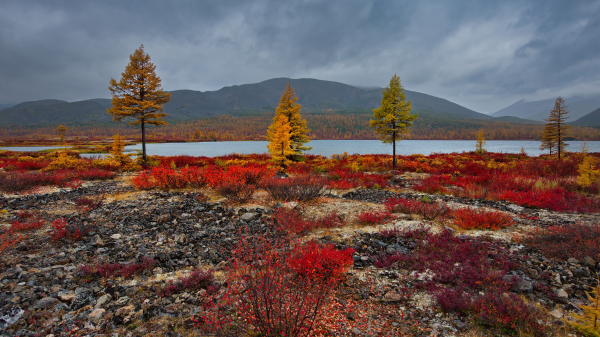
Much of the temperature rise predicted by climate models is not in direct response to rising greenhouse gas emissions but rather is due to the secondary effects or feedback mechanisms that climate models assume will occur as temperatures rise. Among the feedback mechanisms or knock-on effects that many if not all climate models hypothesize will occur is melting of the permafrost in the Arctic, which the models posit will then release stored methane and carbon dioxide, including from rivers that the melting will feed into.
Recent research published in the peer-reviewed journal Nature suggests any modeled secondary emissions impact of permafrost melting will have to be recalculated in climate models to account for a newly discovered mitigating effect.
The research by an international team of 14 scientists from universities and research institutes spanning seven countries discovered that rock weathering, which increases along with warming, reduces the amount of CO2 released under warming climate conditions.
The researchers used geochemical modelling “to infer how permafrost thaw may affect river biogeochemistry over decades to centuries across the Qinghai–Tibet Plateau. In general, their analysis of the study area suggests rock weathering reduces the amount of CO2 released by rivers by about 35 percent, varying by catchment.
“We found that river CO2 emissions decline while carbon uptake through rock weathering increases as permafrost cover decreases,” Liwei Zhang, a biogeochemist at East China Normal University and co-lead author of the study, told Science Direct. “In some catchments where permafrost has become patchier, weathering-driven carbon uptake was large enough to offset or even exceed river CO2 emissions.”
This drawdown or offset of modeled carbon dioxide emissions from rivers in response to rock weathering is not accounted for in climate models. If the study’s conclusions are correct, it is critical for this negative secondary effect to be accounted for.
“Thus, carbon fluxes from chemical weathering may become increasingly important with ongoing permafrost thaw, potentially even outpacing river CO2 emissions,” the article states. “Our findings disentangle the interplay between biological and geological carbon fluxes that are important for the cryosphere and the global carbon cycle.”
Sources: Science Daily; Nature