IN THIS ISSUE:
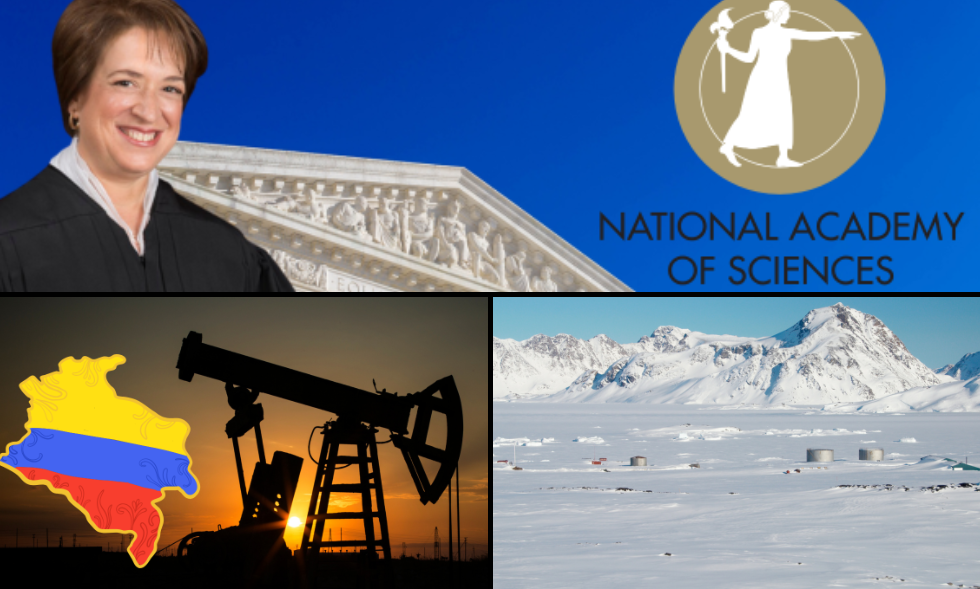
- National Academy Pulls Climate Chapter—for Now, at Least
- Colombia, Coalition of the Willing Leader, Backtracks on Fossil Fuel Phaseout
- Studies Confirm Greenland Cooling, Sea Ice Expanding
National Academy Pulls Climate Chapter—for Now, at Least
The Federal Judicial Center’s (FJC) Reference Manual on Scientific Evidence, Fourth Edition, was quietly released in late 2025, only getting a wide release in early 2026, which is when I became aware of it. Since then, I’ve repeatedly discussed the controversy and political and legal wranglings surrounding the FJC’s fourth edition, as in Climate Change Weekly 570, 574, 579, and 583.
To catch readers up, the FJC science manual is a reference guide used by judges nationwide on scientific subjects they have no special expertise in, explaining the state of science and evidence. The National Academies of Sciences, Engineering, and Medicine (NAS) coauthors and assembles the document.
The main controversy concerning the fourth edition, although not the only dispute, was the inclusion, for the first time, of a chapter devoted specifically to climate change. The problem with that chapter centered on the fact it was not neutral or unbiased, as the science manual is supposed to be, but was written by activist lawyers and academics actively involved in climate lawsuits filed across the nation, plus plaintiffs, advisors, and climate experts participating in those trials.
Being written by public advocates of climate lawsuits, while citing materials and using whole sections written by attorneys and academics testifying for the plaintiffs in those lawsuits, doesn’t just tiptoe along the line of the appearance of impropriety. It is flat-out improper and should have been sufficient by itself to disqualify the climate science document from inclusion in the FJC science manual. It represents a direct conflict of interest: judges using one side’s point of view about climate change as a reference guide for how to decide cases where science is at issue.
Interested parties in the states took notice. Led by West Virginia Attorney General John B. McCusky, 27 states’ attorneys general delivered a letter rebuking the FJC for including the biased climate science section in its reference manual. The FJC was quick to respond, removing the climate chapter from manual. This didn’t end the controversy, however, for a few reasons. First, material and statements from the same authors cited in and contributing to the now-disavowed climate chapter were also used in other parts of the manual, a problem yet to be addressed.
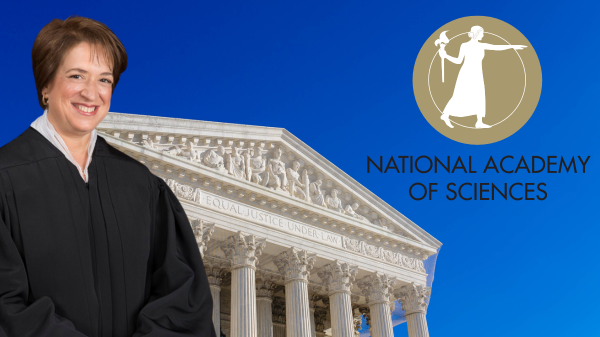
Second, Supreme Court Justice Elena Kagan has faced calls to recuse herself from a climate lawsuit pending before the court because she wrote the foreword to the fourth edition, endorsing it and implying support for chapter’s theory of climate liability by calling it a “dispassionate” guide for judges. Thus far, Kagan has rejected calls to recuse herself from the case, saying there is no evidence that she is biased or unduly influenced by the manual because she didn’t read it. Get that: she endorsed a document she didn’t read. That doesn’t inspire much confidence that she gives thoughtful, informed opinions in the cases before her.
Finally, despite the FJC’s quick retreat, the NAS stubbornly defended the chapter, calling for its continued inclusion in the manual and keeping it in the version on its website. In the face of criticism, NAS President Marcia McNutt wrote The Wall Street Journal a letter defending the climate chapter, in response to an analysis it published critiquing it.
“[The article] inaccurately describes a chapter on climate science in our Reference Manual on Scientific Evidence as biased,” McNutt said. “In fact, it was developed under rigorous procedures of the National Academies of Sciences, Engineering, and Medicine to ensure that the chapter, like all chapters in the manual, reflects the best available scientific evidence.”
President Donald Trump entered the fray in late July, writing on Truth Social,
[T]he Academy has been run by Radical Left Dumocrats who, it turns out, published fraudulent, biased, and misleading Manuals on Climate Change. These bogus Manuals were used by Judges to decide massive “Climate Change” Cases, and have created huge losses across our Country. These Manuals have been totally DISCREDITED. Our Nation’s Federal Judges deserve Facts and Science, not Political Fraud and False Science on Climate. With this TRUTH, I hereby order Federal Suspension and Debarment Officials to review this conduct. Our Taxpayers should not be funding Climate Fraud, and Judges should never have relied upon it.
For background, although the NAS receives no direct appropriations from government, in some years as much as 70 percent of its more than $360 million in annual total revenue comes through federal contracts. Without that money, the NAS would shrink considerably or have to close up shop entirely. As a result, the threat to the NAS’s continued federal funding got its attention, in contrast to the threat to its reputation as an unbiased research organization within the broader scientific community.
To wit, in early August the NAS announced it was pulling the climate chapter from its website and initiating a formal investigation into the process by which it was written. The NAS’s news release announcing the move stated,
The fourth edition of the Reference Manual on Scientific Evidence, produced in partnership with the Federal Judicial Center (FJC), included a chapter on climate science. That chapter has received considerable scrutiny, and the FJC has removed it. The NAS has determined that questions about the processes used to develop the chapter warrant an independent review, and the chapter will not appear on our website while that review is underway.
This assessment is about the process used to produce the chapter and not about the validity of climate science. The focus is on our own procedures and whether they were adequate to ensure the highest standard of objectivity that this institution requires and our nation deserves.
McNutt’s letter seems mistimed at the very least, if not ill-considered entirely, in light of this announcement.
The NAS, in its statement, has already indicated it will stand by the scientific findings in the chapter, announcing in advance it considers the results to be valid even if the process was flawed. That doesn’t work in courts of law. Perfectly true admissions of guilt, for example, are often disallowed during court cases because the court determines they resulted from improper procedures by the police or prosecutors.
I think McNutt has put the NAS in a hard spot that will likely lead to a whitewash. McNutt’s knee-jerk reaction letter already assured the public the chapter “was developed under rigorous procedures of the National Academies of Sciences, Engineering, and Medicine to ensure that the chapter, like all chapters in the manual, reflects the best available scientific evidence.”
“The draft chapter was reviewed by an oversight committee that included judges and scientists and was further evaluated by a different group of judges and scientists serving as anonymous, expert peer reviewers,” McNutt continued.
What is left to investigate if McNutt was right and the chapter was developed under proper standards and procedures?
I expect the NAS review to result in a complete vindication of its actions—although the reviewers might not come to that conclusion until after the midterm elections, in the hope that Democrats will then control Congress and ease the pressure. The best we can hope for, I suspect, is a tepid admission of a lapse in the internal review process with inadequate understanding of the biases of the authors involved in the writing and cited in the chapter by the reviewers. In other words, the NAS will claim it didn’t know those writing and cited in the chapters were intimately involved in ongoing litigation. I wouldn’t believe it, but they might make that their final conclusion.
Just like Kagan endorsing a manual for judges without ever reading it (as she now says), the NAS is on record endorsing a chapter and the process they went through to write and review it, before admitting that a review of that process is warranted. It’s a black eye for the institution, and for now, the chapter is off their website and lacks their continued sanction. That’s a win, even if only for the short term.
Sources: The Wall Street Journal (behind paywall); Prevention Web; The New York Times (behind paywall); Washington Legal Foundation; Energy In Depth; National Academies of Sciences, Engineering, and Medicine

Colombia, Coalition of the Willing Leader, Backtracks on Fossil Fuel Phaseout
In April 2026, representatives from 57 countries assembled in Colombia to attend the First Conference on “Transitioning Away from Fossil Fuels (TAAFF).” At the conference, led by Colombia and the Netherlands, a “coalition of the willing” was established to come to agreement on how, not whether, to phase out fossil fuels in the short term.
Then-Colombian President Gustavo Petro claimed climate change was destroying the Amazon and capitalism was unable to adapt to the necessary end of fossil fuels. Offering more proof that elections matter, recently elected Colombian president Abelardo de la Espriella is walking away from the agreement and the anti-capitalist, anti-fossil fuel rhetoric of his predecessor, just four months after the government committed to ending the development and use of fossil fuels.
During his inauguration, de la Espriella pledged to revive the country’s oil and gas sector, restore state-owned energy company Ecopetrol, and strengthen the electricity system, stating energy security would be a cornerstone of his administration.
De la Espriella said any shift agreed to by the prior government would be slow rather than rapid and not come at the expense of the nation’s oil and gas industry.
In contrast to Petro, who stopped awarding new oil and gas exploration contracts, de la Espriella has vowed to reverse key elements of Petro’s energy policy by offering new contracts and expanding exploration and production. De la Espriella committed to developing Colombia’s natural resources, including oil, gas, and coal. Colombia is the world’s sixth-largest coal-exporting country, and de la Espriella has already reversed his predecessor’s ban on coal exports to Israel.
Other moves the new president announced in reversing course on pledges made at the TAAFF conference included prioritizing investment in the state oil company, Ecopetrol, one of the largest sources of the government’s revenue and export earnings, and authorizing fracking to produce more oil and gas from additional fields.
Marc Morano, who operates the Climate Depot website, referred to Colombia’s reversal as a “victory for climate reality … [with the] election bring[ing] in [a] ‘Trump-supported’ gov’t that declares climate meetings an ‘absolute waste of time & money.’”
With the cohost of the TAAFF meeting backtracking, are other members of the coalition of the willing (willing to become or remain energy-impoverished, in my view) be far behind?
Sources: Los Angeles Times; Climate Depot; Mining Weekly
Studies Confirm Greenland Cooling, Sea Ice Expanding
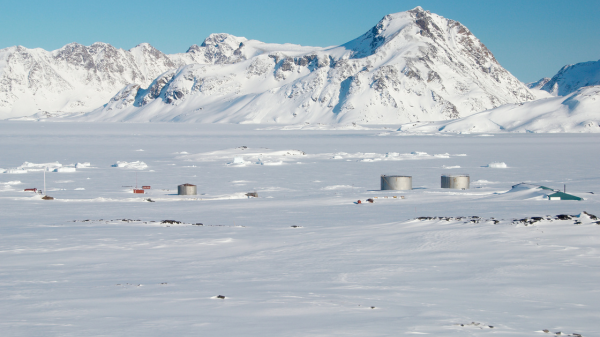
Recent peer-reviewed research indicates the much-ballyhooed “permanent” sea ice loss in the Arctic and around Greenland has been overstated or exaggerated. A sharp and rapid decline in sea ice was touted by some scientists and the mainstream media as one of the most certain and visible signs of climate change. Some even predicted summers without sea ice would be a common occurrence or regular state of affairs by now. Mounting evidence indicates nature had a different future in store.
Instead of the continual warming predicted by climate models and forecast by climate alarmists, large parts of Greenland cooled by about 1℃ between 2016 and 2024. That was accompanied by a substantial increase in annual mean sea ice in the region: sea ice extent in the Greenland Sea was 8.4 times greater in 2023 than in 2019, with January sea ice 6.4 times greater than in 2017. These are, of course, short-term measurements, but then so was the sharp decline in sea ice measured earlier in the century that was touted as showing a long-term decline and proof of ongoing damage by human-caused climate change
These findings will be published in the September 2026 edition of the journal Polar Science. The researchers used remote sensing data from the Sentinel-1 Synthetic Aperture Radar satellite operated by NASA in cooperation with Copernicus.
The reversal of sea ice trends in Greenland is consistent with those in the wider Arctic. Research published last year in Geophysical Research Letters (GRL) indicated there has been no statistically significant September sea ice loss in the Arctic since 2005. For 20 years, amid an ongoing rise in human-caused greenhouse gas emissions, there has been no measurable decline in sea ice at the nadir of the Arctic’s annual summer season. This stable sea ice trend is not a blip or an anomaly measured at one or a few locations across the Arctic. It “is robust across observational data sets, metrics, and seasons,” the researchers write.
Both teams of scientists involved in the sea ice research attribute the relatively stable trends in the Arctic and the increase in sea ice in Greenland to natural factors.
“The modeling evidence suggests that internal variability has substantially offset anthropogenically forced sea ice loss in recent decades. Overall, this observed pause in Arctic sea ice decline is consistent with simulated internal variability superimposed on the long-term trend according to the bulk of the climate modeling evidence,” the authors of the GRL study state.
“The remarkably large sea-ice extent in 2023 and 2024 strongly reminds of a re-occurrence of [the] Odden … ice tongue which formed regularly near [Greenland’s] West Jan Mayen Ridge,” the researchers write in Polar Science. “Further analysis of atmospheric conditions and sea-surface temperature in the study area suggests that the large sea-ice extent in 2023 and 2024 cannot be explained by a single driver but is the result of several interacting factors.”
Together, these two studies strongly suggest nature, not humans, still controls the climate at the frigid top of the world.
Sources: No Tricks Zone; Polar Science; Geophysical Research Letters