IN THIS ISSUE:
- Climate Lawfare Under Counterassault, Finally!
- Met Office Temperature Inflation Exposed, Again
- Ancient Temperatures and Carbon Dioxide Not Correlated, New Study Finds
Climate Lawfare Under Counterassault, Finally!
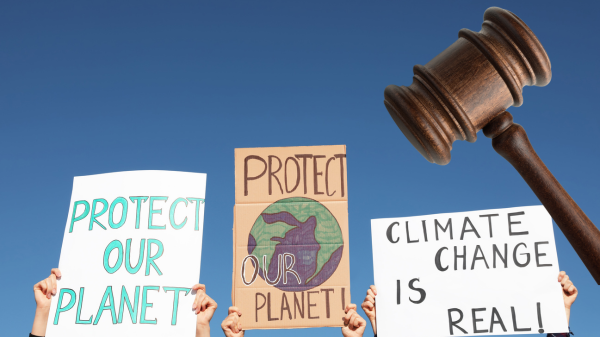
Over the years, I’ve covered climate lawfare. First, I described a series of dozens of lawsuits filed against fossil fuel companies and industry lobbying groups by climate activist law firms and cities, supposedly on behalf of residents and individuals such as youths, in an attempt to use the court system to impose carbon dioxide restrictions. The effort to engage the judiciary to legislate from the bench across dozens of state and local jurisdictions has failed so far, having been tossed out of a federal court in California and state courts in Maryland, New Jersey, New York, and Pennsylvania. Despite the costly, mounting losses, new lawsuits keep getting filed, or old lawsuits based on different claims refiled, clogging the courts and wasting billions of dollars in legal costs. That is money the industry could have used to develop new production, better securing American energy dominance and lower costs for consumers.
Direct climate lawfare efforts may soon be coming to an end. The U.S Supreme Court has been loath to remove state lawsuits to federal courts, despite clear and legitimate interstate commerce and federal and international law supremacy concerns. In February, however, the court accepted a climate lawfare case out of Boulder, Colorado.
“Boulder contends that oil and gas companies have knowingly played a role in exacerbating climate change and therefore have caused millions of dollars of damage to its property and residents,” reports ScotusBlog. “The oil and gas companies urged the state courts to dismiss the case, arguing that the state-law claims are superseded by federal environmental laws and the federal government’s power to conduct foreign policy.
“[The defendant oil companies] told the justices that the dispute ‘provides the Court with its best opportunity yet to resolve one of the most important questions currently pending in the lower courts,’” continued ScotusBlog, citing the companies’ legal brief. “‘Energy companies that produce and sell fossil fuels … are facing numerous lawsuits in state courts across the Nation seeking billions of dollars in damages for injuries allegedly caused by the contribution of greenhouse-gas emissions to global climate change … but as the Court has recognized for over a century … the structure of our constitutional system does not permit a State to provide relief under state law for injuries allegedly caused by pollution emanating from outside the State.’”
A broad ruling for the companies and against Boulder, with a finding that the claims in Boulder’s lawsuit fall solely under the Federal government’s, particularly Congress’s, purview under the Interstate Commerce Clause and the government’s authority to conduct foreign policy, could end this type of lawfare.
A narrower ruling—and narrow rulings are what the Supreme Court loves to issue—could remove the lawsuit from the state court, leaving it and similar cases for federal courts to decide. That would mean fewer lawsuits, which would be consolidated and would likely end up back before the U.S. Supreme Court in the future, especially if there is a split among federal courts concerning the merit of such lawsuits.
A finding for the plaintiffs, and the sue-a-thon continues.
Regardless, seeing the writing possibly on the wall for such lawsuits, climate activists have not been idle. They are seeking a backdoor way to get judges to legislate climate policy from the bench; climate lawfare part deux, if you will. As I wrote in CCW 570 and 574, climate alarmists have been attempting to undermine the independence of the judicial system by presenting biased information, written by climate activists often actively involved in the lawsuits, to judges involved in or likely to be involved in climate change cases. They were successful in adding a legally compromised climate change chapter to the Fourth Reference Manual on Scientific Evidence by the Federal Judiciary Center, the reference book for science before the federal courts, and through a series of judicial retreats and workshops for judges hosted by the Environmental Law Institute. Both these efforts have gotten the attention of states’ attorneys general and Congress.
Most recently, as detailed by Energy in Depth,
House Judiciary Committee Chairman Jim Jordan (R-OH) and Subcommittee on Courts Chairman Rep. Darrell Issa (R-CA), are accelerating their investigation into climate activists, plaintiffs’ attorneys, and the “improper attempts by the Environmental Law Institute and its Climate Judiciary Project to influence federal judges.”
The committee sent letters to Michael Burger, the Executive Director of the Sabin Center for Climate Change Law at Columbia Law School, Jordan Diamond, the President of the Environmental Law Institute (ELI), and Vic Sher of Sher Edling, the law firm supporting many of the climate lawsuits around the country, seeking more information on their efforts to communicate biased and subjective information to judges who may soon rule on climate litigation.
It’s a significant escalation in an investigation into an influence campaign that included Jordan and Issa sending letters in January to the Judicial Conference of the United States, the Federal Judicial Center and plaintiffs attorneys David Bookbinder and Roger Worthington, and an initial letter to ELI in August 2025.
This is the second time the House Judiciary Committee has sent letters to the academics, nonprofits, and litigators involved in the ELI retreats.
A more direct effort to end climate lawfare is also underway. Rep. Harriet Hageman (R-WY) recently introduced the Stop Climate Shakedowns Act of 2026. As an article in the Daily Caller describes Hageman’s bill, it would by federal law force the dismissal of all active climate litigation and “overrule state-level laws penalizing energy production, prohibit retroactive lawsuits over carbon emissions and reaffirm the federal government’s sole authority to regulate greenhouse gases.” This bill is more than a decade overdue and shows real promise and finality if it can get through the Senate, a big if.
Short of that, unless and until tax-exempt nonprofits and university-linked research institutes cease their obvious attempts to prejudice the judiciary to adopt their position on the causes and consequences of climate change and impose the groups’ preferred remedies of fossil-fuel restrictions, the best path forward might be for the federal government to defund and/or remove the tax-exempt status from any university or nonprofit involved in such efforts. This does not bar the courthouse door to these groups. But it will make clear to the judiciary that the federal government neither supports nor endorses their efforts, and it will deny them scarce taxpayer dollars for an effort that compromises the rule of law and the constitutionally designed separation of limited powers, and harms U.S. energy and economic security and the well-being and pocketbooks of Americans in general.
It’s Congress’ role, if any branch of government, to make energy policy. Not the courts, and certainly not interest groups attempting to break down the walls between the legitimate, constitutionally designed and assigned roles of the different branches of government. The time is now for the Supreme Court, Congress, or better yet both, to end climate lawfare once and for all.
Sources: House Judiciary Committee; Climate Change Weekly; ScotusBlog; Daily Caller
Met Office Temperature Inflation Exposed, Again
New investigative research suggests it is 10,000 to 1 against the claim corrupted temperature stations maintained by the U.K. Met office—the official weather and temperature service for the United Kingdom—are reporting temperatures accurately.
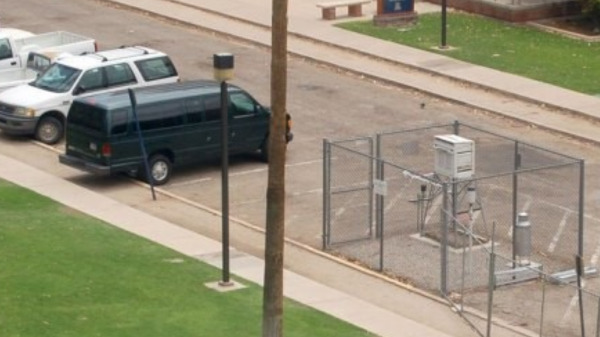
An independent U.K. researcher, Dr. Eric Huxter, spent a year examining temperature data from 96 compromised temperature stations operated by the Met Office, seeking to explain an unnatural spike in daily high temperatures when compared to a well-sited station. The problem is not just poor location but also a difference in the measuring technology used. Newer technologies are able to capture miniature minute-long or shorter heat spikes, especially when compared to the previous liquid-in-glass thermometers, which could not register such spikes. Such short-term, highly localized spikes can skew a station’s reported high, low, and average temperatures.
Huxter compared electronic measurements at stations identified as poor-quality because their location reflects the urban heat island effect from nearby artificial heat sources, with temperatures recorded at a rural Commission for Instruments and Methods of Observation (CIMO) temperature site. CIMO stations are defined by the World Meteorological Organization as the highest-standard, “reference-quality” stations, designed and located to receive minimal environmental interference, ensuring highly accurate data with a maximum of 100-meter separation from heat sources.
Chris Morrison, writing for the Climate Skeptic, describes Huxter’s methodology:
During his year-long project, Dr. Huxter examined 340 daily maximum temperature highs recorded across 96 Met Office stations and discovered that these sites showed average short heat spikes around 1.1°C. Most of these spikes occurred around daily ‘records’ in junk CIMO Class 3, 4 and 5 locations. These sites have internationally recognized ‘uncertainties’ or possible errors of 1°C, 2°C and 5°C respectively. But spikes in temperature can occur naturally, so Huxter consulted a full year of individual minute temperature figures at a pristine Class 1 site in open farmland at Rothamsted. From the purchased records—a total of 525,541—he was able to compile a baseline probability control.
The large discrepancy between the pristine CIMO station and the compromised stations’ temperatures on “spike” days is almost impossible to be attributable to actual differences in temperatures, as opposed to siting or technology differences.
Regarding the different outcomes attributable at least in part to different technologies, Morrison writes,
The daily maximum high, along with the minimum low, is a key number in calculating average temperatures and is behind the Met Office’s ubiquitous claims of ‘hottest ever’ days. If the automated sensors, which move much quicker than the old liquid-in-glass thermometers, catch brief exaggerated spikes rather than true ambient air temperatures, then the outlier information will end up corrupting all the daily, monthly, annual and decadal averages. Eventually some of this information will end up in global datasets and will help exaggerate the rate of recent cyclical global warming.
Extreme examples of heat spikes are not uncommon. On May 1st last year, the Met Office claimed its station in Kew Gardens recorded a temperature at 2.59 pm of 29.3°C. Promoted by the BBC, this was said to be the highest temperature ever recorded for this day in the UK. But the temperature was a massive 2.6°C higher than that recorded at 2 pm and no less than 0.76°C above the figure recorded a minute later on the hour.
The Met Office is aware of the problem but has ignored it when reporting on daily, monthly, and annual temperature records. The office claims it has “corrected” the record to account for the UHI and anomalous short-term spikes, without specifying how it is doing so. It simply claims “everything we do at the Met Office is based on peer reviewed science and subject to external scrutiny.
“To ensure we [the Met Office] maintain continuity of long-term datasets we use peer reviewed science methods that, where stations have closed, use well-correlated observations from other nearby stations to help inform long-term average,” says the Met office. However, the agency has not disclosed its methodology for adjusting for the identified problems or discussed the short-term discrepancies between different types of measuring instruments or why people should trust temperatures reported from stations that have been shuttered based on readings from nearby sites or that have been replaced by new technologies and different locations. That is not a sound scientific research methodology for compiling and reporting supposedly “continuous records.” This is not the first time that weaknesses in MET office data have been scrutinized or exposed. I discussed similar findings at Climate Change Weekly nearly a year ago, in June 2025. I also discussed the switching of temperature stations in the United States, in which data gatherers illegitimately treat new ones in a different location as if they were a continuation of previously existing locations that were closed. Filling in data from nonexistent locations, ghost stations, by averaging for a site from nearby locations or treating a new location as the same is not sound science, does not produce legitimate “data” (numbers that would pass any legitimate data quality review), and shouldn’t be used to report temperatures, much less purportedly “record breaking” temperatures.
Source: The Climate Skeptic
Ancient Temperatures and Carbon Dioxide Not Correlated, New Study Finds
Research recently published in the journal Nature blows up one or both of two narratives: that climate change has historically been driven by significant changes in carbon dioxide emissions, or that the Earth’s climate is so sensitive we should sharply curtail carbon dioxide (CO2) emissions before a climate disaster ensues.
The study examined the relationship between atmospheric CO2 levels and methane levels and temperatures via proxy data over the past three million years. The team of international researchers found CO2 and methane levels were largely stable for millions of years during interglacials and ice ages alike, changing by amounts within the margin of potential error or the inability to measure accurately through proxy data, over periods in which temperatures rose and fell multiple times by as much as 5℃ or more, sometimes over short time periods.
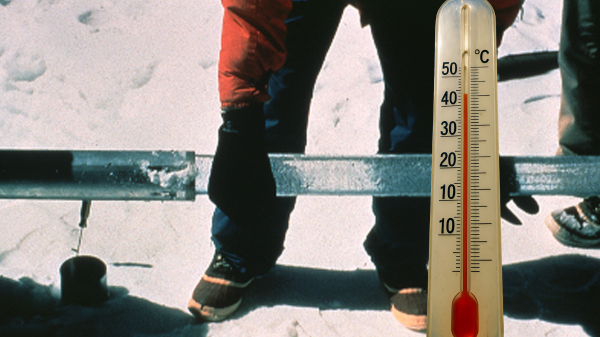
The ice cores the researchers sampled in Antarctica suggest shifts in temperature by as much as 5℃ occurred, despite no change in methane concentrations and sometimes a minimal change in CO2 (20 parts per million). The temperature changes correlated sometimes with the possibly nonexistent shift of 20 ppm, but sometimes they did not. It’s important to note the 20 ppm changes teased out of the proxy records are six times less than the amount of increase since 1830, during which time temperatures have increased by 1.2 to 1.5℃, much lower than the 5shift they are linking to much smaller CO2 changes.
Commenting on this finding, Zero Hedge notes,
The climate science world (‘settled’ division) is in shock following the discovery in ancient ice cores that levels of carbon dioxide remained stable as the world plunged into an ice age around 2.7 million years ago. …
The latest Nature-published research gives a snapshot from ancient Antarctica ‘blue’ ice drilled in the Allan Hills area. It looks back further in time past the usual 800,000 ice core records. The key finding is that over the last three million years, when sea levels fell and ice periods intensified, the level of the main ‘greenhouse’ gases remained remarkably stable. For the first time, the work has pushed the direct gas measurements back into the late Pliocene era. Over the last three million years moving into the Pleistocene, global temperatures showed a long-term cooling trend of several degrees Celsius, interrupted by increasingly large interglacial oscillations. Interglacial temperature swings, as in the current Holocene, often see temperatures rise by 5°C and more.
With such significant temperature swings during periods of minimal or nearly immeasurable changes in CO2 and methane, one might be forgiven for believing this might make the scientists involved in the study question the “greenhouse gases drive climate change” narrative, but not so.
“We definitely were a bit surprised,” was the takeaway from the study’s lead author, Julia Marks-Peterson of the College of Earth, Ocean, and Atmospheric Sciences at Oregon State University in Corvallis, Oregon. “If correct, the findings may suggest that even small changes in greenhouse gas levels could trigger major shifts in climate.” Nope, even minimal changes in CO2 can drive climate change: they just don’t always do so or correlate with climate change. The past 170 years of so of modest climate change suggests even huge changes in CO2 come with minimal or no changes in temperature or extreme weather. This is especially telling because all or part of the present 1.2 ℃ change could be due to a variety of factors such as the urban heat island effect, the recovery from the little ice age, and reductions in sunlight-blocking pollution, with researchers wrongly attributing the changes to CO2-induced warming.
In fact, the recent temperature rise may be entirely natural, as suggested in the book Unstoppable Global Warming: Every 1,500 Years or as Les Hatton, emeritus professor in computer science at Kingston University, has teased out from ice core records.
“100-year rises of 1.1°C in the current interglacial, which started 20,000 years ago, have occurred in one in six centuries,” writes Zero Hedge, citing Hatton’s research. “Going back 150,000 years, the frequency was around one in six to one in 20 centuries.”
Sources: Zero Hedge; Nature