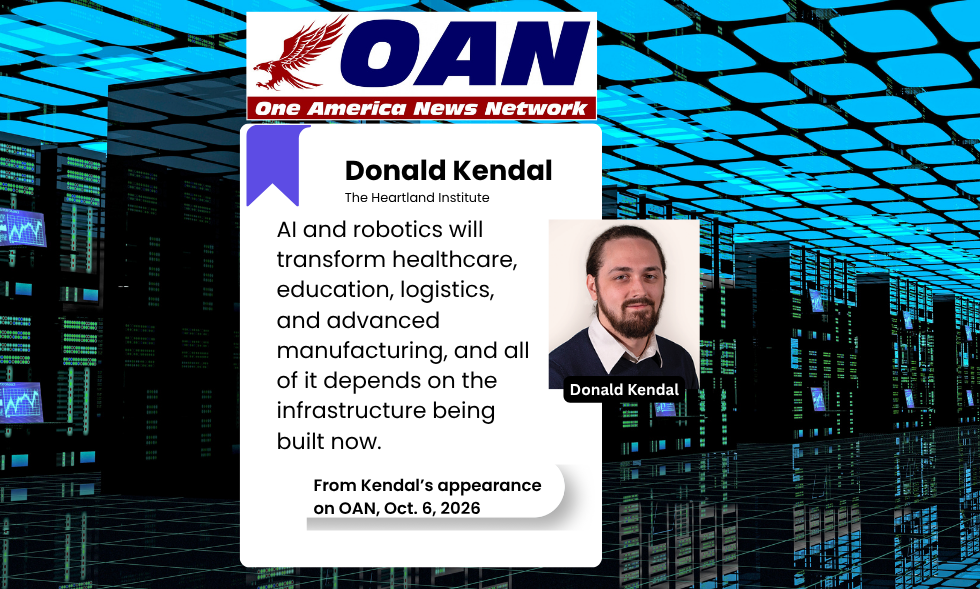
Polls show that many Americans now oppose building new data centers. They point to strained power grids, rising utility bills, and heavy water use. Donald Kendal, director of the Glenn C. Haskins Emerging Issues Center at The Heartland Institute, appeared on One America News Network to argue that this resistance overlooks the large benefits these facilities bring to their communities and to the country.
Kendal began by explaining what data centers actually do. Recent headlines tie them to artificial intelligence, but they have supported everyday digital life for decades, including e-commerce, social media, and streaming.
“That cloud is actually a physical thing,” Kendal said. “That infrastructure is data centers.”
The United States already has about 3,000 active data centers, and nearly 2,000 more are planned or under construction. Kendal called the backlash against them “a bit of a perfect storm.” Part of it is unease about AI in general. On top of that, he said, the left distrusts “the billionaire class,” and the right still remembers big tech’s era of censorship. Together, these produce a broad resistance to the companies building these facilities.
Kendal said this narrative leaves out what data centers deliver locally. Building them creates construction and engineering jobs, and the finished facilities generate a great deal of tax revenue. He cited Loudoun County, Virginia, where data center property taxes have more than made up for falling revenue from traditional commercial real estate.
Kendal also tied data centers to America’s competitiveness in the world. He said AI and robotics will transform healthcare, education, logistics, and advanced manufacturing, and all of it depends on the infrastructure being built now.
“It all stems from artificial intelligence and the idea of being at the forefront of that issue,” Kendal said, “and keeping a head and shoulders lead over our geopolitical rivals of China.”
Watch below:

Donald Kendal is Director of The Heartland Institute’s Socialism Research Center. Kendal is also the host of Heartland’s In the Tank Podcast.