Forward this issue to your friends and urge them to subscribe.
Read all Life, Liberty, Property articles here, and full issues here and here.
In This Issue:
Life, Liberty, Property #158
- Rising Pushback Against the Surveillance State
- Video of the Week: What The Flock?! – In The Tank #549
- States (Finally) Look into SNAP Fraud
- New Support for Interest Rate Reduction
- Massachusetts Initiative Would Encourage Starter Home Construction
Rising Pushback Against the Surveillance State
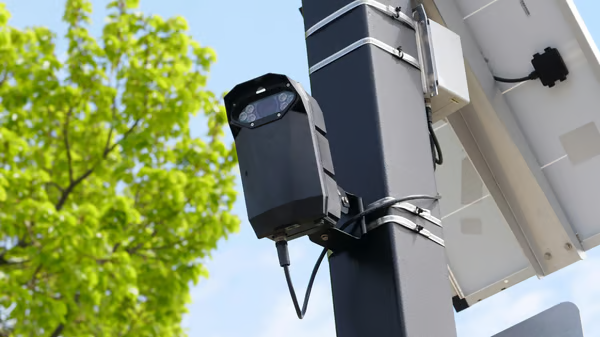
Cities and states across the country are reacting quickly to residents’ concerns about governments’ rapidly expanding use of public surveillance cameras, automated license plate readers, sound detection devices, and the like.
This reflects a much-needed debate over when governments’ crime-protection efforts cross over into illegal searches and invasions of people’s privacy.
The Flock Safety company’s AI-assisted surveillance systems comprise more than 120,000 cameras in 49 states, identifying 20 billion license plates each month, plus other features of vehicles on the nation’s streets.
Public debate over Flock cameras in particular has risen rapidly in recent weeks, with communities increasingly bowing to pressure to remove the devices, turn them off, or limit the collection and storage of the data they accumulate.
Last Monday, for example, the Douglas, Massachusetts Police Department announced it was discontinuing the use of Flock cameras and deactivating the department’s monitoring accounts immediately, citing “what they described as a ‘divisive atmosphere’ surrounding the use of the cameras,” Boston 25 News reported.
Numerous communities in other states have banned the use of the cameras, including Arizona, Florida, Kentucky, Massachusetts, Wisconsin, and others Action is pending or under consideration in Louisiana, Michigan, Minnesota, New York, and multiple other states.
Members of Congress are joining the fray as well.
“Flock cameras are emerging as a rare area of bipartisan agreement on Capitol Hill, with conservatives and progressives in particular speaking out on the issue in recent weeks,” Axios reports. “A trio of House Republicans led by Rep. Tim Burchett (R-Tenn.) introduced a bill last month to prohibit the federal government from purchasing Flock cameras or similar technology.”
Flock emphasizes that “customers own the data, decide who can access it, and choose who they share it with.” The “customers” are the governments that use the cameras. Flock’s statement places the responsibility where it belongs: the governments that use these devices and compile the information on people’s movements—and on the people who vote those governments into power.
That last part is the key to a solution of the dilemma of how to balance security and privacy.
Opponents of the burgeoning use of Flock cameras argue—correctly—that the systems are creating a surveillance state in which governments collect massive amounts of data on people who have not been accused of any crime. Artificial intelligence has enabled the sophisticated use of this data to compile comprehensive information about the travels and habits of anyone who lives in or moves through any area being monitored.
Although Flock places limits on how long its government “customers” can store the information and use it to build dossiers on people who have not been accused of any crime, that inspires little trust in a nation where the National Security Agency spied on the American people for at least a decade under cover of alleged searches for foreign terrorists.
Increasing use of the system by police for criminal purposes provides further reason to doubt the safety of this data and to question government workers’ and officials’ respect for people’s privacy rights.
In just the past 10 days, police officers and other government personnel were indicted in Florida, Georgia, Kentucky, Missouri, Texas, Wisconsin, and elsewhere for using police cameras to track people for personal reasons. These commonly involve thousands of searches by a single officer, and in some cases tens of thousands.
The Institute for Justice has found 170 cases of law enforcement personnel’s misuse of data from automatic license plate readers and Flock cameras, with more cases coming to light each day.
While these illegal uses are obviously unjustifiable, the public is finding the legal applications increasingly dubious as the full implications of this government power become clearer.
In principle, the use of license plate readers, Flock cameras, and the like is nothing new. The cameras function like a police officer walking a beat, the photographs and license plate numbers are analogous to an officer noting them down or taking pictures, and the records are analogous to a vast filing cabinet in which these items are stored and made easily accessible.
The only thing that is different about the situation today is the enormous amount of information the police are able to collect and analyze through these new technologies, especially with AI.
Although the Constitution forbids searches without a warrant, we expect police to keep an eye on public places, and they certainly have the authority to do that. Accordingly, the Supreme Court has consistently ruled that people cannot expect the same privacy in public that they have on private property, though the Court has recognized some limits on government access to private data.
That is what gives states the authority to install these systems through their local governments.
It also gives the people the right to decide not to do so.
Not everything that is constitutional is good or even justifiable. The people and their chosen representatives in government should decide the matter, and the only way for that to happen is for people to make their opinions heard and force state and local politicians to make their intentions clear and then abide by their promises.
In my view, the best solution to this problem is for states to make it illegal for any police officer or other personnel in any level of government to inspect any surveillance data without a warrant, signed by a judge, citing a specific suspected crime.
Ideally, this access should be limited to suspected felonies, not misdemeanors such as traffic violations. The use of these cameras as government revenue generators is not a legitimate government police power.
This approach would preserve the ability of police to investigate real crimes while ensuring people’s right to use public roads, spaces, and accommodations without being subjected to unwarranted and unnecessary government documentation of their whereabouts and actions.
This debate is exactly what we need. Now it’s up to the voters to decide what to do about it.
Sources: Boston 25 News; Axios; The Center Square
Video of the Week

One of the biggest tech-related debates right now, which also overlaps with concerns about privacy rights and government overreach, is over new Flock camera systems being used on public and private property. These camera systems are interconnected, in part so police departments can more easily coordinate between jurisdictions to solve crimes… but at what cost? Supporters say it’s worth it to stop crime, opponents say it’s an invasion of privacy and expansion of the surveillance state. The panel discusses how much is too much, and whether regulations already exist to limit public surveillance.
The Latest Heartland Institute Report
‘Today’s crisis is a product of government errors, not greedy landlords, institutional investors, and so-called market failure.’
States (Finally) Look into SNAP Fraud

State governments are preparing to increase their attention to eligibility for food stamps, the federally funded Supplemental Nutrition Assistance Program the states manage. The states must reduce their payment error rates below 6 percent by October of next year or pay 5, 10, or 15 percent of their SNAP costs, on a graduated scale depending on the magnitude of their error rates.
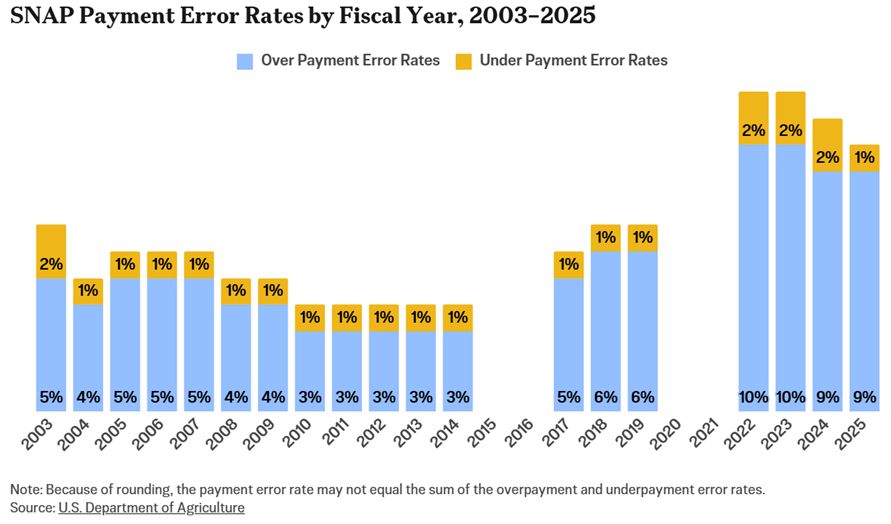
Forty-one states and the District of Columbia had error rates above the threshold in 2025, the Department of Agriculture reported. Error rates have ballooned in recent years:
Source: The Epoch Times
Enrollments are already decreasing, The Epoch Times reports: “Even though the deadline is more than a year out, enrollment in the program has dropped by more than 5 million recipients as a result of the stricter rules, according to Agriculture Secretary Brooke Rollins.”
SNAP exemplifies the enormous problems with programs funded by the federal government and administered by the states. The states have little incentive to track down fraud, because it reduces the flow of taxpayer money into their coffers from other states, as I have noted recently in issues 131, 143, 149, and 154.
The numbers confirm this. “With an overall error rate of 10.6 percent, nearly one in nine food stamp allotments went to an ineligible recipient or was paid in the wrong amount,” the Epoch Times story reports.
An error rate of 6 percent is an unacceptable amount of waste of taxpayer dollars, in my view, though it is certainly a good deal better than 10.6 percent, of course.
The states can reduce this fraud fairly easily if they put some effort into it, the story notes: “State agencies made improper payments mainly because they did not verify recipients’ eligibility criteria, such as citizenship, employment, finances, identity, residency, and household size, before making a payment, according to the Government Accountability Office.”
These “errors” cost taxpayers more than $10 billion in the past fiscal year, with 87 percent of the waste arising from overpayments. The quotation marks around the word “errors” are justified by the fact that the overpayments result from state governments’ negligence or tacit suborning of theft, not some unavoidable accident.
The proof of the states’ complicity in this massive fraud is in the fact that they are making efforts to reduce the thefts now that they have to share in the cost.
Source: The Epoch Times
New Support for Interest Rate Reduction
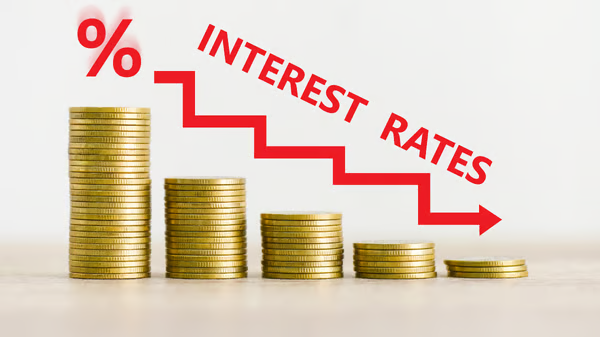
I hate inflation as much as the next guy, even if the next guy is inflation ultra-hawk David Stockman, President Ronald Reagan’s first director of the Office of Management and Budget. I differ from most such hawks, however, in placing full responsibility for inflation on overspending by Congress and the presidents over the years.
As I’ve argued regularly in this newsletter and other writings, the Federal Reserve (Fed) would have no incentive to inflate the money supply if it were not for the massive federal budget deficits they have to cover lest the government’s siphoning of ever-larger amounts of resources from the private sector plunge the nation into hard recessions and high unemployment.
That is why I believe that new Fed Chair Kevin Warsh is right to be cautious about raising interest rates and to concentrate instead on reducing the Fed’s balance sheet, an alternative way of shrinking the money supply. I have been arguing since 2024 that the Fed should reduce interest rates to ensure sufficient liquidity for private sector expansion.
New support for that position has just arrived from the good people at Truflation, developers of a daily inflation index that uses updated metrics to give a more accurate number than the federal government’s Consumer Price Index.
In “The Case for Lower Interest Rates,” the Truflation team argues for multiple interest rate cuts. “The Federal Reserve should begin a gradual, data-dependent rate reduction cycle,” the document states. The writer gives several reasons for this:
Inflation remains above 2%, but a meaningful share of the recent increase is supply-driven, particularly energy. Trimmed-mean and real-time measures put underlying inflation much closer to target. Meanwhile the labor market is cooling through weaker hiring, consumer buffers are eroding, and policy is clearly restrictive in the sectors most exposed to rates. A measured cut would be a recalibration of restraint, not a shift to stimulus.
The paper supplies data supporting those evaluations. The point is that high interest rates are holding back the economy much more than they are contributing to inflation of consumer prices, which have been affected much more powerfully by oil price shocks.
As a result, at present the key to keeping central bank policy from adversely affecting the economy and the value of the dollar is to reduce interest rates, not raise them or hold them steady:
The case does not depend on declaring victory over inflation or diagnosing a recession. It depends on recognising that the balance of risks has changed: inflation risk is smaller and more supply-driven; employment risk is rising; the consumer is more fragile; and real restraint is quietly increasing as inflation falls. A gradual reduction lets the Fed keep policy restrictive at a lower nominal rate while cutting the risk of unnecessary damage to jobs and growth.
Keeping interest rates where they are or raising them would put all the burden of tight monetary policy on the nation’s workers. That is no way to solve an affordability crisis, and it is poor stewardship of the value of the U.S. dollar.
Source: Truflation
‘The CSDDD is the greatest threat to America’s sovereignty since the fall of the Soviet Union.’

Massachusetts Initiative Would Encourage Starter Home Construction
There is now widespread agreement that a central element of the housing affordability crisis is the failure of supply to increase in step with rapidly rising demand, as I wrote in my Heartland Institute paper titled “Housing Affordability: America’s Short-Term Crisis and Long-Term Problem.” The supply shortage is not a “market failure” but an outcome of the minefield of government policies on the federal, state, and local levels.
These rules, regulations, and tax policies place excessive restrictions on where people can build houses, the sizes of those structures and of the properties on which they sit, what features those houses must include, and countless other factors.
These policies have raised the costs of starter homes in particular. State and local governments’ requirements for minimum lot sizes are especially damaging to this part of the market, strangling the supply of affordable homes for first-time buyers, such that the average age of those buying their first home is now a record 40 years.
These houses cost much more than they did before the pandemic-era inflation, Realtor.com reports:
There are still approximately 300,000 fewer low-cost listings now than there were in 2019, and the typical starter home comes with a nearly $90,000 premium.
When mortgage rates are factored in, qualifying for a starter home now requires a household income of around $78,000, up from just $43,000 seven years ago.
It is a supply problem, the Home Buying Institute reports:
- In the U.S., starter homes plummeted from 40% of new construction in the early 1980s to just 7% by 2019.
- Builders now construct 65,000 entry-level homes annually compared to 418,000 in the late 1970s.
- Homes under 1,800 square feet dropped from 37% of new construction in 1999 to under 24% by 2021.
- Builders earn higher profit margins on large homes because fixed costs like permits and utilities don’t change with home size.
- Strict zoning laws and nearly $94,000 in regulatory fees (roughly 24% of a home’s price) make it harder for builders to price new homes for entry-level buyers.
Note item five in that list.
When governments are causing problems, the solution is to reverse the policies that are doing the damage. That is common sense.
An organization is Massachusetts has developed a ballot initiative that would do exactly that. “Legalize Starter Homes was launched in July 2025 to support a 2026 ballot question that would allow single-family homes to be built in any residentially-zoned area as long as the lot has at least 5,000 square feet, at least 50 feet of land bordering the street, and access to public sewer and water services,” the organization’s website states.
Lot-size requirements raise the cost of housing in the state and make starter homes a bad investment, the organization argues:
Because land is so expensive in much of Massachusetts, allowing homes on smaller lots will reduce the cost of homes for buyers and will make it so that developers don’t have to build giant McMansions just to justify the cost of assembling the land. Thus, legalizing starter homes in Massachusetts will result in smaller homes, more affordable homes, and more homes in general.
These regulations place special and entirely unnecessary burdens on young people, the elderly, families, middle-income households, and the Massachusetts economy, the organization states:
- Skyrocketing costs have made [Massachusetts] the hardest state for young adults to buy a home, and the middle class is shrinking. As a result, a third of Massachusetts residents—especially those ages 26-34—are considering leaving, threatening the state’s economy and separating families.
Those factors also reduce tax revenues, it is worth noting.
The high cost of housing in Massachusetts is causing people to flee the state, local business leaders say:
A new report from the Greater Boston Chamber of Commerce found that between 2024 and 2025, Massachusetts lost 33,000 workers to seven competitor states. Why did most of them leave? Not because they hate cold weather, since a good chunk of them moved to New Hampshire. But because they simply can’t afford to live here.
The referendum would not solve the state’s housing shortage on its own. Legalize Starter Homes estimates the lot-size reform would generate an additional 2,200 to 5,700 new homes per year. The state legislature can and should implement further regulatory reforms to remove other impediments to housing construction in the state, with special attention to starter homes.
Massachusetts voters will decide the matter this November.
This is an initiative that other states would do well to replicate if their local governments are imposing restrictions like those in Massachusetts.
Sources: Yes on 7: Legalize Starter Homes
Contact Us
The Heartland Institute
1933 North Meacham Road, Suite 559
Schaumburg, IL 60173
p: 312/377-4000
f: 312/277-4122
e: [email protected]
Website: Heartland.org



S. T. Karnick is a senior fellow and director of publications for The Heartland Institute.