Life, Liberty, Property #154: The Nonpartisan Case for Punishing Government Program Fraud
Forward this issue to your friends and urge them to subscribe.
Read all Life, Liberty, Property articles here, and full issues here and here.
In This Issue:
- The Nonpartisan Case for Punishing Government Program Fraud
- Video of the Week: Our Elections Are In Peril! – In The Tank Podcast #546
- A Housing Affordability Turnaround?
- Portland’s Blazer Dilemma
DON’T MISS THIS!
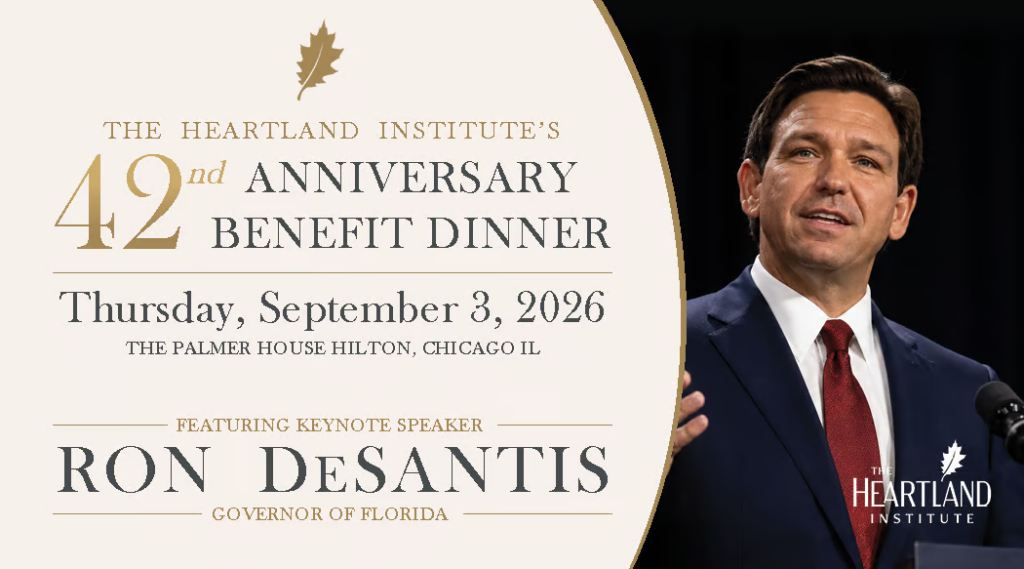
Heartland and Ron DeSantis
Join us on Sept. 3
The Nonpartisan Case for Punishing Government Program Fraud
The Trump administration has announced another step in its efforts to identify fraud in government programs and, of equal importance, hold states, organizations, and individuals responsible for it.
The Centers for Medicare and Medicaid Services have placed a hold on more than $867 million in scheduled Medicaid payments for California and more than $200 million for Minnesota, on top of $1.3 billion and $259 million withheld from those two states, respectively, earlier this year.
Opponents of the administration’s actions in combating entitlement fraud characterize the president’s endeavor as vindictive and politically motivated. Those complaints are unjustified for multiple reasons.
The claim of political spite, for example, is morally unfounded. The administration’s motive for rooting out fraud has nothing at all to do with whether it is good government policy and a just cause. Fraud is wrong, obviously, and the government has a strict responsibility to ensure that it is not allowing some people to steal other people’s money through any means, including via taxpayer-funded programs.
One of the (very few) duties of government is to protect people’s property rights. If a president sees fraud prevention as working to his political advantage, we should be overjoyed that the system is working properly for once.
That makes assertions about vindictiveness irrelevant. The only way to prevent crimes is to uncover violations and punish the perpetrators. It is obvious that merely telling people not to cheat “the government”—which actually involves robbing from their taxpaying neighbors—will not eliminate these thefts. And if state governments can easily get away with gaming the system so they can secure more benefits for their constituents without having to raise the taxes themselves, certainly some will do so.
That means individuals and governments must pay some price for their crimes. States should pay a heavy price for these offenses, as should individuals who engage in these frauds. These are simple truths.
Gov. Tim Walz of Minnesota disagrees with that.
“The Trump Administration is cutting more money in healthcare than they’ve prosecuted for fraud,” Walz, told The Epoch Times. “The math doesn’t add up. They’re not punishing fraudsters, they’re punishing children, seniors, working families, and people with disabilities. This is about cutting healthcare for people they don’t care about in their campaign of retribution against Minnesota.”
The complaint that innocent people will be affected by the punishment as funds are cut off to their states is shortsighted, cynical, or both. The people of California and Minnesota, to take the present examples, voted into office those who engaged in willful negligence or a corrupt and defiant refusal to enforce the law. The people of those states should pay for the offenses along with those who directly committed them, and in proportion with their involvement.
The public gave those elected officials that power, installing a government that allowed rampant stealing from taxpayers in other states.
Holding voters responsible for the results of their choices is the only way to ensure that people take their duty as voters seriously. We need much more of that, not less. As the great journalist H. L. Mencken said, “Democracy is the theory that the common people know what they want, and deserve to get it good and hard.”
It does seem unfair, of course, that the punishment should fall also on those who did not vote for the miscreants. Our secret-ballot system, however, means that we cannot know who in those states is free of responsibility for installing the politicians who allowed the system to be exploited or actively encouraged the crimes. Hence, we cannot release them from the punishment their state so richly deserves. That’s how democracy works. If you can call that working.
The claim of partisanship is likewise unfounded. If the president’s critics in this matter dislike the fact that his administration has found fraud in two states controlled by the opposing political party, they should direct their anger toward the individuals, groups, lawmakers, and political party or parties that participated in these schemes or deliberately looked the other way. Those are the people who did wrong here.
Failure to enforce the law has obvious consequences. Government program fraud has increased rapidly in recent years under Walz, Gov. Gavin Newsom of California, and other governors. The number of federal government benefits fraud cases referred for sentencing nearly tripled between fiscal years 2021 and 2025, with almost all the case rise occurring under President Joe Biden.
“Fraud has plagued Minnesota’s safety-net system for years,” and “state spending on the 14 services deemed high-risk for fraud more than doubled from $1.4 billion in 2020 to $3.7 billion in 2025,” Politico reported just last week. The Minnesota Department of Human Services had to disqualify more than 60 percent of the providers it finally checked up on once the federal government applied pressure.
In California, Newsom has presided over an increase in Medicaid payments for In-Home Supportive Services at double the national rate, sending about $608 million per month to more than half a million providers for “home help” tasks such as cooking, cleaning, laundry, errands, and shopping.
Did Newsom really think that the need in California was expanding twice as fast as in other states? Does he really want us to believe that he is that gullible, or negligent?
Predictably, both governors have repeatedly accused the president of targeting his political enemies, with Walz squawking that the federal fraud crackdown is a “campaign of retribution.”
Those complaints are obviously self-serving and slimy. When government officials allow people to steal from other states’ taxpayers, the thieves deserve to be exposed and punished regardless of their governor’s political alliances, rivalries, and presidential ambitions.
Contrary to the complaints, the current enforcement actions are by no means unprecedented or partisan. Under Biden in 2022, “the Justice Department charged dozens of people in connection to a $250 million fraud scheme involving Feeding Our Future, a Minnesota nonprofit that exploited federal childhood nutrition program funds during the Covid-19 pandemic.” There have been more than 60 convictions so far, with the scheme’s ringleader being sentenced to 500 months in prison this past May.
The solution to the perceived fairness problem is simple. If those who are complaining about the fraud investigations feel it is unfair that other states may be getting off scot-free for similar violations, the honorable course is obvious: demand that the White House expand its investigations to encompass the entire country, root out every instance of fraud in every government program, and punish the perpetrators and the states that engaged in these crimes.
I think that the president and his team might be quite happy to oblige.
Sources: The Epoch Times; Politico
Video of the Week
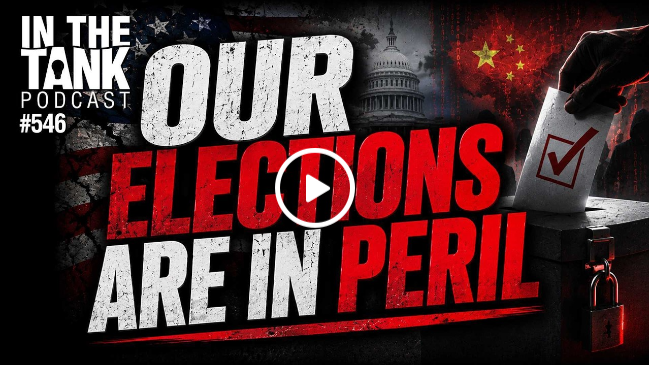
President Trump revealed that China has been interfering with our elections, especially the fraught 2020 election, in a speech that the mainstream media attempted to debunk before they even had the details. Trump brought receipts, and then as if to re-emphasize his point about election integrity, another bombshell dropped: illegals have been voting in New Jersey elections. The panel will discuss how to prevent these egregious problems with our election system, how to harden it against attacks, and how deep this all may go.
On UNHINGED: Representative Jasmine Crockett says the reason people were rooting for Spain in the World Cup… was racism. And for USA @250 – In 1776, the first draft of the Pennsylvania constitution quickly highlighted why too much Democracy can be a bad thing.
The Heartland Institute’s Linnea Lueken, Jim Lakely, and S. T. Karnick will talk about all of this and more on Episode #546 of the In The Tank Podcast.
Hot off the Presses!
‘Today’s crisis is a product of government errors, not greedy landlords, institutional investors, and so-called market failure.’
A Housing Affordability Turnaround?
The most vexing aspect of the post-Covid inflation affordability crisis has been the rapid increase of housing costs and the enormous difficulty of people under age 40 finding affordable houses to buy. Last week I presented data indicating the U.S. economy is entering a positive, long-term turnaround which should slowly restore affordability to the housing market and other essentials of life as real, inflation-adjusted per capita income continues to rise.
Another long-term trend is already starting to improve the housing situation on the supply side, a report from the Mortgage Bankers Association indicates. As I noted in my recent Heartland Institute paper on housing affordability, a demographically based increase in housing demand hit the market after the financial crisis of 2007-2008, just as the government’s tightening of financing rules suppressed home building. The mortgage bankers paper makes that same connection:
After the financial crisis, housing demand increased dramatically, driven by the millennial generation entering the housing market. This resulted in a shortage of housing that persisted over time as homebuilders were not building enough to keep up with growing demand. Estimates of the housing shortage ranged from a shortfall of between 1.5 million and 7.3 million housing units.
That explanation omits mention of the likewise demand-increasing effect of immigration, unfortunately, which I covered in my paper and in last week’s issue of this newsletter. The report continues:
House prices grew year-over-year since 2012 given the increased demand for housing. House price growth was exacerbated further during the pandemic period (2020–2022) due to significant increases in demand over a short period stimulated by record low mortgage rates. The FHFA national home price index grew by double digits over that period and nearly every market in the country saw rapid home price gains. National home prices increased 55 percent between 2020 and 2025, and annual rent growth ran in double digits over much of the same period.
In response to those attractive price signals (for sellers), developers increased the amount of building, and “the number of multifamily units under construction reached a peak in 2023 to levels not seen since the early 1970s,” the study states. “Single-family homebuilders also picked up the pace, particularly in states like Florida and Texas, which have favorable long-term demand trends given faster than national job and population growth.”
Now the increases in supply are starting to outpace demand, the study states:
Many of these projects began to be delivered from 2023 to 2025, coinciding with cooling demand as interest rates rose significantly and the job market softened. The lock-in effect is easing even as mortgage rates remain between 6 and 6.5 percent, well above the pandemic lows. The number of existing homes on the market is up about 30 percent compared to the prior year. Rental vacancy rates increased from a low of 5.6 percent in 2022 to 7.3 percent in 2025 and rents have flattened. In several markets in the South and West—Austin being a prominent example—many more units were delivered than could be rapidly absorbed.
Domestic migration will stabilize the market by increasing demand in the oversupplied markets, the researchers note. However, household formation is about to start falling significantly, creating a more widespread, long-term trend toward reduced demand for housing:
The demand picture is also shifting in ways that go beyond the current rate environment. Gen Z is now at peak rental age and moving towards first-time homebuying age, but this generation is smaller in numbers than the Millennial cohort. Over the past decades, young adult cohorts were augmented through international migration, but this is unlikely to be the case given the abrupt changes in immigration policy in 2025. Recent estimates suggest that net immigration may be negative for at least the next few years. The aging of the Baby Boomers will reduce housing demand further, with the oldest Baby Boomers having turned 80. Boomers will likely be adding to housing supply as they age further, but we do not expect a “silver tsunami” that would flood the market. With respect to younger cohorts, fertility rates continue to be well below the replacement rate and may be falling further. The expected net impact of these changes is that the U.S. population could stop growing absent positive net immigration, perhaps as soon as the early 2030s.
As such, the rate of household formation is slowing and is likely to be much slower over the next decade than it was in the last one. Slower household formation means less demand for housing, for both rental and for-sale units. This means that many units are now being delivered at a time when demand is not growing at the same pace, and our forecast is that this will persist over at least the medium term. After increasing 4 percent nationally in 2024, we are forecasting growth of only 1 percent this year and flat home prices over the next two years.
Given the study’s mortgage industry target audience, the authors emphasize the financial implications of this turning of the demographic tide:
If construction activity remains elevated, changing demographic trends could lead to a growing oversupply of housing in more markets. We expect household formation to slow materially, and the population base that would absorb new units is growing more slowly than the current pipeline suggests. The challenge is timing. Construction decisions made today reflect current price signals, which we do not believe have fully accounted for the demographic shifts already visible in the data. The demand picture may look materially different by the time those units are completed and delivered. We expect that this will lead to falling prices for both single-family and multifamily housing at the national level.
The potential for oversupply and falling prices is a concern for the mortgage industry. The most direct impact is on origination volume, as fewer households purchasing homes means fewer loans.
Current homeowners who have mortgages are highly vulnerable to housing price reductions as well, the researchers write:
For existing homeowners, falling prices would erode equity, limiting access to cash-out refinancing and increasing the likelihood of selling at a loss. We are also concerned that falling prices would push more of today’s homebuyers underwater on their mortgages. Recent borrowers and those with low down payments are most vulnerable, as they have the least equity cushion to absorb a price decline. Underwater borrowers who experience an income shock are at the greatest risk of default, which suggests additional consequences for mortgage servicers due to the potential for advances, loss mitigation costs, and extended resolution timelines[.]
We see some of that effect already, with Baby Boomers holding onto their homes instead of downsizing. That will reverse as those older Americans leave the scene and their children inherit their homes, which they will either put on the market or move into and sell their current homes. That will further reduce housing demand while putting larger houses on the market.
The long-term prospects for Millennial and Gen Z participation in the American Dream of homeownership are clearly improving. The only thing that could mess it up is actions by governments to keep prices up (to bail out current homeowners) or to stimulate home building (to benefit buyers), all to solve a problem that government intervention created in the first place.
We would then have a more protracted housing affordability problem or a “cheap housing crisis” to replace the affordability plight.
Chances are, of course, that governments will do both, creating an even worse mess that sends ugly ripple effects across the economy.
Short-term solutions lead to long-term disasters, as the government’s response to the financial crisis illustrates. The long-term solutions to all these government-induced disasters remain the same: cut taxes, remove unnecessary regulations, and stabilize the currency by cutting government spending to balance the budget.
Source: Mortgage Bankers Association
‘The CSDDD is the greatest threat to America’s sovereignty since the fall of the Soviet Union.’

Portland’s Blazer Dilemma

Public spending on pro sports stadiums has been running into snags lately. The owner of the Portland Trail Blazers NBA team recently announced that he would rather move the team out of town than help pay for renovation of the city-owned Moda Center in which the team plays.
The proposed renovation, which the Trail Blazers’ owners called for, would cost an estimated $600 million. Blazers owner Tom Dundon stated he believes the city and state should make taxpayers come up with the money … because state and municipal taxes are too high. Raising taxes on other people is his proposed solution.
That’s pretty much everybody’s idea of a solution, everywhere.
Dundon is not wrong about the tax bite.
“It feels like we’re making a pretty big investment by staying here and paying these tax rates,” Dundon said at the annual meeting of the Portland Metro Chamber being held at the Moda Center, ClutchPoints reported.
“There’s lots of places that don’t have taxes at the same rate,” the Blazers owner told the crowd of more than 750 local business and political leaders. “So if you charge people taxes and invest it back into the thing that helps generate the money relative to the market, other places … it’s a huge investment.”
The state of Oregon has committed to $365 million in bonds, and Multnomah County “has signaled willingness to contribute another $88 million” for the renovation, OPB reports. Portland has pledged at least $120 million “but hasn’t identified a funding source,” according to OPB. That amounts to $573 million. Dundon clearly expects the city to come up with the money and leave him and his partners off the hook.
He’s probably not wrong. An emerging pattern shows high-status, long-established major metros with rising homelessness and crime problems and high taxes are dialing back on taxpayer support of new stadiums, while up-and-coming, ambitious cities are aggressively committing to “investment” in sports teams’ homes to prove they are “major league” destinations where big companies should consider locating.
Portland is the worst possible combination of those two types. It is at best a minor “major league city,” the kind of place that feels the most urgent need to get and keep major league teams. The city is struggling with crime, homelessness, high taxes, and a 35 percent downtown office vacancy rate as businesses flee the chaos.
Portland cannot afford to keep the Blazers, but it will probably put up the money to do so. After all, the city has extensive recent experience in wasting money.
Contact Us
The Heartland Institute
1933 North Meacham Road, Suite 559
Schaumburg, IL 60173
p: 312/377-4000
f: 312/277-4122
e: [email protected]
Website: Heartland.org



S. T. Karnick is a senior fellow and director of publications for The Heartland Institute.